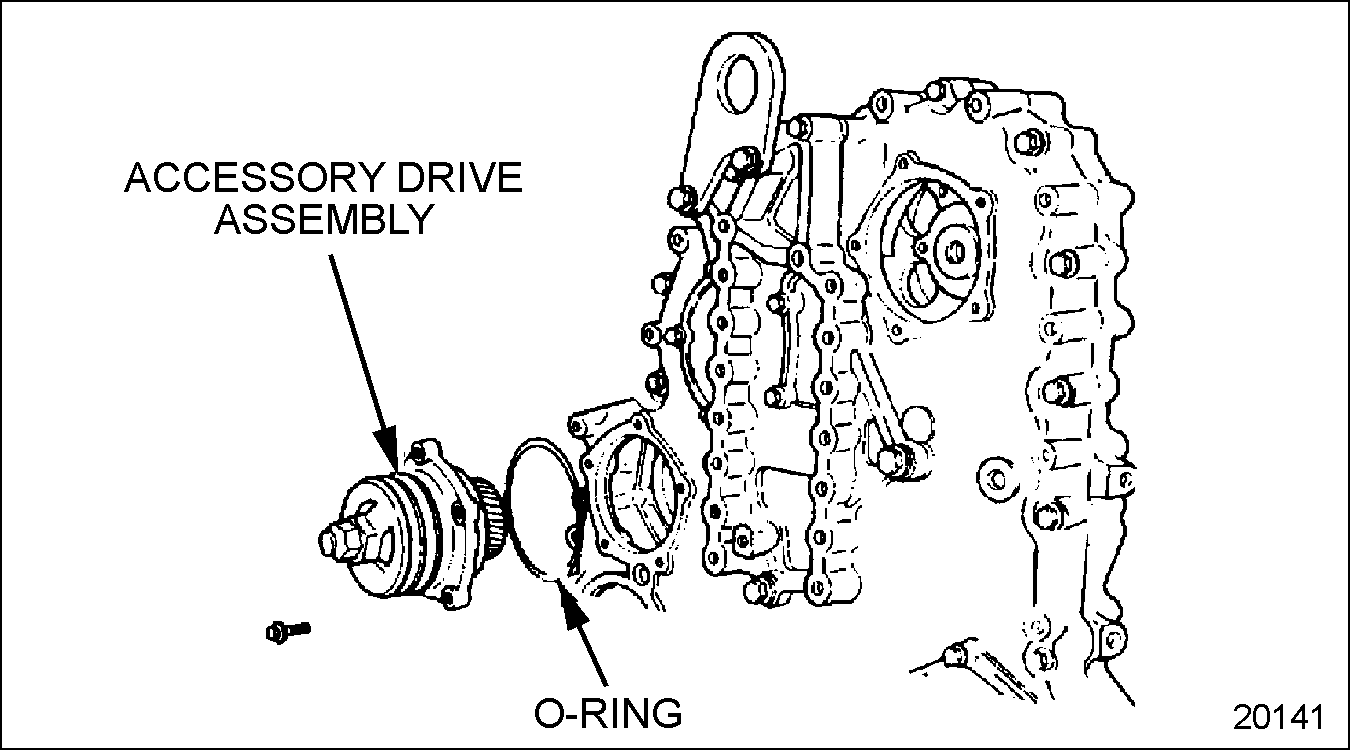
Figure 1. Accessory Drive Assembly Related Parts (Former Design)
1. Locknut
8. Drive Gear
2. Mounting Bolts (5)
9. O-Ring
3. Drive Housing
10. Gear Case Cover
4. Snap Ring (Small)
11. Needle Bearing
5. Ball Bearing
12. Oil Seal
6. Snap Ring (Large)
13. Pulley
7. Drive Shaft
Figure 2. Accessory Drive Assembly Related Parts (Current Design)
The accessory drive assembly is splash fed oil through two holes in the casting of the accessory drive housing. The oil returns to the crankcase via the gear case.
The accessory drive is driven by a drive gear which is pressed onto the drive shaft. The drive gear meshes with the bull gear and is driven at 2.41 times engine speed.
The drive shaft is supported by a ball bearing at the drive end and a needle bearing at the pulley end.
Figure 3. Flowchart for Repair or Replacement of Accessory Drive
Section 1.35.2 Removal and Cleaning of the Accessory Drive
Precleaning is not necessary.
Remove the accessory drive as follows:
Loosen the alternator mounting bolts and the adjusting rod nuts to get slack in the alternator drive belts. Remove the alternator drive belts. Refer to "14.6.9 Drive Belts"
.
Remove the five bolts that secure the accessory drive assembly to the gear case cover.
Remove the accessory drive pulley by tapping it with a rubber hammer or fiber mallet. If the pulley does not come off easily, use a puller to remove it.
1. Seal Sleeve
Figure 8. Accessory Drive Seal Remover (J–45533)
Note: Perform steps 5, 6 and 7 unitized seal removal procedure for accessory drive assemblies on engines built after December 2000.
Turn the housing over and support the accessory drive housing on the machined surface using V-blocks.
Using a press, apply pressure to the pulley end of the shaft and remove the shaft and bearing assembly.
Turn the accessory drive housing over, and support it on the attaching bolt bosses using V-blocks.
Note: On current design, the shaft serves as the inner race for the needle bearing.
NOTICE:
For assemblies with inner race for needle bearing, place the accessory drive shaft in a vise with soft jaws taking care not to damage the shaft surface.
Remove the needle bearing inner race from the accessory drive shaft with a two jaw puller utilizing the slots provided in the shaft. See Figure
"Bearing Inner Race Removal"
.
Note: Whenever the needle or ball bearing is removed from the shaft, they MUST be replaced with new bearing assemblies.
Use a press to apply pressure to the top of the shaft and remove the ball bearing from the shaft.
Section 1.35.3.1 Inspection of the Accessory Drive
Clean the accessory drive prior to inspection as follows:
Clean all of the parts with clean fuel oil.
EYE INJURY
To avoid injury from flying debris when using compressed air, wear adequate eye protection (face shield or safety goggles) and do not exceed 276 kPa (40 psi) air pressure.
Dry parts with compressed air.
To inspect the accessory drive visually examine the drive shaft for damage check the drive shaft for galling, pitting, cracks, or other damage. If any damage is detected, replace with a new part. If no damage is found, reuse the part.
Install the snap ring to the accessory drive shaft making sure it is fully seated in the groove a full 360 degrees See Figure
"Snap Ring Installation"
.
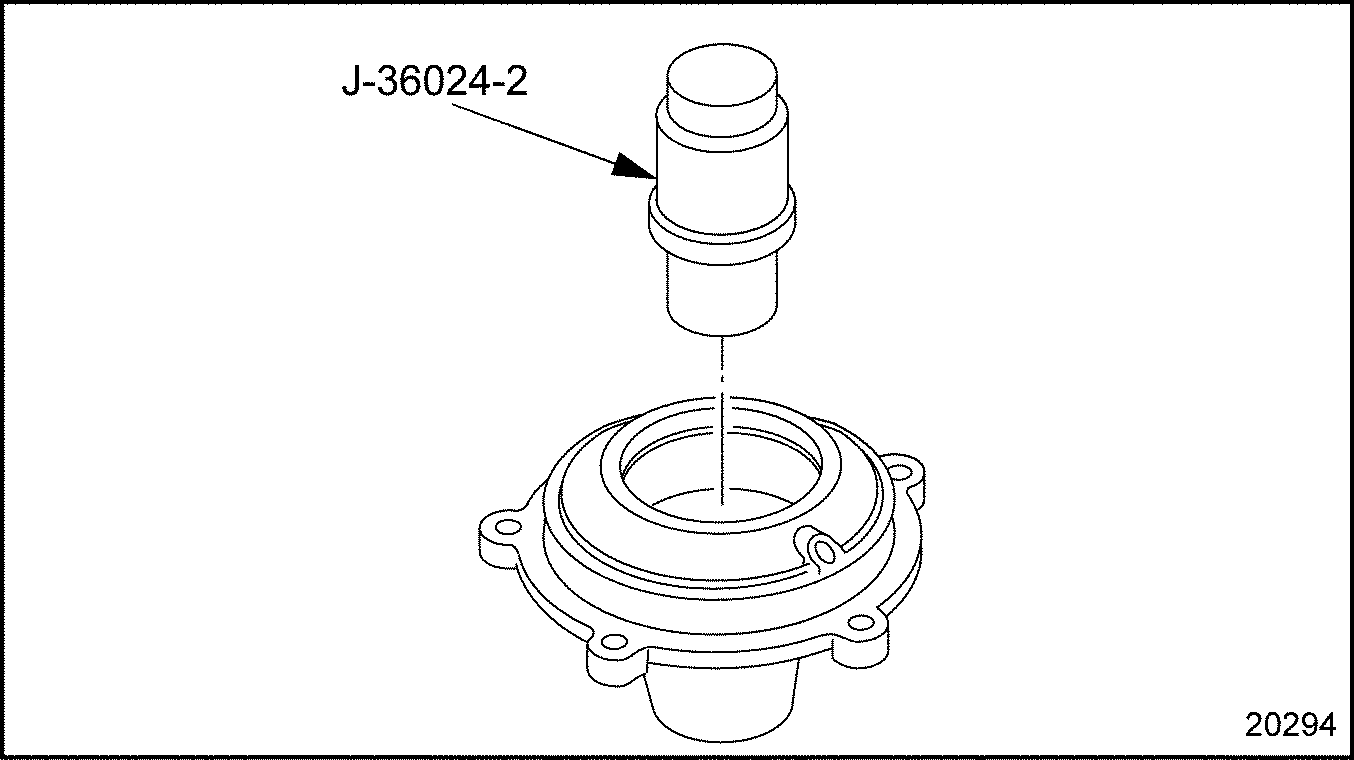
Press the bearing into the housing until the bearing is seated against the shoulder of the housing. See Figure
"Bearing Installation"
.
Figure 22. Bearing Installation
Install the snap ring to the accessory drive housing making sure the snap ring is fully seated in the groove a full 360 degrees See Figure
"Snap Ring Installation"
.
Figure 23. Snap Ring Installation
Lubricate the contact surfaces of the bearing with clean engine lubricating oil.
Use a press to install the drive gear on the accessory drive shaft until it is flush with the drive shaft end. Make sure the three threaded holes are facing up. See Figure
"Accessory Drive Gear Installation"
.
Note: Support the opposite end of the drive shaft on the press bed when pressing the gear on the shaft. A minimum press load of 17.8 kN (4000 lb) must be obtained when pressing the gear on the shaft.
Figure 25. Accessory Drive Gear Installation
Note: For accessory drive assemblies with unitized seals, effective with engines built after December 2000 perform the procedures in steps 16 and 17.
Figure 26. (J–45833) Accessory Drive Seal Installer
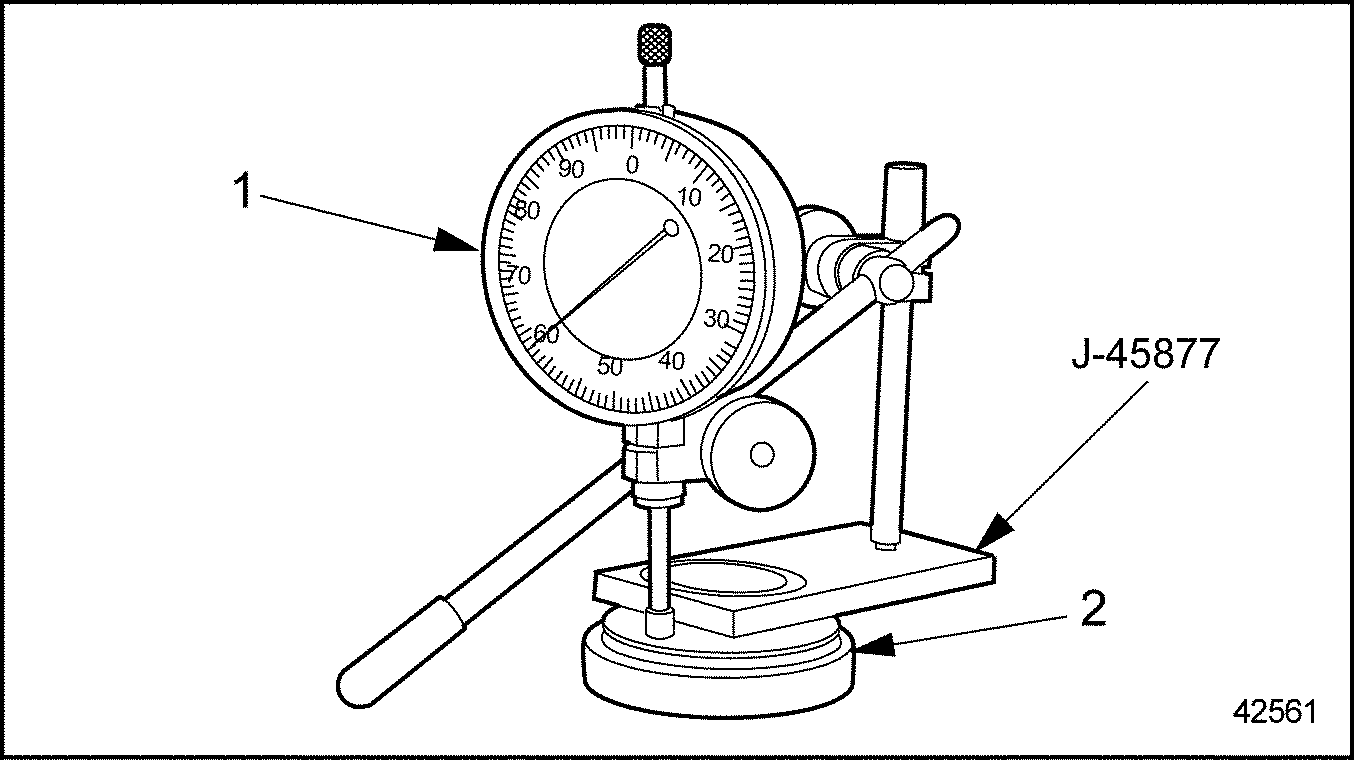
Measure sleeve and seal run out using tool J–45877
and a dial indicator. Total indicator deflection should not exceed 0.0762 mm (0.003 in.) for the sleeve and 0.1778 mm (0.007 in.) for the seal. If the run out is greater for either measurement, install a new seal. See Figure
"Seal Run Out Gauge Adaptor (J–45877)"
.
1. Dial Indicator
2. Seal Sleeve
Figure 27. Seal Run Out Gauge Adaptor (J–45877)
Install the accessory drive pulley to the shaft.
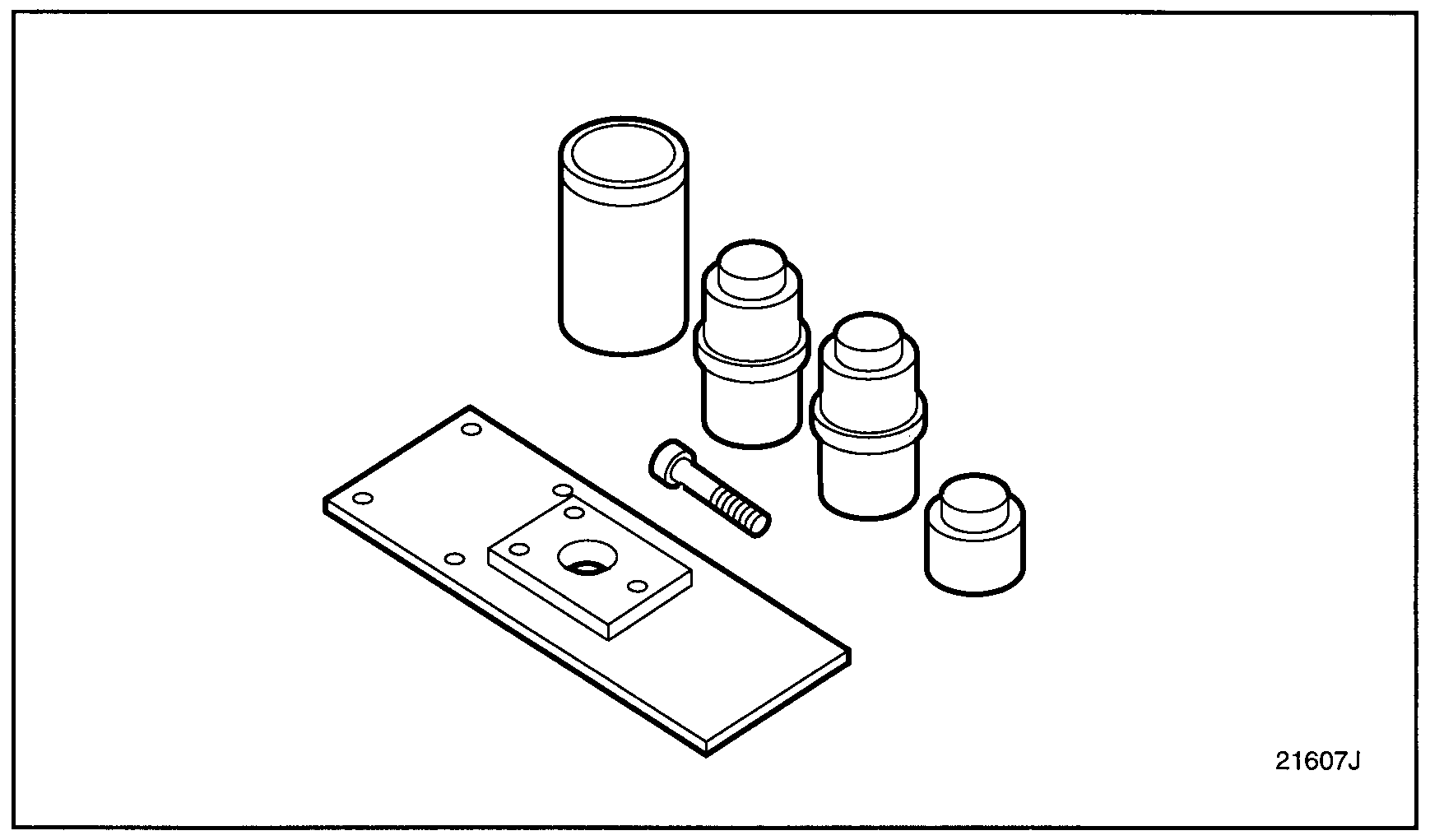
Note: If necessary, use tool J–36024–8 (part of toolset J–36024–C)
to seat the pulley on the shaft. If pressing is necessary, the opposite (gear) end of the shaft must be supported during the pressing operation.
Assemble a dial indicator and magnetic base, so that the indicator stem rests on the face of the accessory drive gear just inboard of the drive gear teeth. See Figure
"Accessory Drive Gear TIR Measurement"
.
The total amount the dial indicator needle moves to the left and right of zero, added together, gives the total indicated run-out (TIR). The specified TIR is 0.04 mm (0.0015 in.).
Section 1.35.5 Installation of the Accessory Drive
Install the accessory drive as follows:
Install the O-ring seal in the groove on the drive housing.
Lubricate the O-ring with petroleum jelly.
Install the accessory drive housing to its original position in the gear case cover.
Note: The word "UP" is cast into the drive housing.