
The valve and injector operating mechanism is located entirely in the cylinder head.
The Series 60 overhead camshaft design eliminates the need for push rods. Separate camshaft followers are not needed, since the rocker arms incorporate follower rollers riding directly on the camshaft lobes, transmitting camshaft motion to the valves and injectors. See Figure "Camshaft and Related Parts" .
Figure 1. Camshaft and Related Parts
Each of the three rocker arm assemblies contain bushings where the rocker arms are supported on the rocker arm shafts. These bushings are not serviced separately. Each intake rocker arm assembly operates two intake valves in each cylinder. Each exhaust rocker arm assembly operates two exhaust valves in each cylinder. In each set of rocker arm assemblies, the exhaust rocker assembly is the widest, straddling the intake and fuel injector rocker arm assembly. The center rocker operates the fuel injector follower. See Figure "Rocker Arm Identification" .

Figure 2. Rocker Arm Identification
The fuel injector rocker arm assembly is located between the intake and exhaust rocker arm assemblies and has a single bushing (not serviced separately). A rocker arm shaft carries three sets of rocker arm assemblies and is mounted in seats machined into the camshaft bearing caps. See Figure "Rocker Arm and Related Parts" and see Figure "Rocker Arm and Related Parts (Series 60G Engine)" .

|
1. Unitized Valve Adjusting Screw Assembly; Intake |
5. Rocker Arm Shaft |
|
2. Locknut |
6. Unitized Valve Adjusting Screw Assembly; Exhaust |
|
3. Intake Rocker Arm Assembly |
7. Exhaust Rocker Arm Assembly |
|
4. Fuel Injector Rocker Arm Assembly |
8. Unitized Valve Adjusting Screw Assembly; Injector |
Figure 3. Rocker Arm and Related Parts

|
1. Unitized Valve Adjusting Screw Assembly; Intake |
5. Rocker Arm Shaft |
|
2. Locknut |
6. Unitized Valve Adjusting Screw Assembly; Exhaust |
|
3. Intake Rocker Arm Assembly |
7. Exhaust Rocker Arm Assembly |
|
4. Spacer |
Figure 4. Rocker Arm and Related Parts (Series 60G Engine)
A new injector rocker arm assembly replaced the former injector rocker arm assembly on all model 6067-GK60 engines beginning with serial number 06R0133091, and on all model 6067-GU60 and 6067-WU60 engines beginning with serial number 06R0157655.
Note: When the current rocker is installed on a phosphated shaft, the shaft should be turned 180° to present a fresh phosphated area to the loaded region of the bushing.
The current assembly has a honed rocker arm shaft bushing, a ceramic cam follower and a new phosphated (black in color) rocker arm shaft which provides improved wear characteristics. The phosphated surface is required for the proper break-in of the steel rocker arm shaft bushings.
Current Series 60 engines have rocker arm shafts without flats at the mounting bolt locations. For these engines, a spacer is installed between the rocker arm shaft and the mounting bolts or nuts rather than a washer. This allows the rocker arm shaft to be rotated when installing new rocker arms. When reusing rocker arm assemblies, the rocker arm shaft should not be rotated so that the same surfaces of the rocker arm assemblies and rocker shafts are in contact with each other.
Vertical oil passages at the front and rear of the cylinder head deliver oil from the cylinder block front and rear oil galleries to the No. 1 and 7 lower camshaft bearing saddles. From there, the oil is directed upward (through the enlarged stud hole) to the No. 1 and 7 upper bearing caps. A drilled passage in each of these caps exits at the rocker arm shaft seat area, where it indexes with a hole in each rocker arm shaft.
The rocker arm shafts have internal oil passages that deliver oil to the rocker arm bushings and intermediate upper camshaft bearings. Some of the oil supplied to the rocker arm bushings passes through the oil hole in the bushing to the rocker arm assemblies. The rocker arm assemblies contain drilled passages that supply oil to the camshaft roller follower, the roller pin and the bushing. The rocker arm assemblies also contain drilled passages that supply oil to the unitized valve adjusting screw assembly and exhaust valve stems and the fuel injector follower.
Note: In December 2000, a new unitized adjusting valve screw assembly now replaces the former valve adjusting screw, valve button and retainer clip.
The No. 4 camshaft cap is "Y" drilled, forming an oil path connection between the front and rear rocker arm shafts, to ensure complete lubrication. The oil passage within one rocker arm cylinder set is shown. See Figure "Rocker Arm Assembly Lubrication Schematic with Former Valve Adjusting Screw Assembly" and see Figure "Rocker Arm Assembly Lubrication Schematic with Unitized Valve Adjusting Screw Assemblies" .

|
1. Exhaust Rocker Arm Assembly |
4. Rocker Arm Shaft |
|
2. Fuel Injector Rocker Arm Assembly |
5. Cylinder Head |
|
3. Camshaft Cap |
6. Intake Rocker Arm Assembly |
Figure 5. Rocker Arm Assembly Lubrication Schematic with Former Valve Adjusting Screw Assembly
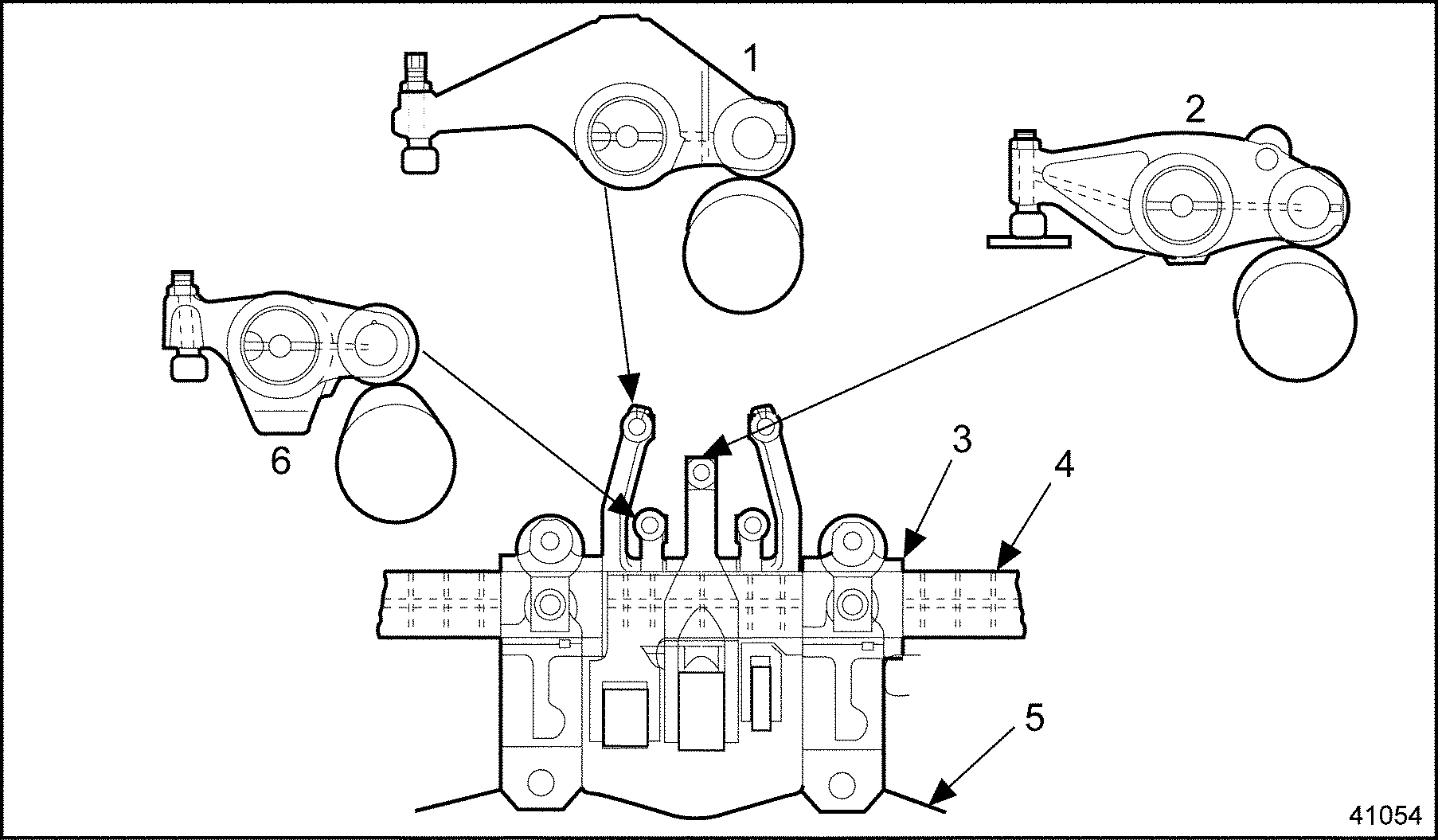
|
1. Exhaust Rocker Arm Assembly |
4. Rocker Arm Shaft |
|
2. Fuel Injector Rocker Arm Assembly |
5. Cylinder Head |
|
3. Camshaft Cap |
6. Intake Rocker Arm Assembly |
Figure 6. Rocker Arm Assembly Lubrication Schematic with Unitized Valve Adjusting Screw Assemblies
To determine if repair is possible or replacement is necessary, perform the following procedure. See Figure "Flowchart for Repair or Replacement of Valve and Injector Operating Mechanism and Camshaft" .

Figure 7. Flowchart for Repair or Replacement of Valve and Injector Operating Mechanism and Camshaft
Perform the following steps for rocker arm assembly removal:
Note: If unit is equipped with Jake Brake®, remove brake. Refer to "1.36.2 Removal of Model 760, 765, or 770 Jake Brake" .
Note: Jake Brakes are not used on the Series 60G engine.
Note: High pressure water or steam cleaning should be avoided in the valve rocker cover/cylinder head area of the Series 60 gas. The ignition system can be affected.
Note: Whenever nuts No. 1 or 8 are loosened or removed, the torque on the corresponding rocker shaft stud must be checked. Torque to 126–146 N·m (93–108 lb·ft).

Figure 8. Rocker Arm Shaft Bolts and Nut Identification Numbers

Figure 9. Rocker Arm Shaft Bolts and Nut Identification Numbers (Series 60G Engine)
Note: Some engines may be equipped with ceramic injector rollers. Use extra caution while removing and handling.

Figure 10. Rocker Arm Shaft Assembly Removal
Note: If the unitized valve button separates from the screw, the button and screw must be replaced with a new Unitized Valve Adjusting Screw assembly. Do not attempt to reassemble them for reuse in engine. Unitized Valve Adjusting Screws will not be serviced separately.
Note: If removing a former valve adjusting screw with valve button and retainer clip, proceed to step 6 .
NOTICE: |
|
To avoid possible component damage, the valve button retainer MUST NOT be expanded more than 15.5 mm (0.610 in.). An adjusting screw is provided on the expander tool to limit the amount of travel. |

Figure 11. Valve Button Retainer Clip Removal
Note: Front and rear rocker arm shaft sections look identical, but must not be reversed, and must be installed as removed, due to bolt hole center line distances. The DDC logo is stamped on the outboard end of each rocker shaft to ensure correct assembly and installation. See Figure "Rocker Arm Shaft Identification Mark" .

Figure 12. Rocker Arm Shaft Identification Mark
Clean the rocker arm assemblies as follows:
NOTICE: |
|
Do not soak the rocker arms in solvent because this will remove the lubricant from the cam follower roller bushings. |
 EYE INJURY |
|
To avoid injury from flying debris when using compressed air, wear adequate eye protection (face shield or safety goggles) and do not exceed 276 kPa (40 psi) air pressure. |
Prior to inspection:
Figure 13. Rocker Arm Shaft Identification Mark
Inspect the rocker arm assemblies and camshaft lobes as follows:
Note: Replace with unitized valve adjusting screw assembly of the correct position.
Note: Former style valve adjusting screw assemblies and the unitized valve adjusting screw assemblies are interchangeable and can be mixed in the same engine.
Perform the following for rocker arm shaft assembly installation:
|
1. Unitized Valve Adjusting Screw Assembly; Intake |
5. Rocker Arm Shaft |
|
2. Locknut |
6. Unitized Valve Adjusting Screw Assembly; Exhaust |
|
3. Intake Rocker Arm Assembly |
7. Exhaust Rocker Arm Assembly |
|
4. Fuel Injector Rocker Arm Assembly |
8. Unitized Valve Adjusting Screw Assembly; Injector |
Figure 14. Rocker Arm and Related Parts
Note: There are three different unitized valve adjusting screw assemblies. Ensure the correct unitized valve adjusting screw assembly is used in the correct location. See Figure "Unitized Valve Adjusting Screw Assemblies (Exhaust, Injector and Intake)" .
Note: Former style valve adjusting screw assemblies can be mixed with new unitized valve adjusting screw assemblies.

Figure 15. Unitized Valve Adjusting Screw Assemblies (Exhaust, Injector and Intake)
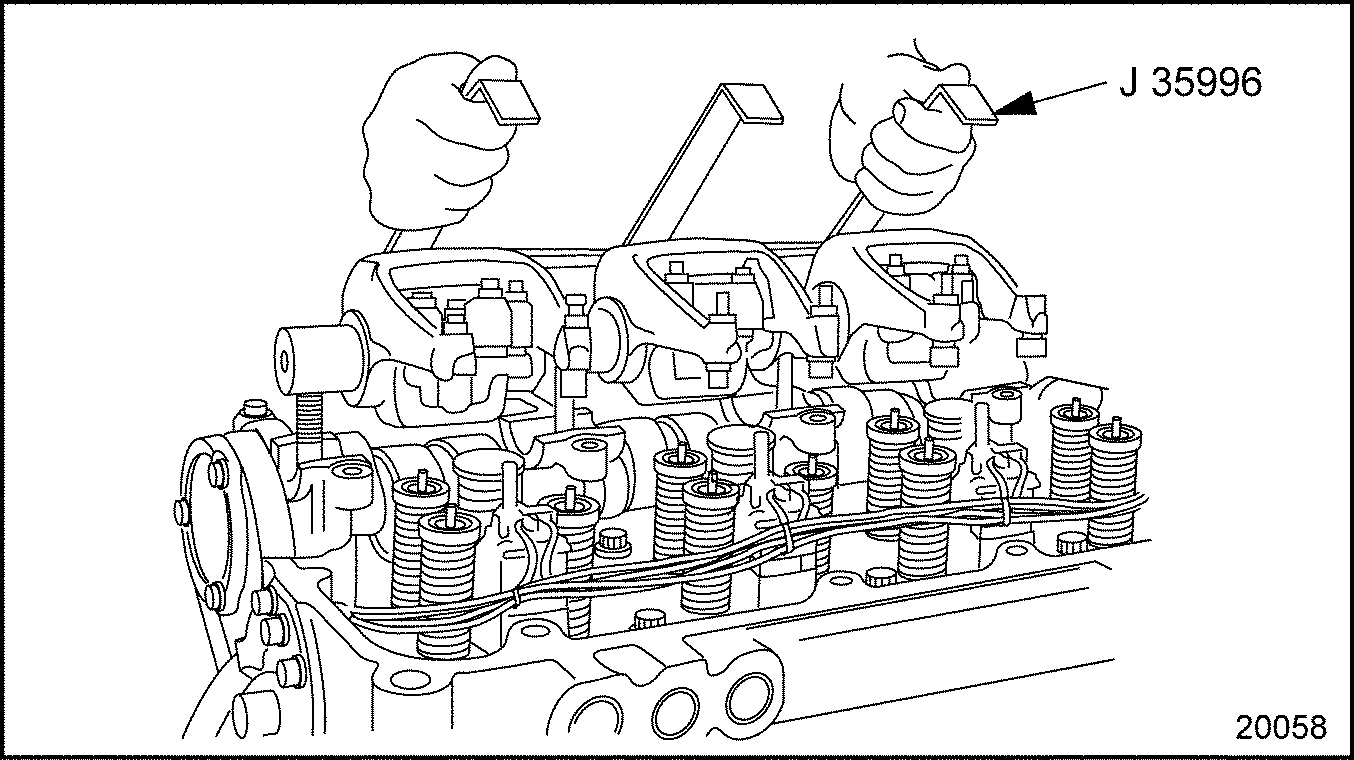
Figure 16. Rocker Arm Shaft Assembly Installation
Note: If new rocker arm components are installed, engine oil should be poured over the rocker arms, rocker shaft, and camshaft as a pre-lubricant.

Figure 17. Rocker Arm Shaft Retaining Bolt and Nut Tightening Sequence
|
PERSONAL INJURY |
|
Diesel engine exhaust and some of its constituents are known to the State of California to cause cancer, birth defects, and other reproductive harm.
|
| Series 60 Service Manual - 6SE483 |
| Generated on 10-13-2008 |