
An improved fuel pump replaced the former fuel pump, effective with July 1995 engine production. The improved and former pumps are similar, except that the improved pump has a one-piece drive shaft and hub assembly. See Figure "Current Compressor-Mounted Fuel Pump Assembly with One-Piece Drive Shaft and Hub Assembly" .
|
1. Driven Gear |
8. Snap Ring |
|
2. Driven Shaft |
9. Oil Seals |
|
3. Pin, Drive |
10. Drive Shaft and Hub Assembly |
|
4. Cover |
11. Coupling |
|
5. Drive Gear |
12. Pump Body |
|
6. Key |
13. Needle Bearing |
|
7. Gasket |
|
Figure 1. Current Compressor-Mounted Fuel Pump Assembly with One-Piece Drive Shaft and Hub Assembly
The former pump has a separate drive shaft and drive hub. See Figure "Current Gear Case-Mounted Fuel Pump Assembly" .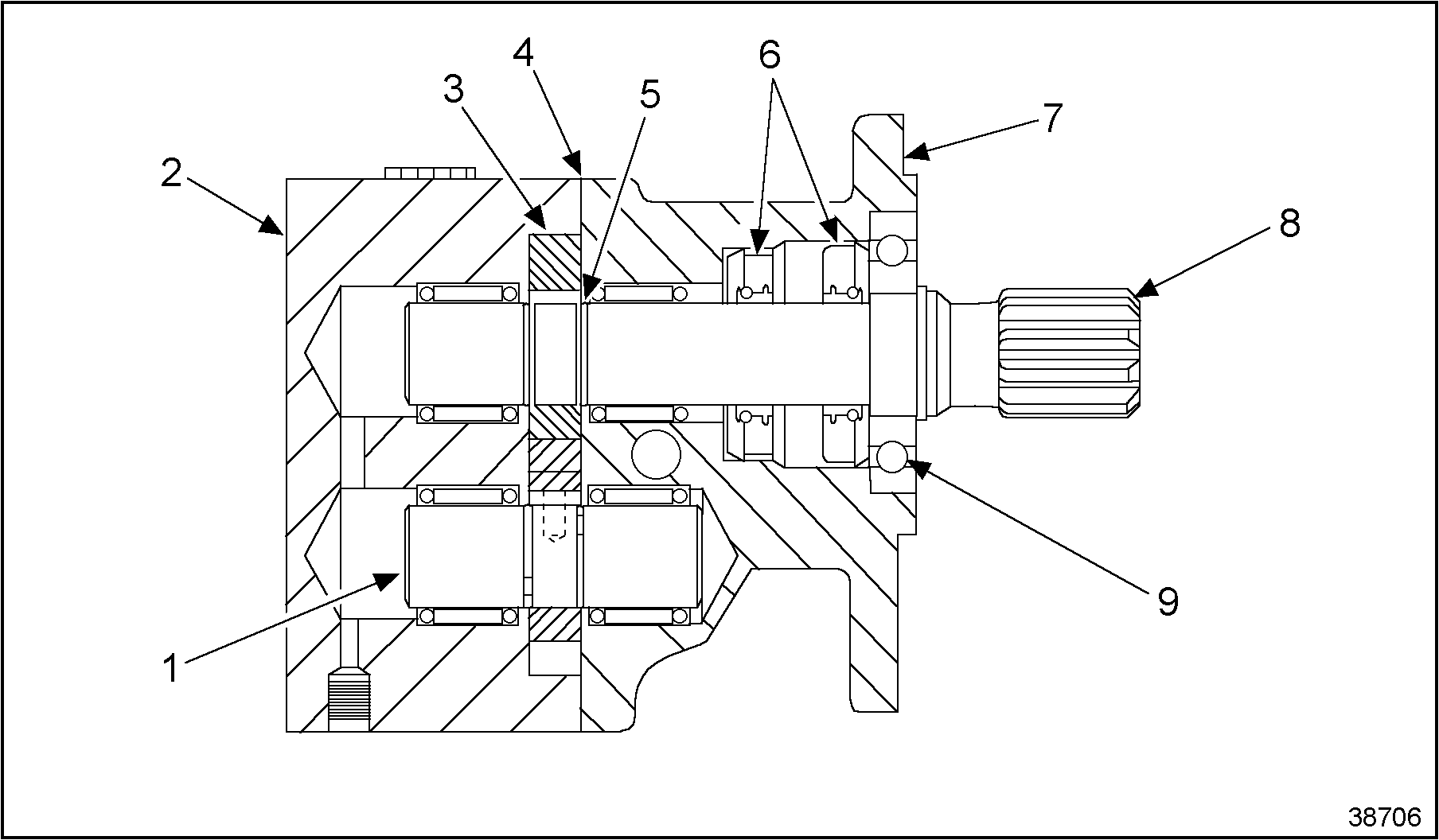
|
1. Driven Shaft |
6. Oil Seal |
|
2. Cover |
7. Pump Body |
|
3. Drive Gear |
8. Spline Drive Shaft |
|
4. Gasket |
9. Steel Cage Ball Bearing |
|
5. Snap Ring |
|
Figure 2. Current Gear Case-Mounted Fuel Pump Assembly
Former and improved pump assemblies are completely interchangeable. However, components of former and improved pump assemblies are not interchangeable.The current fuel pump system consists of the following components:
Note: Effective with engine serial number 06R0549855 built on October 19, 1999, gear case-mounted fuel pumps have a splined drive shaft and splined gear coupling assembly. See Figure "Current Gear Case-Mounted Fuel Pump Assembly" . The former and current fuel pump and fuel pump drive assemblies are not interchangeable. Both current assemblies must be used together. Components of former and current pump assemblies and drive assemblies are not interchangeable.
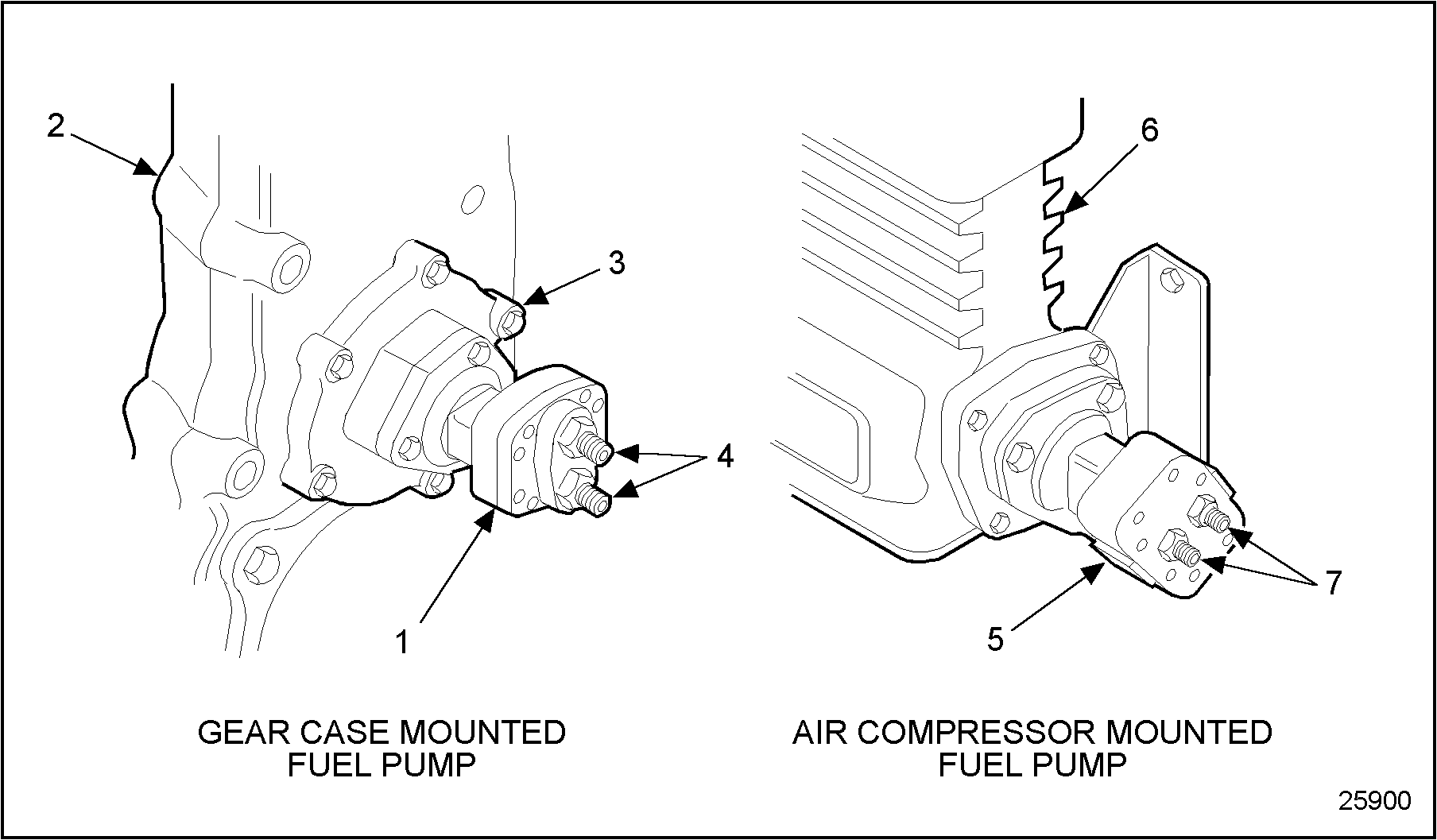
See Figure "Gear Case and Air Compressor-Mounted Fuel Pumps" for the current positive displacement gear-type fuel pump is shown in the next illustration.
|
1. Gear Case-Mounted Fuel Pump Assembly |
5. Air Compressor-Mounted Fuel Pump |
|
2. Gear Case Housing |
6. Air Compressor Assembly |
|
3. Fuel Pump Drive Adaptor |
7. Brass Fittings |
|
4. Brass Fittings |
|
Figure 3. Gear Case and Air Compressor-Mounted Fuel Pumps
The fuel pump transfers fuel from the supply tank to the fuel injectors. The pump circulates an excess supply of fuel through the injectors, which purges the air from the system and cools the injectors. The unused portion of fuel returns to the fuel tank by means of a fuel return line.
The fuel pump is either attached to a drive assembly mounted on the rear side of the gear case, or driven off of the rear of the air compressor. See Figure "Gear Case and Air Compressor-Mounted Fuel Pumps" .
The fuel pump cover and body are positioned by two dowels. The dowels aid in maintaining alignment between the body, cover and shafts. The mating surfaces of the pump body and cover are perfectly flat ground surfaces. A gasket is used between the cover and body.
The fuel pump body is recessed to provide running space for the pump gears. Recesses are also provided at the inlet and outlet positions of the gears. The small relief valve vent (5) (see Figure "Fuel Pump" ) permits the fuel oil in the inlet side of the pump to lubricate the relief valve at its outer end. This eliminates the possibility of a hydrostatic lock which would render the relief valve inoperative. Pressurized fuel contacts the relief valve through the passage to the head of the relief valve (1) and provides for relief of excess discharge pressures. Fuel re-enters the inlet side of the pump through the passage to the head of the relief valve (6) when the discharge pressure is great enough to move the relief valve back from its seat. Part of the relief valve may be seen through the passage to the head of the relief valve (6). The gear teeth vent cavity (7) provides escape for the fuel oil that is squeezed out of the gear teeth as they mesh together on the discharge side of the pump. Otherwise, fuel trapped at the root of the teeth would tend to force the gears apart, resulting in undue wear on the gears, shafts, body, and cover. See Figure "Fuel Pump" .

|
1. Passage to Head of Relief Valve, Pressure Side |
10. Dowel |
|
2. Dowel Hole |
11. Drive Gear |
|
3. Body |
12. Drive Shaft Gear |
|
4. Oil Seal Vent to Suction Side |
13. Relief Valve |
|
5. Relief Valve Vent to Suction Side |
14. Spring |
|
6. Passage to Head of Relief Valve, Suction Side |
15. Pin |
|
7. Gear Teeth Vent Cavity |
16. O-ring |
|
8. Cover |
17. Plug |
|
9. Driven Gear |
18. Spacer |
Figure 4. Fuel Pump
Two oil seals are pressed into the bore in the flanged side of the pump body to retain the fuel oil in the pump and the lubricating oil in the fuel pump drive and gear case. The oil seal vent (4) (see Figure "Fuel Pump" ) serves as a vent passageway in the body, between the inner oil seal and the suction side of the pump, which prevents building up any fuel oil pressure around the shaft ahead of the inner seal. The oil seals are installed with the lips of the seals facing each other. See Figure "Fuel Pump Oil Seal Arrangement" .

Figure 5. Fuel Pump Oil Seal Arrangement
Some fuel oil seepage by the fuel pump can be expected with a running engine and immediately after an engine has been shut down. This is especially true with a new fuel pump, new pump seals, or both, as the seals have not yet conformed to the pump drive shaft. Fuel pump seals will always allow some seepage. A drain hole in the pump body is provided to prevent fuel oil from being retained between the seals. Excessive fuel retention between the seals could provide enough pressure to cause engine oil dilution by fuel; therefore, drainage of the excess fuel oil is mandatory. However, if leakage exceeds one drop per minute, replace the pump. The drain hole should be checked for plugging at normal scheduled maintenance.
A spring-loaded relief valve incorporated in the pump body normally remains in the closed position, operating only when pressure on the outlet side (to the fuel filter) reaches approximately 448 kPa (65 psi).
In operation, fuel enters the pump on the suction side and fills the space between the gear teeth that are exposed at that instant. The gear teeth then carry fuel oil to the discharge side of the pump and as the gear teeth mesh in the center of the pump, the fuel is forced out the outlet cavity. Since this is a continuous cycle and fuel is continually being forced into the outlet cavity, the fuel flows from the outlet cavity into the fuel lines and through the engine fuel system under pressure.
The pressure relief valve relieves the discharge pressure by bypassing the fuel from the outlet side of the pump to the inlet side when the discharge pressure reaches approximately 448 to 517 kPa (65 to 75 psi).
The fuel pump should maintain the fuel pressure as listed in Table "Series 60 Engine Fuel System Parameters" .
|
Fuel System Parameter Limits |
Operating Limits at 2100 rpm |
Operating Limits at 1800 rpm |
|
Fuel pressure at secondary filter outlet - kPa (psi): |
– |
– |
|
Normal with 2.03 mm (0.080 in.) restriction |
517 (75) |
517 (75) |
|
Minimum |
345 (50) |
345 (50) |
|
Fuel spill minimum at no-load - L/min (gal/min): |
|
|
|
Normal with 2.03 mm (0.080 in.) restriction |
4.9 (1.3) |
4.1 (1.0) |
|
Fuel pump suction at pump inlet, maximum - kPa (in. Hg): |
– |
– |
|
Clean system |
20 (6) |
20 (6) |
|
Dirty system |
41 (12) |
41 (12) |
To determine if repair or replacement of the fuel pump is necessary. See Figure "Flowchart for Repair or Replacement of Fuel Pump" .
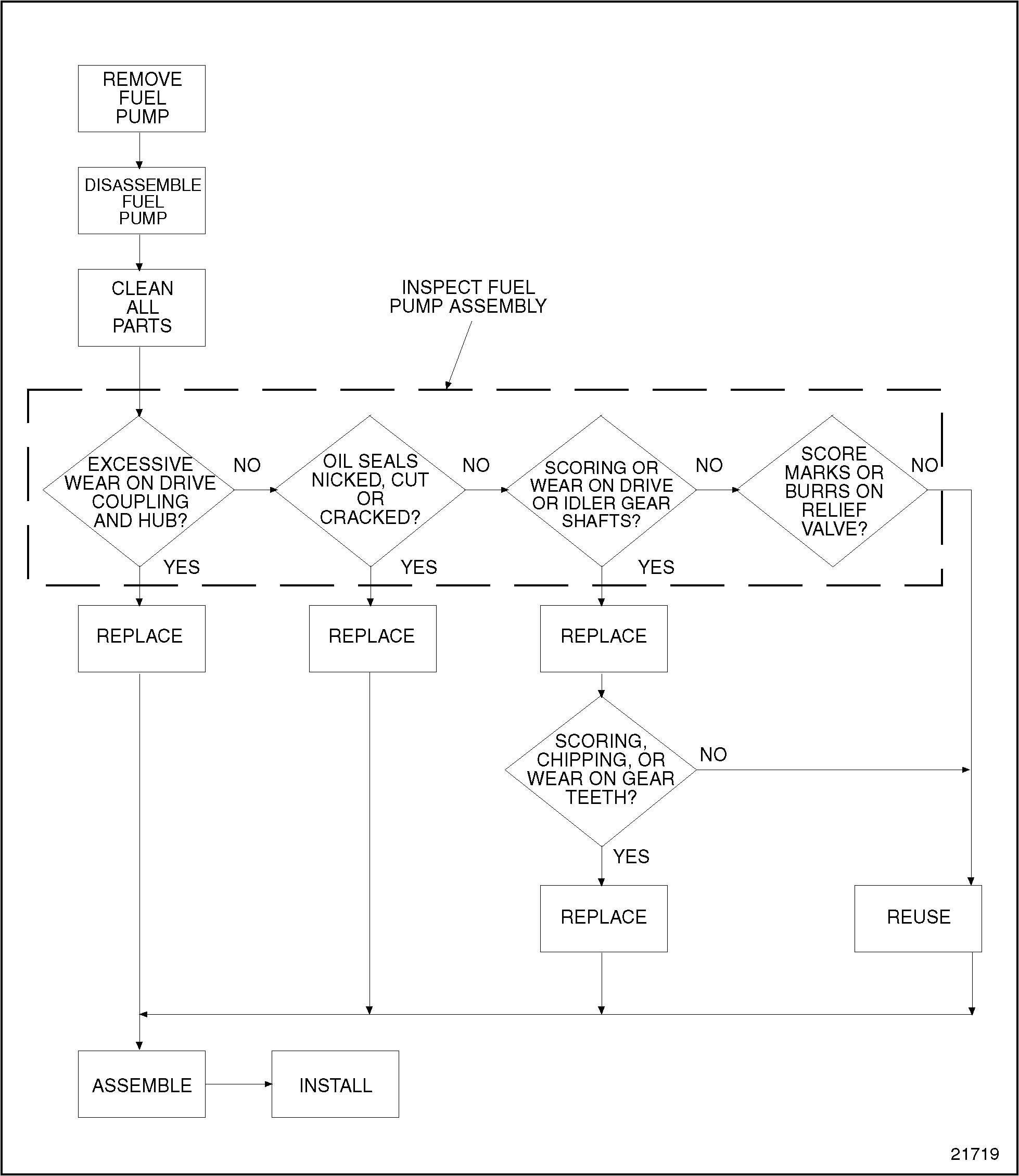
Figure 6. Flowchart for Repair or Replacement of Fuel Pump
Perform the following steps for fuel pump removal:
Perform the following steps for fuel pump disassembly:

Figure 7. Fuel Pump Holding Fixture
Note: Note the color of the foil gasket, gold or silver. If the pump is reassembled, the same color foil gasket must be used. The gaskets are of different thickness and establish correct internal clearance.
Note: When the drive shaft is removed from the pump, the oil seals must be replaced.
Note: When the drive shaft is removed, the drive shaft needle bearing assembly in the pump body must also be removed to allow installation of the oil seal protector used during reassembly.

Figure 8. Needle Bearing Assembly Removal

Figure 9. Oil Seal Removal
Perform the following steps to clean and inspect the fuel pump parts:
 EYE INJURY |
|
To avoid injury from flying debris when using compressed air, wear adequate eye protection (face shield or safety goggles) and do not exceed 276 kPa (40 psi) air pressure. |
Note: Oil seals, once removed, must be discarded and replaced with new seals. Oil seals must be removed whenever the fuel pump drive shaft is withdrawn.
Perform the following steps for fuel pump assembly:

Figure 10. Installing Inner Oil Seal

Figure 11. Installing Outer Oil Seal
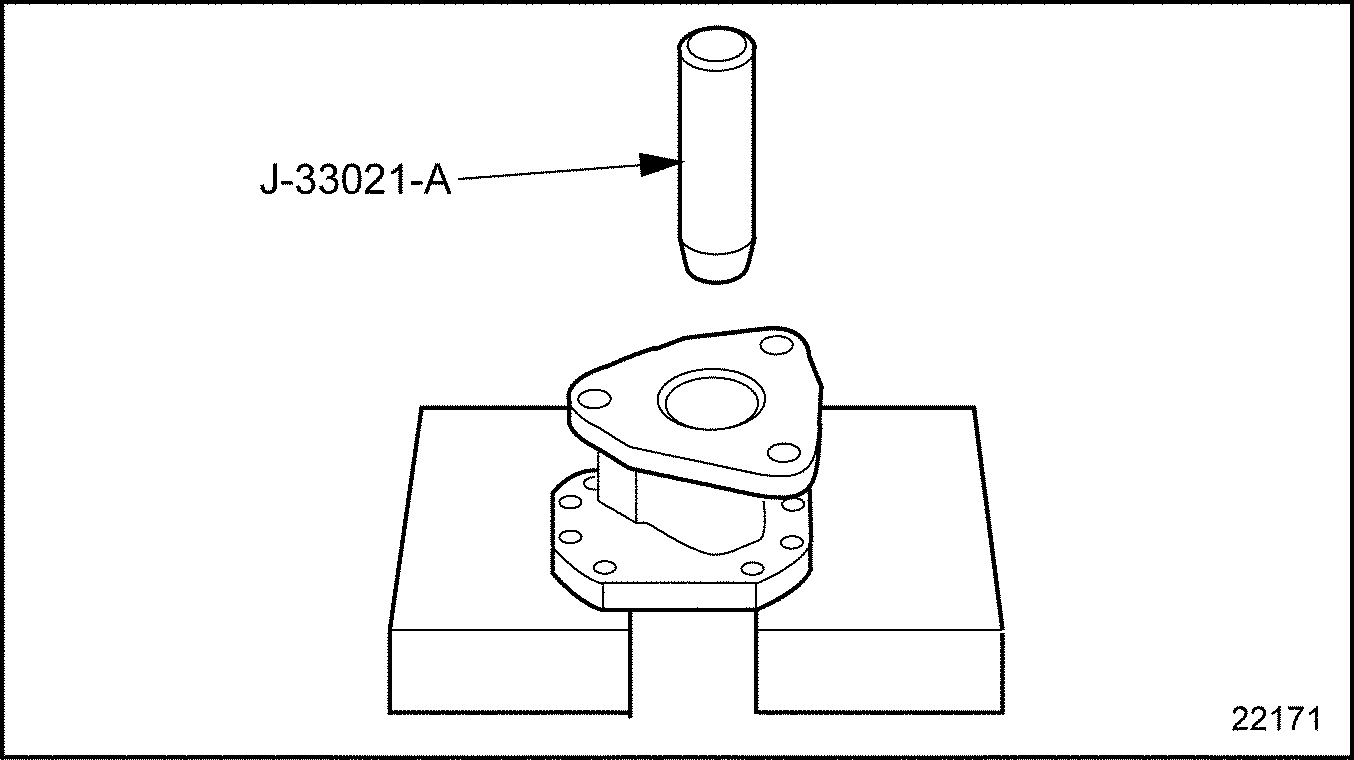
Figure 12. Seal Protector Installation
Note: The bearing numbers should always be against the tool during installation.

Figure 13. Drive Shaft Bearing Installation
Note: Hold the shaft in position with the gear against the pump body while handling to ensure the drive hub C-clip grooves do not contact the oil seals.
Note: When assembling pump, always use the same color foil gasket that was originally installed. Required gaskets for gear driven pump are listed in Table "Gasket Color vs. Gear Cavity Depth Chart (Gear Driven Pumps)" . Required gaskets for air compressor-driven pumps are listed in Table "Gasket Color vs. Gear Cavity Depth Chart (Air Compressor-Driven Pumps)" . If the color is unknown, measure the depth of the gear cavity in the pump cover and install the required gasket.
|
Gear Cavity Depth |
Color Gasket Used |
|
6.320-6.325 mm (0.24885 - 0.24905 in.) |
Blue |
|
6.326-6.331 mm (0.24906 - 0.24925 in.) |
Amber |
|
6.333-6.338 mm (0.24935 - 0.24955 in.) |
Gold |
|
6.339-6.344 mm (0.24956 - 0.24975 in.) |
Silver |
|
Gear Cavity Depth |
Color Gasket Used |
|
9.495-9.500 mm (0.37385-0.37405 in.) |
Blue |
|
9.501-9.505 mm (0.37406-0.37425 in.) |
Amber |
|
9.508-9.513 mm (0.37435-0.37455 in.) |
Gold |
|
9.514-9.518 mm (0.37456-0.37475 in.) |
Silver |
Note: When positioning the cover, the fuel inlet (stamped on cover) must be on the same side as the relief valve bore in the pump body.
Note: As the outside of the pump body and cover are not machined and to prevent possible distortion, ensure that only the pump cover is gripped and that the vise jaws do not contact both body and cover.
Install the fuel pump as follows:
NOTICE: |
|
It may be necessary to use a brass hammer or fiber mallet to seat the drive assembly. Be careful not to damage the O-ring on installation. |
Note: Effective with engine serial number 06R0549855 built on October 19, 1999, gear case-mounted fuel pumps have a splined drive shaft and splined gear coupling assembly. See Figure "Current Gear Case-Mounted Fuel Pump Assembly" . The former and current fuel pump and fuel pump drive assemblies are not interchangeable. Both current assemblies must be used together. Components of former and current pump assemblies and drive assemblies are not interchangeable.

Figure 14. Fuel Pump Drive Retaining Bolt Torque Sequence
|
PERSONAL INJURY |
|
To avoid injury before starting and running the engine, ensure the vehicle is parked on a level surface, parking brake is set, and the wheels are blocked. |
|
PERSONAL INJURY |
|
Diesel engine exhaust and some of its constituents are known to the State of California to cause cancer, birth defects, and other reproductive harm.
|
Perform the following steps for air compressor-driven fuel pump installation:
Note: New fittings have sealant already applied. If reusing fittings, coat the threads lightly with Loctite® Pipe Sealant, PT-7260 , or equivalent before installing. To prevent sealant from entering fuel system, do not apply it to the first two (2) threads of the fitting. Do not use teflon tape or paste on the fittings.
Note: When correctly positioned, the outlet fitting on the pump should be in approximately the 8 o'clock position when viewed from the rear, and the drain opening in the pump body facing down.
| Series 60 Service Manual - 6SE483 |
| Generated on 10-13-2008 |