Section 2.12 Fuel Filter Type for the Series 60G Engine
The primary (High Pressure) natural gas filter and secondary (Low Pressure) natural gas filter must be a coalescing 0.3 micron @ 99.97% efficiency fuel filter. Detroit Diesel recommended filters include the following:
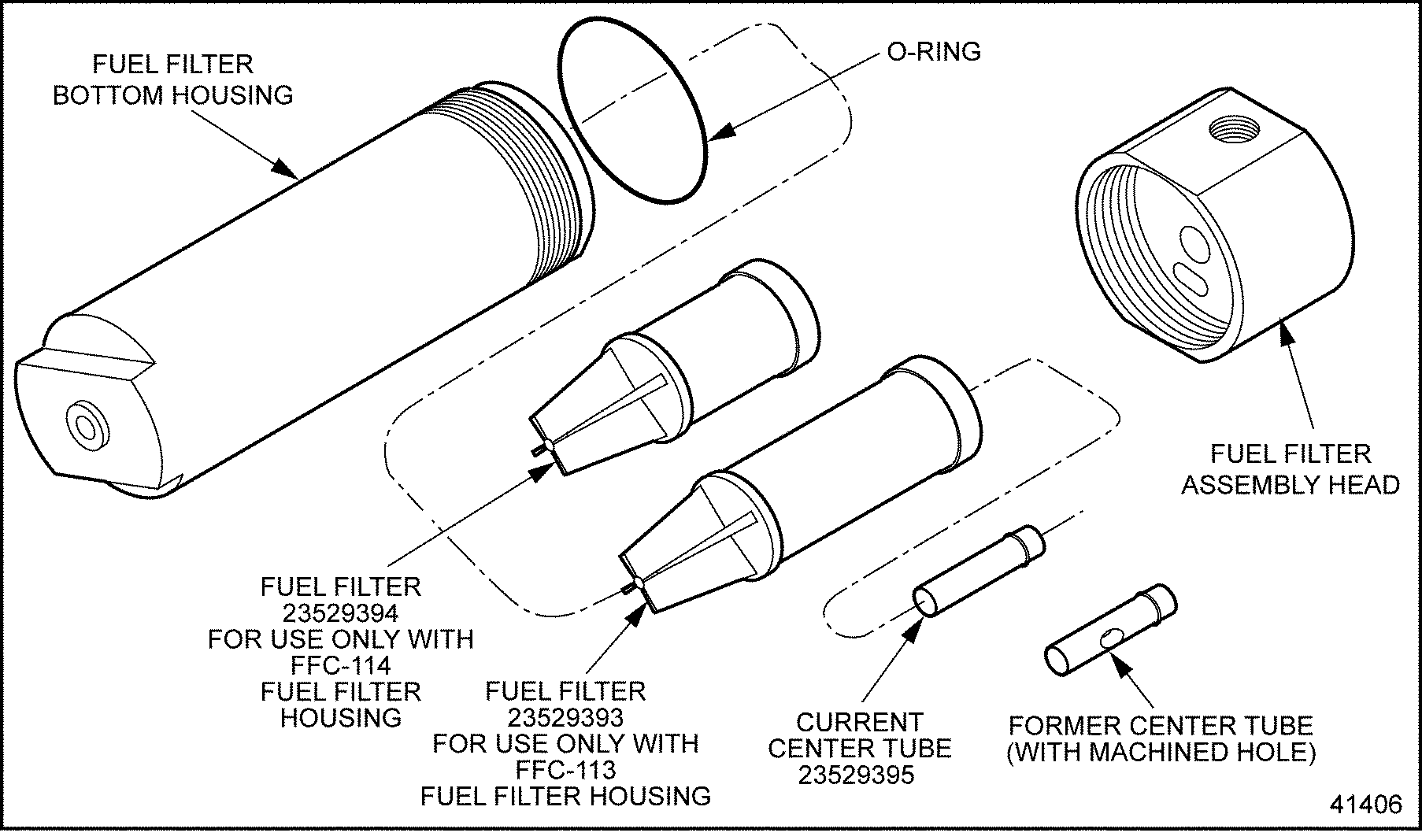
Racor — fuel filter 23529393 for use only with fuel filter housing FFC-113
Racor — fuel filter 23529394 for use only with fuel filter housing FFC-114
The high pressure gas filter is mounted between the manual shutoff valve and the DDEC controlled shutoff valve.
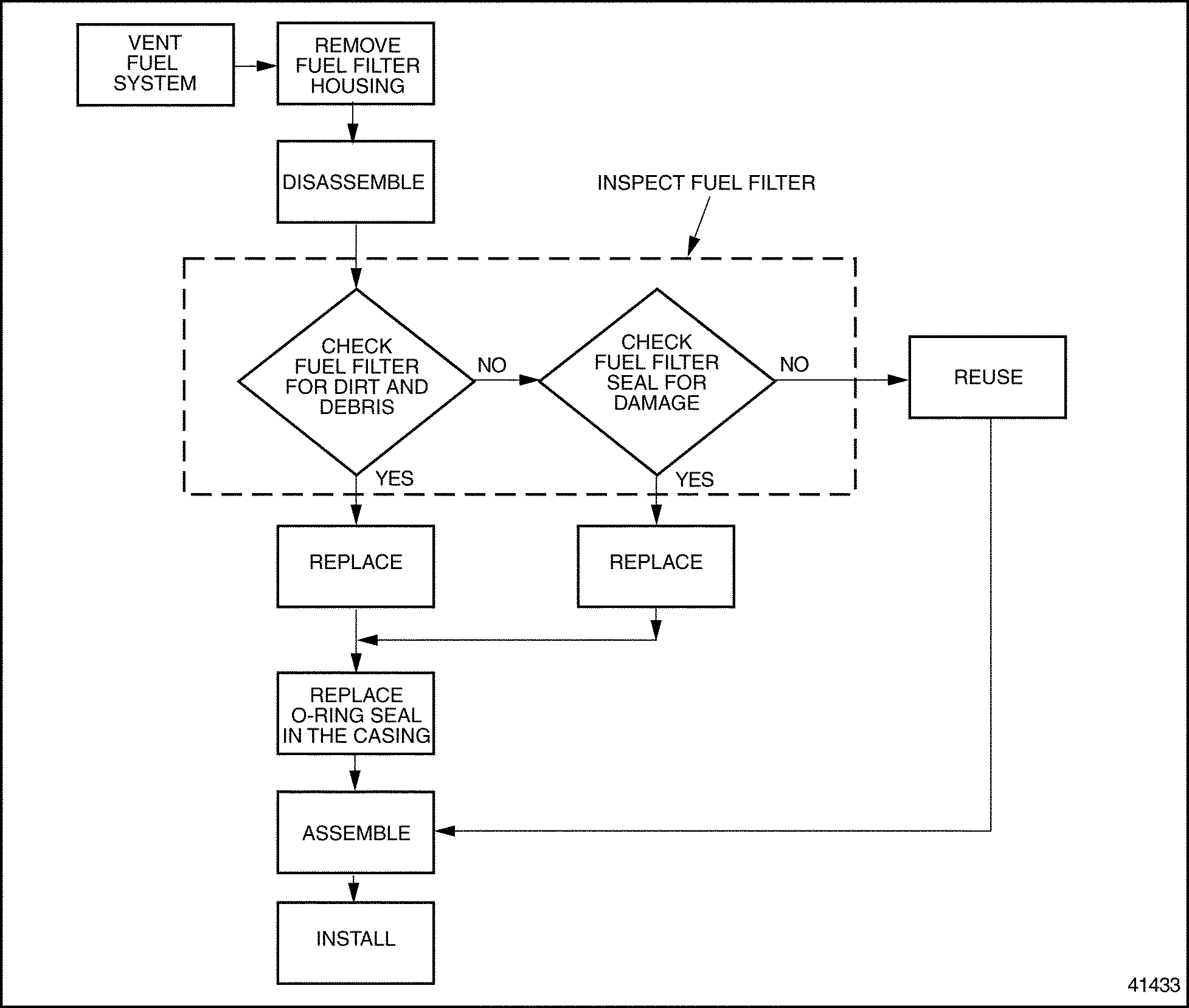
Drain coalescing fuel filters daily. Inspect natural gas fuel filter every 9,600 km (6,000 miles). Replace fuel filter if dirt, debris or foreign objects are present “inside” of the fuel filter. Also, replace if fuel filter seal is damaged.
Note: Oil saturation on the outside of the fuel filter is a NORMAL condition of the oil coalescing process.
Section 2.12.1 Replacement of Fuel Filter for the Series 60G Engine
To avoid injury from the explosion of natural gas, the engine must be kept in a well ventilated area away from open flames, sparks, and electrical resistance (heating) coils.
EXPLOSION
To avoid injury from an explosion of natural gas, the following precautions must be taken:
Do not smoke when installing or servicing the engine or fuel system.
Installation or servicing of natural gas equipment must only be conducted in well ventilated, natural gas-compatible areas. Do not install or service equipment in an enclosed area where ignition sources are present without first ensuring that an undetected gas leak may be safely vented without being ignited.
Bleed natural gas lines before installing or servicing any component connected to the fuel lines.
Natural gas fuel systems are pressurized. Relieve pressure from any fuel system component prior to installation or service of that component.
Use a combustible-gas detector. Liquefied natural gas (LNG) is odorless and cannot be detected by smell. Compressed Natural gas (CNG) may be odorless and may not be detected by smell.
Equipment fuel systems are the responsibility of the Original Equipment Manufacturer (OEM). Equipment fuel system guidelines must be closely adhered to when installing or servicing equipment. Refer to OEM guidelines specifying which maintenance procedures require venting of fuel lines and fuel tanks.
LNG systems are pressurized and contain extremely cold (-162°
C [-260°
F]) fluids. Contact the fuel supplier or OEM for LNG safety requirements. Contact with LNG may cause personal injury (freezing).
Vent systems on the equipment should be ducted to a safe area whenever equipment is in an enclosed area.
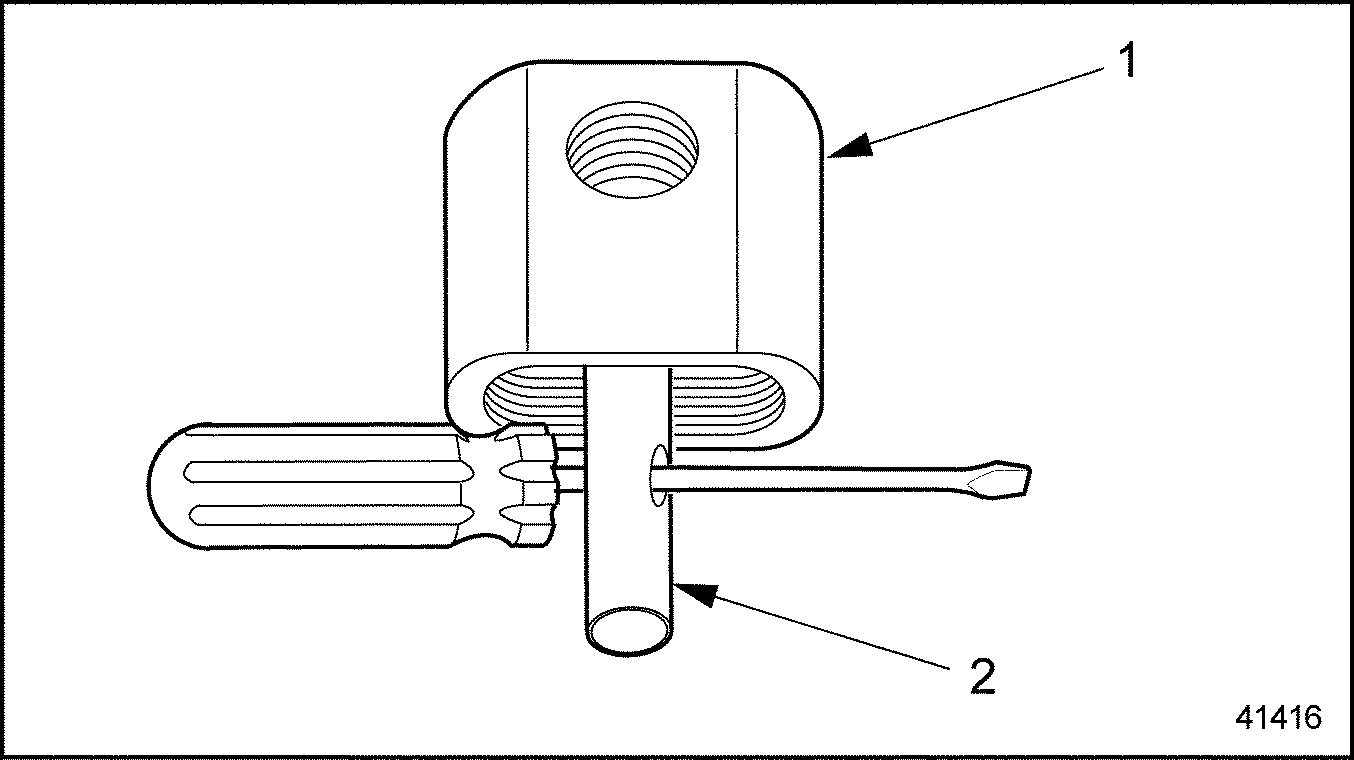
Remove the center tube by gently tapping the metal end of the screwdriver, down away from the filter head.
Note: Discard bypass spring and former center tube with holes.
Section 2.12.2.1 Inspection of Fuel Filter for the Series 60G Engine
Inspect the fuel filter as follows:
Inspect the inside of the fuel filter for dirt, debris, foreign objects.
If dirt, debris, foreign objects are found; replace the fuel filter.
If no damage if found, reuse the fuel filter.
Note: Oil saturation on the outside of the fuel filter is a NORMAL condition of the oil coalescing process.
Inspect the fuel filter seal on the fuel filter.
If the fuel filter seal is worn, ripped, torn; replace the fuel filter.
If no damage is found on the fuel filter seal ; reuse the fuel filter.
Section 2.12.3 Installation of Fuel Filter for the Series 60G Engine
NOTICE:
The fuel filter is directional. Gas from the regulator must be plumbed to the fuel filter inlet port and from the fuel filter outlet port to the compuvalve. This provides proper filtration.
EXPLOSION
To avoid injury from an explosion of natural gas, the following precautions must be taken:
Do not smoke when installing or servicing the engine or fuel system.
Installation or servicing of natural gas equipment must only be conducted in well ventilated, natural gas-compatible areas. Do not install or service equipment in an enclosed area where ignition sources are present without first ensuring that an undetected gas leak may be safely vented without being ignited.
Bleed natural gas lines before installing or servicing any component connected to the fuel lines.
Natural gas fuel systems are pressurized. Relieve pressure from any fuel system component prior to installation or service of that component.
Use a combustible-gas detector. Liquefied natural gas (LNG) is odorless and cannot be detected by smell. Compressed Natural gas (CNG) may be odorless and may not be detected by smell.
Equipment fuel systems are the responsibility of the Original Equipment Manufacturer (OEM). Equipment fuel system guidelines must be closely adhered to when installing or servicing equipment. Refer to OEM guidelines specifying which maintenance procedures require venting of fuel lines and fuel tanks.
LNG systems are pressurized and contain extremely cold (-162°
C [-260°
F]) fluids. Contact the fuel supplier or OEM for LNG safety requirements. Contact with LNG may cause personal injury (freezing).
Vent systems on the equipment should be ducted to a safe area whenever equipment is in an enclosed area.
Install the fuel filter as follows:
Place the fuel filter housing head on a flat surface facing up.
Insert new center tube in the center hole of the fuel filter housing head.
Note: Use a press to push the center tube into the hole of the fuel filter housing head. Center tube should seat flush at rolled portion of tube.
Install fuel filter housing head on mounting bracket with the two bolts torque to 40.67–47.45 N·m (30–35 lb·ft).
Install correct fuel filter element into fuel filter housing head.
Note: Ensure that the correct fuel filter is being used with the correct fuel filter housing unit. FFC-113 and FFC-114 are not
interchangeable. Fuel filter 23529393 cannot be used in the FFC-114 fuel filter housing; and fuel filter 23529394 cannot be used in the FFC-113 fuel filter housing. Fuel filter assemblies are listed in Table
"Former and Current Part Numbers for the Fuel Filter Center Tube"
.
Fuel Filter Housing
Former Fuel Filter Part Number
Current Fuel Filter Part Number
FFC-113
23528074
23529393*
FFC-114
23528074
23529394*
Table 7. Former and Current Part Numbers for the Fuel Filter Center Tube
* A new center tube (P/N 23529395) must
be installed on the current FFC-113 and FFC-114 fuel filters. Discard former center tube with hole.
Insert the O-ring and install bottom fuel filter housing and torque to 33.90–47.45 N·m (25–35 lb·ft).