
On vehicle engines, a CAC (charge air cooler) is normally mounted ahead of the cooling system radiator. The compressed air leaving the turbocharger is directed through the CAC before it goes to the air inlet side of the intake manifold. See Figure "Typical Charge Air Cooler" for CAC Water Pump.
Figure 1. Typical Charge Air Cooler
The CAC is used to reduce the temperature of the compressed air leaving the turbocharger before it reaches the intake manifold. This permits a more dense charge of air to be delivered to the engine.
Cooling is accomplished by incoming air flowing past the tubes and fins of the charge air cooler. The compressed intake charge flowing inside the CAC core transfers the heat to the tubes and fins where it is picked up by the incoming outside air (vehicle engines). See Figure "Radiator—mounted Charge Air Cooler Cross-section" .

Figure 2. Radiator—mounted Charge Air Cooler Cross-section
On diesel engines, flexible rubber couplings and hose clamps are used to secure the ductwork to the turbocharger, the CAC inlet and outlet, and the intake manifold.
Ductwork is used to transfer the air from the turbocharger outlet to the CAC, and from there to the intake manifold. See Figure "Radiator—mounted Charge Air Cooler and Related Parts (Series 60 Diesel Engine)" .

|
1. Coupling Hose Clamp |
4. Charge Air Cooler |
|
2. Charge Air Cooler Outlet Duct |
5. Turbocharger |
|
3. Charge Air Cooler Inlet Duct |
6. Coupling Hose Clamp |
Figure 3. Radiator—mounted Charge Air Cooler and Related Parts (Series 60 Diesel Engine)
Refer to the OEM guidelines for CAC repair and replacement procedures.
Refer to the OEM guidelines for CAC service procedures.
The CAC system must be routinely inspected for broken hoses, loose clamps and dirty/obstructed coolers. Damage to any of these components or obstructions require immediate repairs.
 PERSONAL INJURY |
|
To avoid injury while performing the test or procedure, wear adequate eye, face protection, and heat-resistant gloves. |
Inspect the CAC system as follows:
Use the charge air cooler tester (J–41473) to test cooler for leaks. See Figure for component parts

|
1. Gauge |
6. Bleed Valve |
|
2. Safety Straps |
7. Gauge Quick Disconnect |
|
3. Gauge Coupler |
8. Air Regulator Valve |
|
4. Quick Disconnect Fitting |
9. Air Shutoff Valve |
|
5. Bleed-off Coupler |
10. Pressure Relief Valve |
Figure 4. Charge Air Cooler Tester (J–41473)
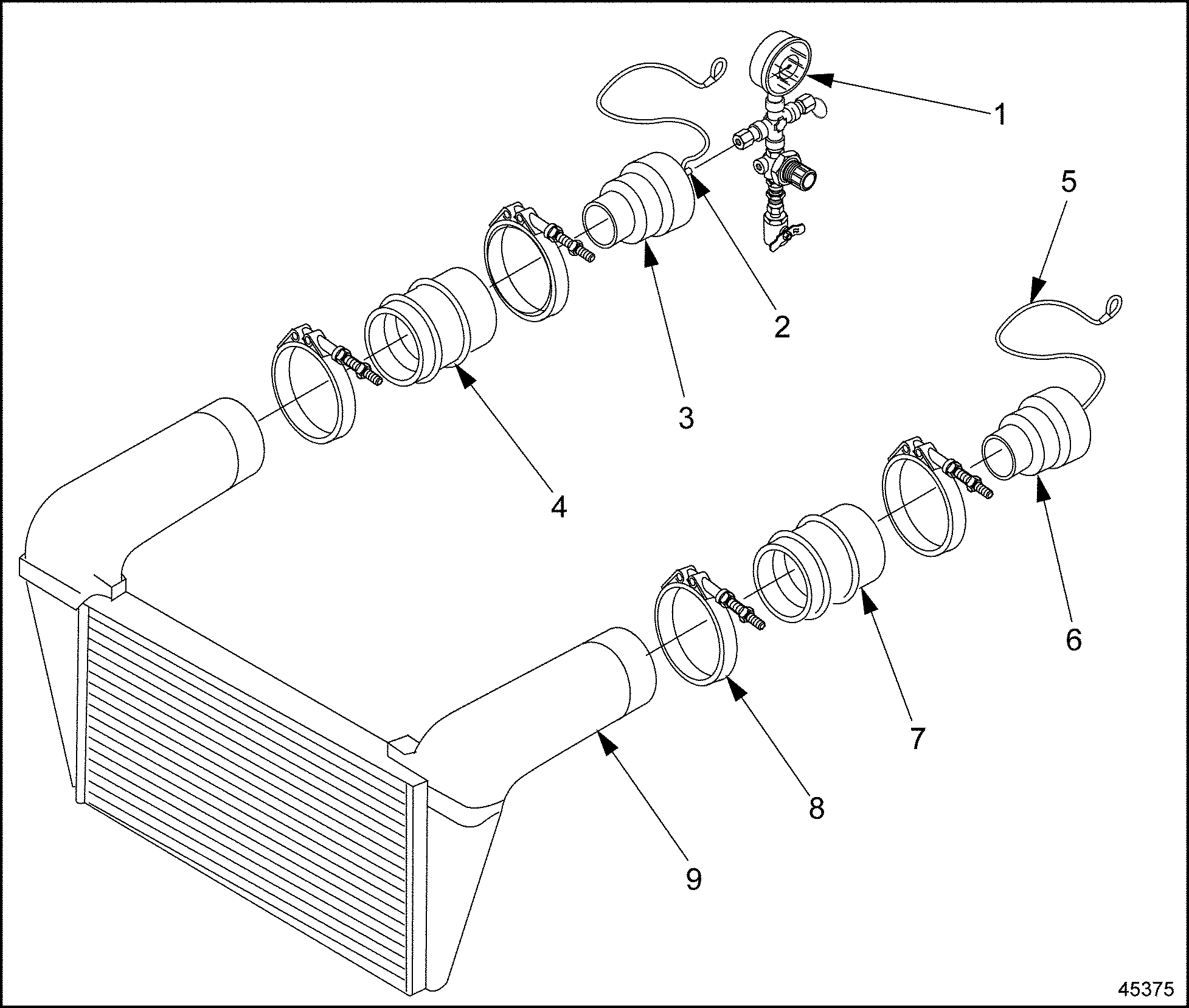
Perform the following to pressure test the charge air cooler:
|
1. Gauge/Regulator Assembly |
6. Bleed-off Coupler |
|
2. Quick Disconnect Fitting |
7. Charge Air Cooler Hose (Cold Side) |
|
3. Gauge Coupler |
8. Clamp |
|
4. Charge Air Cooler Hose (Hot Side) |
9. Charge Air Cooler |
|
5. Safety Strap |
Figure 5. Charge Air Cooler and Tester (J-41473)
|
PRESSURIZED AIR AND FLYING PARTICLES |
|
To avoid injury to eye or face, wear a face shield or goggles when conducting a pressure test. |
When a turbocharger failure occurs, debris and oil are deposited into truck components. It is necessary to properly clean the engine and related components to ensure additional damage does not occur.
|
PERSONAL INJURY |
|
To avoid injury before starting and running the engine, ensure the vehicle is parked on a level surface, parking brake is set, and the wheels are blocked. |
|
NOTICE: |
|
Failure to remove residual lubricating oil from air intake passages may allow the oil to act as an external fuel source at engine start- up. This can cause a sudden engine overspeed condition, which may result in severe engine damage. |
 PERSONAL INJURY |
|
To avoid injury, always wear adequate safety equipment. |
To clean engine and related components perform the following procedure:
|
EYE INJURY |
|
To avoid injury from flying debris when using compressed air, wear adequate eye protection (face shield or safety goggles) and do not exceed 276 kPa (40 psi) air pressure. |
|
PERSONAL INJURY |
|
To avoid injury before starting and running the engine, ensure the vehicle is parked on a level surface, parking brake is set, and the wheels are blocked. |
|
NOTICE: |
|
Failure to remove residual lubricating oil from air intake passages may allow the oil to act as an external fuel source at engine start- up. This can cause a sudden engine overspeed condition, which may result in severe engine damage. |
Refer to the OEM guidelines for CAC installation procedures.
When installation is completed, refer to "12.7 Engine Run-in Instructions" for engine test.
| Series 60 Service Manual - 6SE483 |
| Generated on 10-13-2008 |