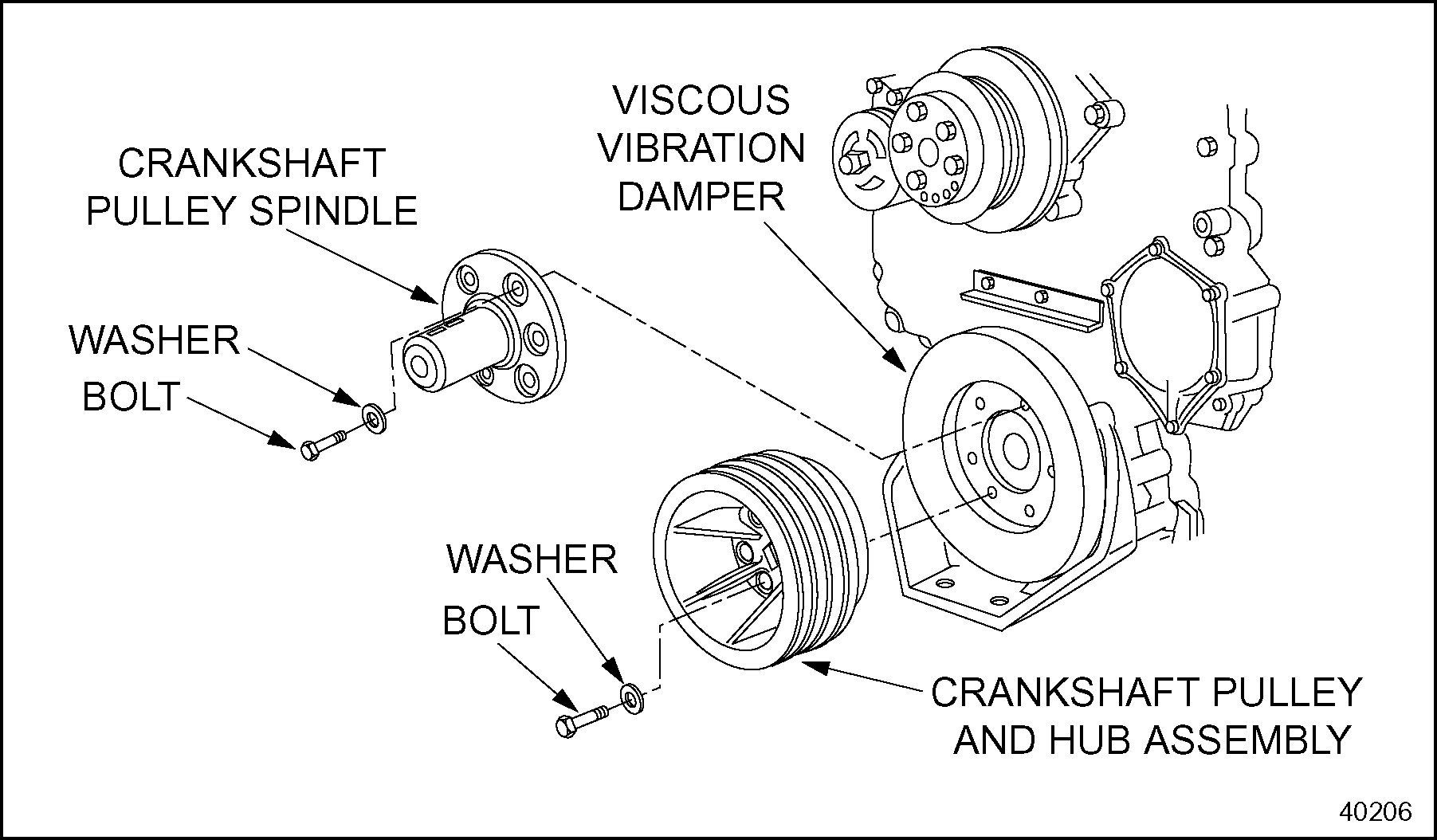
A viscous type vibration damper is mounted on the front end of the crankshaft to reduce torsional vibrations to a safe value. See Figure "Viscous Vibration Damper Mounting with Crankshaft Pulley or Crankshaft Pulley and Hub Assembly with Spindle" .
Figure 1. Viscous Vibration Damper Mounting with Crankshaft Pulley or Crankshaft Pulley and Hub Assembly with Spindle
Prior to April 1993, 11.1 liter engines with less than 320 hp (238 kW) were equipped with a 313.4 mm (12.34 in.) damper and 11.1 liter engines with 320 hp (238 kW) or more were equipped with a 342.9 mm (13.5 in.) damper, and all 12.7 liter engines, were equipped with a 342.9 mm (13.5 in.) damper.
Beginning in April 1993, all Series 60 engines are built with a 342.9 mm (13.5 in.) damper.
The viscous damper assembly consists of a sealed outer shell, an internal flywheel and a quantity of highly viscous fluid. See Figure "Viscous Vibration Damper Detail" .

|
1. Crankshaft |
3. Damper Shell |
|
2. Viscous Fluid |
4. Internal Flywheel |
Figure 2. Viscous Vibration Damper Detail
A properly designed and installed safety shield protects the damper from damage, prevents direct physical contact with the damper during engine operation, and significantly reduces the potential for damper-related personal injury.
Detroit Diesel Corporation does not manufacture, sell or install vibration damper safety shields due to the wide variety of installations in which Detroit Diesel engines are applied. Space restrictions in these numerous applications make it necessary to design an appropriate type of shield for each installation.
The responsibility for designing and installing properly shaped and constructed safety shields, therefore, rests with the OEM (Original Equipment Manufacturer), distributor, or other fabricator designing or manufacturing products in which they apply Detroit Diesel engines.
During operation, the outer shell, which is firmly attached to the crankshaft, turns at the same speed as the crankshaft, its motion being transferred to the flywheel through the fluid within the shell. Since "fluid-drive" is more or less inefficient with frequent speed changes, considerable flywheel slippage will take place as the power impulses are transmitted through the crankshaft. In this type of operation, the slippage is desirable since the acceleration and deceleration of the flywheel in the damper lessens the vibration amplitude, reducing its effects to a level harmless to the engine.
To determine if repair is possible or replacement is necessary, perform the following procedure. See Figure "Flowchart for Repair or Replacement of Crankshaft Damper" .

Figure 3. Flowchart for Repair or Replacement of Crankshaft Damper
Precleaning is not necessary.
 PERSONAL INJURY |
|
To avoid injury from the projection of tools or other objects that may fall on or behind the vibration damper of an engine, always check and remove these items before starting the engine. |
Remove crankshaft vibration damper as follows:

Figure 4. Flywheel Lock
Note: It may be necessary to bar the engine over (using the square hole in the middle of the crankshaft pulley or the center bolt when the pulley and hub assembly with spindle is used) so that the tool center screw is exactly between two teeth.
NOTICE: |
|
Use care when removing the crankshaft pulley as the vibration damper may come off. If the damper is allowed to fall, internal damage to the damper will result. |
NOTICE: |
|
Do not pound with a hammer or pry with other tools to remove the viscous damper from the crankshaft, since the outer shell may be dented and cause the flywheel to turn at the same speed as the outer shell. This renders the damper ineffective. The damper CANNOT be repaired. |
Inspect the vibration damper as follows:
NOTICE: |
|
Dents may render the damper in effective. |

Figure 5. Damper and Crankshaft Contact Surfaces
NOTICE: |
|
A loose engine mount could lead to damage of the vibration damper by allowing the engine to move slightly during operation. |
Note: It is good practice to periodically inspect the engine mounts to be sure they are not loose, cracked or deteriorated.
Install the crankshaft vibration damper as follows:
Note: It may necessary to bar the engine over using barring tool (J–36237) so that the tool center screw is exactly between two teeth.
NOTICE: |
|
Crankshaft pulley and spindle mounting bolts are considered single-use items and must not be reused. Always use new bolts when mounting the crankshaft pulley or spindle. Reusing bolts may result in excessive bolt stretch during installation, leading to loss of bolt torque and loosening during engine operation, which may cause severe engine damage. |
| Series 60 Service Manual - 6SE483 |
| Generated on 10-13-2008 |