
The bull gear and camshaft idler gear assembly is centrally located beneath the gear case cover. The larger bull gear is directly driven by the crankshaft timing gear. The bull gear directly drives all of the gear-driven engine accessories (except the oil pump), meshing with drive gears for the fuel pump drive, air compressor drive and power steering pump (if so equipped), raw water pump (if so equipped), water pump and accessory and alternator drive. See Figure "Engine Gear Train" .
Figure 1. Engine Gear Train
The smaller camshaft idler gear is located behind the bull gear on the same carrier, and turns at the same speed as the bull gear. The camshaft idler gear drives an adjustable idler gear, mounted on a separate hub in the gear case. The adjustable idler gear drives the camshaft drive gear. The gear ratio of each gear in relationship to the crankshaft timing gear is shown directly below the gear title.
The bull gear and camshaft idler gear are a press-fit to the bull gear and camshaft idler gear carrier. See Figure "Bull Gear and Related Parts" .

|
1. Woodruff Key |
8. Snap Ring, Inner |
|
2. Camshaft, Idler Gear |
9. Snap Ring, Outer |
|
3. Bearing Race, Outer |
10. Bearing, Outer |
|
4. Spacer Ring, Small |
11. Spacer Ring, Large |
|
5. Hub |
12. Carrier |
|
6. Bearing, Inner |
13. Bull Gear |
|
7. Bearing Race, Inner |
14. Thread Nut, Left Hand |
Figure 2. Bull Gear and Related Parts
Both gears are keyed to the carrier by the same key. For units built prior to 6R11886, a spacer ring fits in a groove in the carrier between the bull gear and the camshaft idler gear. For units built after 6R11887, this spacer was incorporated in the carrier. The carrier is supported by two tapered roller bearing assemblies that ride on a hub bolted to the engine block by four bolts. A selective-size spacer between the two bearing assemblies is used to obtain the correct bearing preload.
Note: The bull gear and camshaft idler gear assembly is retained to the hub by a left-hand threaded nut.
The camshaft must be in time with the crankshaft timing gear. Since there are three gears between them, timing marks have been stamped or etched on the face of the gears to facilitate correct gear train timing. Refer to "1.24.2.1 Check Engine Timing" for gear train timing procedures. See Figure "Engine Gear Train and Timing Marks" .
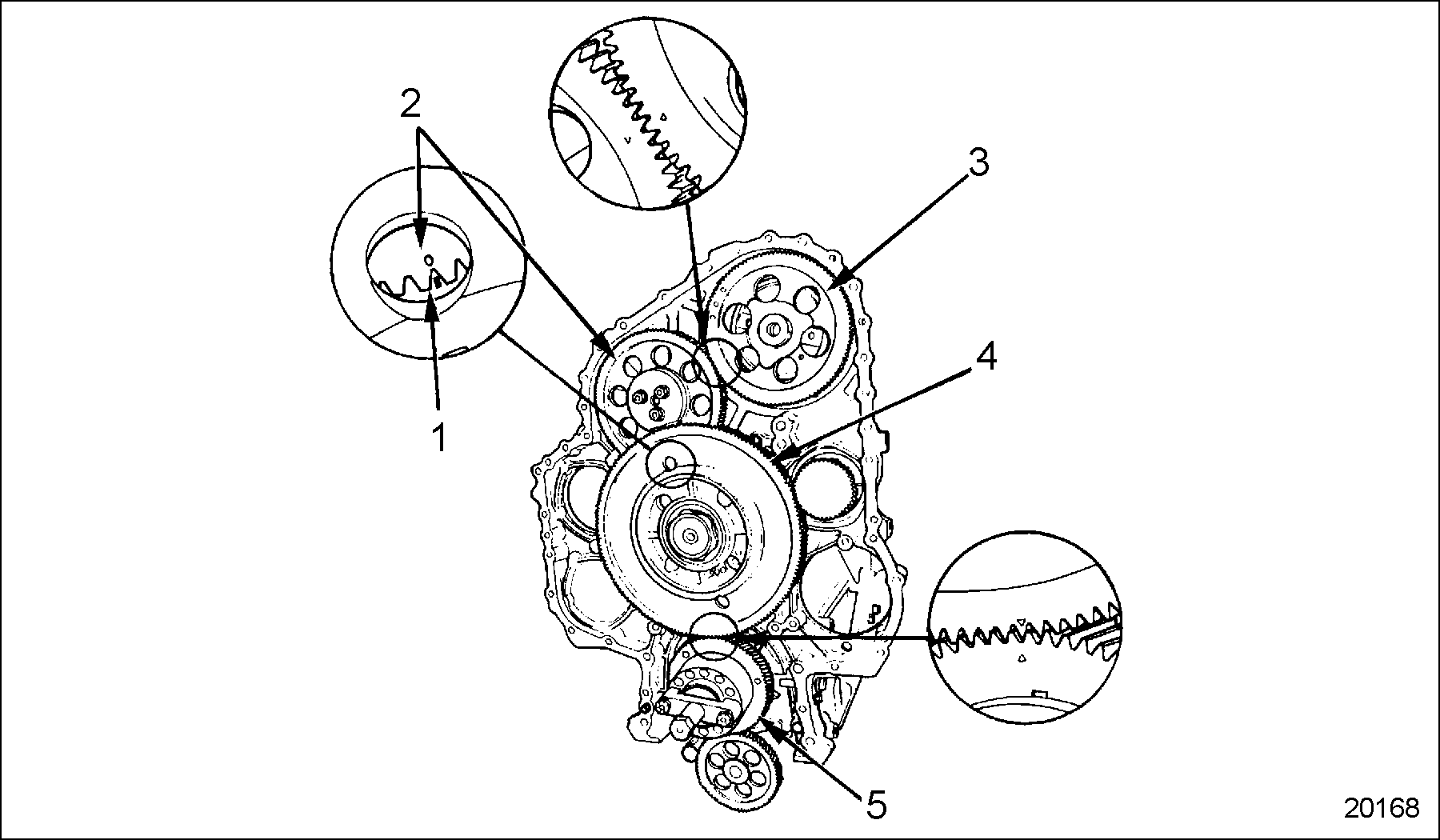
|
1. Idler Gear, Camshaft |
4. Bull Gear |
|
2. Idler Gear, Adjustable |
5. Timing Gear, Crankshaft |
|
3. Drive Gear, Camshaft |
|
Figure 3. Engine Gear Train and Timing Marks
The backlash between the various mating gears in the gear train should be 0.051-0.229 mm (0.002 -0.009 in.), and should not exceed 0.305 mm (0.012 in.) backlash between worn gears. Refer to "1.24.2.1 Check Engine Timing" .
Note: All gear lash measurements should be taken with engine in an upright position.
The bull gear and camshaft idler gear assembly is pressure-fed lubricating oil through two holes in the bull gear recess area of the engine block. See Figure "Bull Gear and Camshaft Idler Gear Lubricating Oil Hole Locations" .

Figure 4. Bull Gear and Camshaft Idler Gear Lubricating Oil Hole Locations
These two holes are drilled into a main oil gallery. An internal oil passage, cast into the bull gear and camshaft idler gear hub relief at the rear of the hub indexes with these two oil holes to supply oil through a drilled passage to the two roller bearing assemblies.
To determine if repair or replacement of the bull gear and camshaft idler gear assembly is necessary, perform the following procedure. See Figure "Flowchart for Repair or Replacement of Bull Gear and Camshaft Idler Gear Assembly" .

Figure 5. Flowchart for Repair or Replacement of Bull Gear and Camshaft Idler Gear Assembly
Remove the bull gear and camshaft idler gear assembly as follows:

Figure 6. Bull Gear Guide Studs
NOTICE: |
|
Use care when removing the bull gear and camshaft idler gear assembly from the engine so that it does not come in contact with the oil seal contact surface of the crankshaft. If this sealing surface is scratched, an oil leak may result. |

Figure 7. Removing Bull Gear Assembly Retaining Bolts
Inspect the bull gear and camshaft idler gear assembly as follows:
 EYE INJURY |
|
To avoid injury from flying debris when using compressed air, wear adequate eye protection (face shield or safety goggles) and do not exceed 276 kPa (40 psi) air pressure. |
NOTICE: |
|
Care should be taken not to damage or dislocate the pin. The pin is installed at a set dimension which is used by the Synchronous Reference Sensor (SRS). Damage to pin will cause loss of engine performance. |
Inspect the SRS pin in the bull gear as follows. See Figure "SRS Pin Location" .

Figure 8. SRS Pin Location
NOTICE: |
|
Do NOT reuse or readjust a pin once it has been installed. Damage to pin will cause loss of engine performance. |
Install bull gear assembly and camshaft assembly as follows:
Figure 9. Bull Gear Guide Stud Installation
Note: The crankshaft seal surface will be protected using J–35994 , when installing the bull gear and camshaft idler gear assembly to the cylinder block.
|
1. Idler Gear, Camshaft |
4. Bull Gear |
|
2. Idler Gear, Adjustable |
5. Timing Gear, Crankshaft |
|
3. Drive Gear, Camshaft |
|
Figure 10. Engine Gear Train and Timing Marks
Note: The injector and valve spring pressures will not allow easy rotation of the camshaft and adjustable idler gears. Therefore, it may be necessary to remove the rocker arm shaft assemblies to facilitate aligning all three sets of timing marks. Refer to "1.3.2 Removal of Rocker Arm Assembly" .
NOTICE: |
|
Use care when installing the bull gear and camshaft idler gear assembly to prevent damaging the crankshaft oil seal contact surface. |
| Series 60 Service Manual - 6SE483 |
| Generated on 10-13-2008 |