The drive gear is pressed on the drive shaft, which is supported inside the housing on two bushings. The driven gear is pressed on the driven gear shaft, which is supported inside the housing on two bushings.
1. Bolt
9. Shim
17. Relief Valve Housing
2. Bracket
10. Oil Pump Housing Cover
18. Oil Pump Outlet Elbow
3. Gasket
11. Seal Ring
19. Nut
4. Bushing
12. Oil Pump Outlet Tube
20. Washer
5. Drive Shaft and Gear Assembly
13. Spring Seat
21. Tube and Screen Assembly
6. Dowel
14. Spring
22. Driven Shaft and Gear Assembly
7. Gear
15. Relief Valve
8. Oil Pump Body
16. Pin
Figure 2. Lubricating Oil Pump and Parts - 1991 & Later Engines
1. Bolt (4)
12. Gasket
23. Valve, Relief
2. Bushing Cover (2)
13. Bolt
24. Bolt (2)
3. Cover, Oil Pump Housing
14. Dowel (Round)
25. Body, Relief Valve
4. Bolt (4)
15. Dowel Diamond
26. Gasket
5. Bolt (2)
16. Bushing (3)
27. Pipe, Outlet
6. Pipe and Screen Assembly, Inlet
17. Gear, Oil Pump Drive
28. Bolt (2)
7. Drive Shaft and Gear Assembly
18. Gasket
29. Body, Oil Pump
8. Washer (2)
19. Bolt (2)
30. Gasket
9. Nut (2)
20. Pin, Retaining
31. Driven Shaft and Gear Assembly
10. Bracket, Inlet Pipe
21. Spring, Relief Valve
11. Bolt (2)
22. Spring, Seat
Figure 3. Lubricating Oil Pump Parts (Pre-1991 Engines)
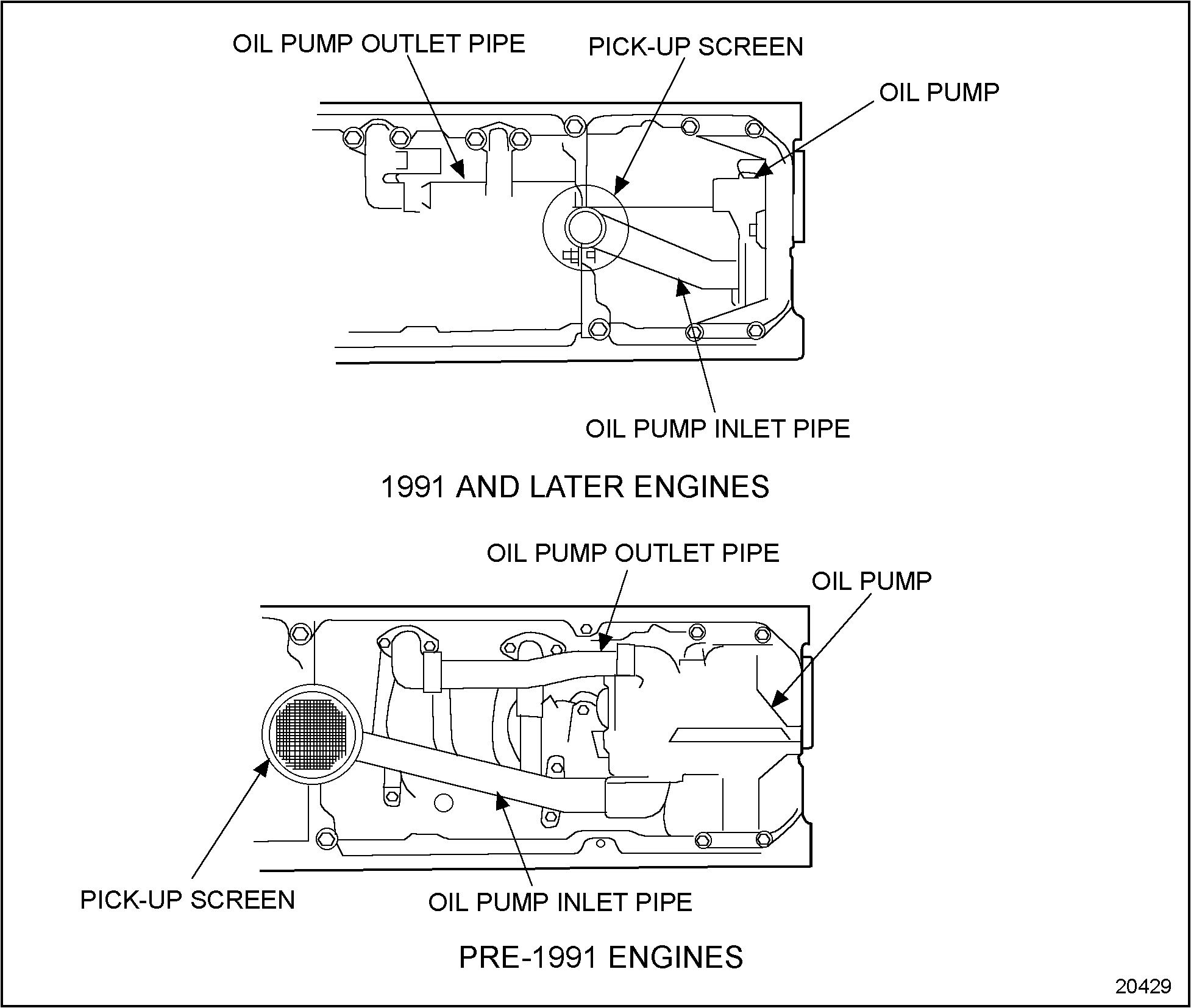
An inlet pipe assembly, with screen, is attached to the inlet opening in the pump body. The screen end of the inlet pipe assembly is supported with brackets mounted to the cylinder block.
The inlet screen is located below the oil in the pan and serves to strain out any foreign material which might damage the pump.
The thru-bolts must be loosened first to prevent twisting the oil pick-up tube. Failure to do this could cause eventual stress-crack damage at the pick-up tube to flange joints.
Loosen but do not remove the thru-bolts securing the oil pump bracket to the pick-up tube.
Remove the two bolts that secure the oil pump pick-up tube support bracket to the cylinder block.
Remove the two bolts securing the oil pump pick-up tube to the oil pump.
Tap the pick-up tube gently to loosen it from the gasket and remove the pipe.
Remove the two bolts securing the outlet pipe to the pump and cylinder block.
Tap the outlet pipe gently to loosen it from the gaskets and remove the pipe.
NOTICE:
If removing the oil pump from the vehicle, loosen the bolts; but leave them in place to prevent the pump from falling, before the mechanic removes the oil pump.
Remove the four bolts retaining the oil pump to the cylinder block.
If necessary, pry gently on the oil pump assembly to loosen it from the block.
Note: Remove and save the shims, if used, between the oil pump mounting feet and the cylinder block. The shims are used to adjust the oil pump drive gear-to-crankshaft timing gear lash.
Section 3.2.3 Disassembly of Oil Pump
Observe the position of all parts including the oil pick-up tube and outlet pipe during disassembly to facilitate reassembly of the pump.
Disassemble the oil pump as follows:
Remove the two bolts securing the oil pressure relief valve to the oil pump housing.
Tap the relief valve lightly to loosen it from the gasket and the oil pump housing (pre-1991 engines only).
Use a two-jaw puller to remove the oil pump drive gear from its shaft.
Remove the four oil pump cover bolts.
Remove the oil pump cover.
Remove the drive gear and shaft assembly, and the driven gear shaft and assembly from the oil pump housing.
Section 3.2.3.1 Inspection of Oil Pump
Inspect the oil pump as follows:
EYE INJURY
To avoid injury from flying debris when using compressed air, wear adequate eye protection (face shield or safety goggles) and do not exceed 276 kPa (40 psi) air pressure.
Wash all parts in clean fuel oil and dry them with compressed air.
Remove any gasket material from the oil pump housing at relief valve, inlet pipe and outlet pipe mating surfaces.
EYE INJURY
To avoid injury from flying debris when using compressed air, wear adequate eye protection (face shield or safety goggles) and do not exceed 276 kPa (40 psi) air pressure.
Clean the outlet and inlet pipe and screen assembly in clean fuel oil and blow dry with compressed air.
Measure the bushing clearance in the pump body and cover.
If the shaft-to-pump cover bushing clearance exceeds 0.089 mm (0.0035 in.), replace bushing.
If the shaft-to-pump cover bushing clearance is within 0.089 mm (0.0035 in.), reuse the bushing.
NOTICE:
The use of excessively worn gears will result in low engine oil pressure that, in turn, may lead to serious engine damage.
Visually inspect the oil pump gear. Check to see if the gear turns freely in the pump housing.
If the gear binds, replace it with a new gear.
If the gear does not bind, reuse the gear.
Visually inspect gear teeth on drive shaft bushing contact areas. Check for worn contact areas on gear teeth and drive shaft.
If the area is worn, replace gear and drive shaft with new parts.
If the area is not worn, reuse the parts.
Section 3.2.4 Assembly of Oil Pump (1991 and Later Engines)
Assemble the oil pump as follows:
Lubricate the drive shaft bushing with clean engine oil.
Position the oil pump assembly on a press, pump body down, supporting the drive shaft. The pump body should be free of the press bed supported by the pump gear contacting the bottom of the pump cavity.
Coat the bore of the drive gear with a light film of Lubriplate (or equivalent).
Position drive gear squarely on the end of the shaft.
Press the drive gear onto the shaft until a clearance of 1.00 mm (0.039 in.) is obtained between the inner face of the gear and the pump body. See Figure
"Oil Pump Drive Gear Installation"
.
Figure 5. Oil Pump Drive Gear Installation
Note: A minimum press load of 6.7 kN (1,506 lb) must be obtained when pressing the gear onto the shaft. When completed, an end play of 0.84-1.12 mm (0.033-0.044 in.) must be obtained.
Lightly coat the driven gear bushing with clean engine oil.
Insert the drive shaft and gear assembly into the pump body.
Position the oil pump assembly on a press, pump body down, supporting the drive shaft. The pump body should be free of the press bed supported by the pump gear contacting the bottom of the pump cavity.
Coat the bore of the drive gear with a light film of Lubriplate (or equivalent).
Position drive gear squarely on the end of the shaft.
Note: A minimum press load of 8.9 kN (2,000 lb) must be obtained when pressing the gear on the shaft. When completed, an end play of 0.25-0.51 mm (0.010-0.020 in.) must be obtained.
Lightly coat the driven gear shaft bushing with clean engine oil.
With a dial indicator mounted on the pump mounting surface, rotate the gear and check the gear run-out. The run-out specification is 0.08 mm (0.003 in.).
If run-out is within specifications, reuse the pump.
Section 3.2.6 Installation of Oil Pump
Install the oil pump to the cylinder block as follows:
NOTICE:
If shims were used between the pump mounting feet and the engine block and a new drive gear was NOT installed, the same shims (cleaned) or the same number of new (identical) shims should be installed. If necessary, adjust shims to obtain the proper clearance between gear teeth. However, if a new drive gear has been installed, a different number of shims may be required under the mounting feet. In either case, the pump must be tightened to the cylinder block BEFORE the clearance between the gear teeth is measured. Gear lash measurements must be done with the engine in the upright position.
Position the oil pump on the cylinder block so that the drive gear of the oil pump meshes with the crankshaft drive gear. The two dowels in the oil pump mounting feet should be positioned in the mating holes in the cylinder block.
Install the four bolts through the mounting feet of the pump into the cylinder block. Torque the bolts to 58-66 N·m (43-49 lb·ft) using the torque sequence shown. See Figure
"Oil Pump Bolt Torque Sequence"
.
Proper clearance between the crankshaft gear and the oil pump drive gear is 0.051-0.229 mm (0.002-0.009 in.).
Note: This gear clearance measurement must be done with the engine in upright position. When adjusting for gear tooth clearance by installing or removing shims, the same number of shims must be changed under each foot so that the pump will always be level on the engine block.
Remove or install shims as necessary to obtain proper gear lash. The insertion or removal of one 0.127 mm (0.005 in.) shim will change the gear tooth clearance by approximately 0.089 mm (0.0035 in.).
When attaching the pump outlet pipe to the oil pump housing and the cylinder block, none of the bolts should be tightened until all of the bolts have been started.
Install new gaskets and seals between the oil pump housing and outlet pipe and between the outlet pipe and cylinder block.
Torque the elbow-to-block bolts first then the elbow-to-pump bolts to 30-38 N·m (22-28 lb·ft).
Install a new gasket between the oil pump housing and pick-up tube.
Install and torque the two bolts, with washers attached, to 30-38 N·m (22-28 lb·ft).
NOTICE:
The thru-bolts must remain loose until last, to prevent twisting the oil pick-up tube. Failure to do this could cause eventual stress-crack damage at the pick-up tube to flange joints.
Install and torque the two pick-up tube support bracket-to-engine block bolts to 58-73 N·m (43-54 lb·ft).
Torque the two thru-bolts at the inlet pipe to support bracket to 58-73 N·m (43-54 lb·ft).
Recheck all bolts for tightness to ensure there will be no leaks in the oil pump and pipe mounting connections.