Figure 1. Water Pump Mounting (1991 and Later Model)
An impeller is pressed on one end of the stainless steel drive shaft. The other end of this shaft has internal threads, and a retaining bolt secures the water pump drive gear to the shaft. Two tapered roller bearing assemblies are used to support the shaft. See Figure
"Water Pump Details and Relative Location of Parts (Gear Case Mounted (GCM)"
.
An O-ring, located in a groove in the water pump housing, seals the water pump to the gear case. An O-ring, located under the water pump cover, seals the cover to the water pump housing. The water pump bearings are lubricated by splash oil through a passage from the front of the pump housing.
An oil seal is located behind the bearing assemblies, and a unitized, spring-loaded, face-type water seal is used behind the impeller. This seal prevents water from leaking down the shaft and into the gear case. It also prevents lubricating oil from entering the cooling system. The water and oil seals cannot be replaced without removing the water pump from the engine.
1. Retaining Bolt
11. Oil Seal
2. Washer
12. O-ring Seal
3. Gear, Water Pump Drive
13. Drain Cock
4. Snap Ring
14. Housing, Water Pump
5. Bearing Race
15. Pipe Plug, Water Pump Housing
6. Roller Bearing, Small
16. Water Seal
7. Spacer Rings (2)
17. Impeller
8. Roller Bearing, Large
18. O-ring, Water Pump Cover
9. Bearing Race
19. Water Pump Cover
10. Drive Shaft
20. Snap Ring, Water Pump Cover
Figure 2. Water Pump Details and Relative Location of Parts (Gear Case Mounted (GCM)
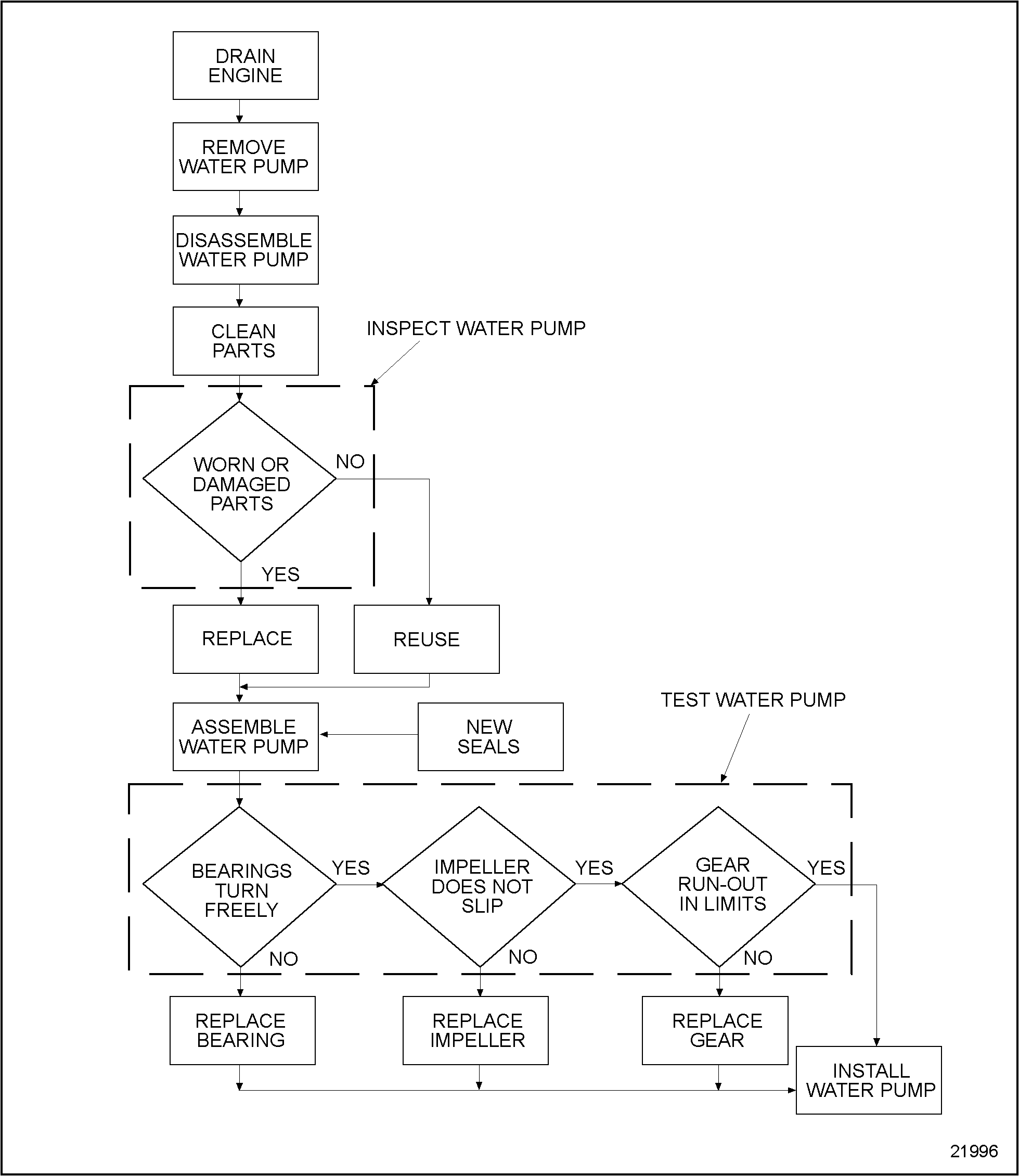
Section 4.2.1 Repair or Replacement of Water Pump (GCM)
Figure 3. Flowchart for Repair or Replacement of Water Pump (GCM)
Section 4.2.2 Draining and Removal of Water Pump (GCM)
Drain the cooling system as follows:
Open the drain cocks located at the right rear corner of the engine, at the bottom of the water pump and in the bottom of the thermostat housing.
Remove the water pump as follows:
Loosen the hose clamps and remove the coolant hoses from the water pump housing.
Loosen and remove the three water pump housing-to-gear case bolts. Remove the water pump from the engine by pulling it straight out of the gear case.
Section 4.2.3 Disassembly of Water Pump (GCM)
Disassemble the water pump as follows:
EYE INJURY
To avoid injury from flying parts when working with components under spring tension, wear adequate eye protection (face shield or safety goggles).
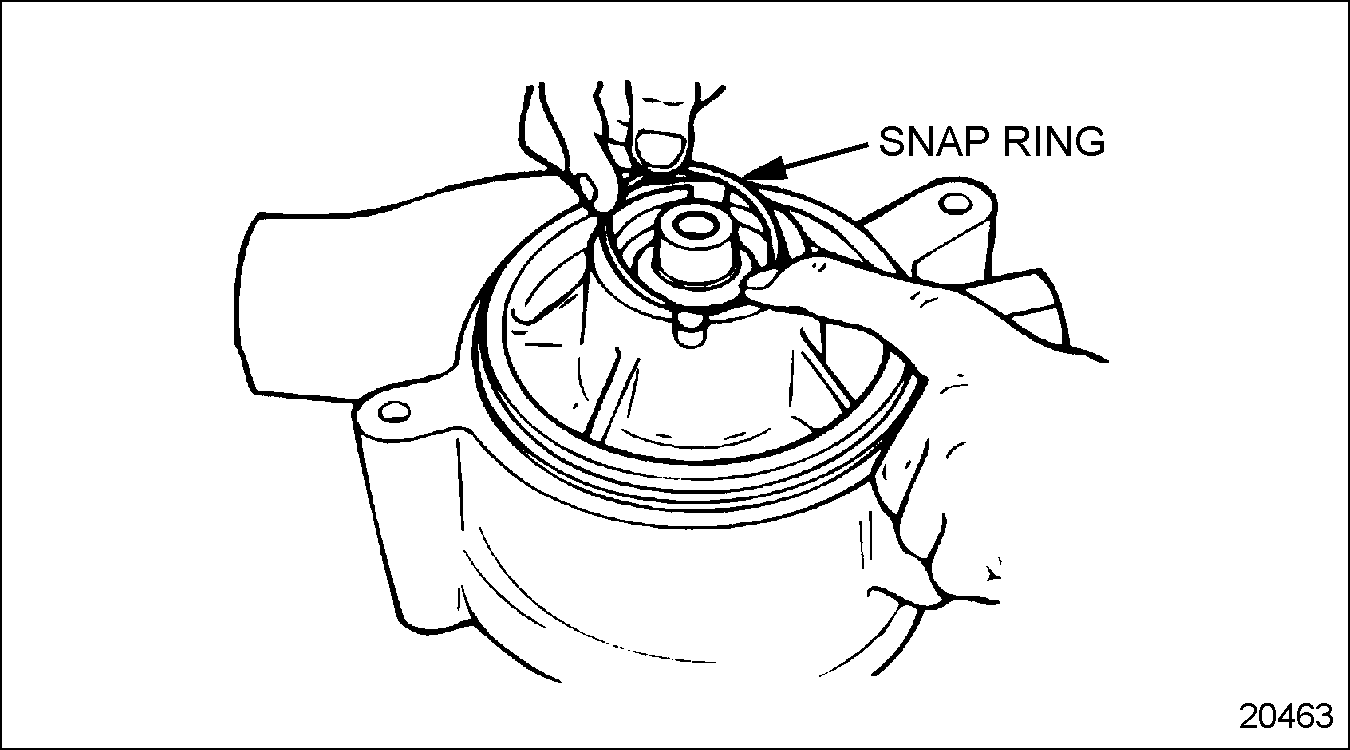
Remove water pump cover snap ring with snap ring pliers, (J–22380)
or equivalent. Remove water pump cover and seal ring.
NOTICE:
When clamping gears, use soft jaws on vise to prevent damage to the gear teeth.
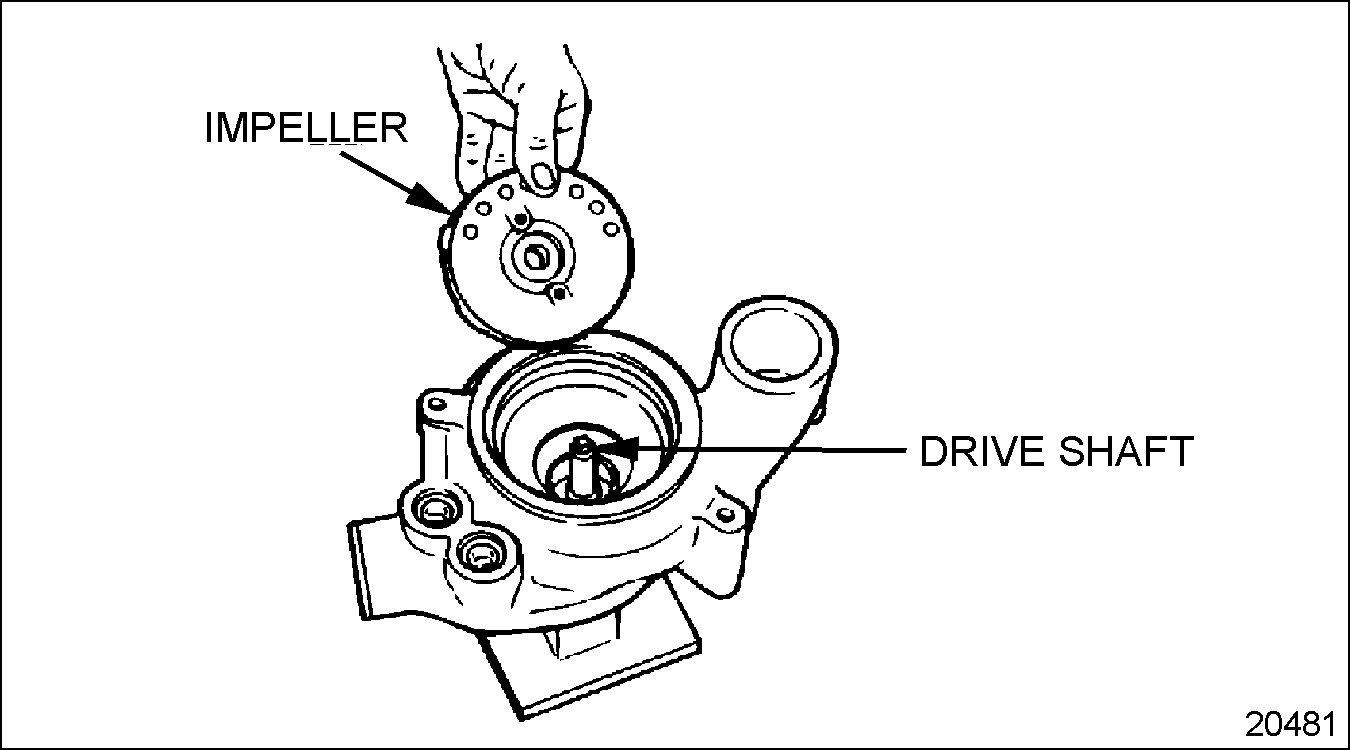
Clamp the water pump drive gear in a vise with the impeller facing up. Use a two-screw gear puller and remove the water pump impeller from the shaft, using the two threaded holes in the impeller.
Support the water pump housing, using steel blocks or plates; allow at least 76 mm (3 in.) of clearance between the pump housing and the press bed.
Press the drive shaft and bearings assembly out through the front (engine side) of the water pump housing, until both bearing races are clear of the housing.
Note: Once the bearing assemblies are pressed out of the water pump housing, they must be replaced with new assemblies.
NOTICE:
Do not allow brass drift to score housing bore when tapping out seals. A scored bore will cause coolant leaks and can damage engine.
CHEMICAL BURNS
To avoid injury from chemical burns, wear a face shield and neoprene or PVC gloves when handling fluoroelastomer O-rings or seals that have been degraded by excessive heat. Discard gloves after handling degraded fluoroelastomer parts.
Remove both the water and oil seals from the housing using a brass drift and hammer.
Support the drive shaft assembly on two steel blocks, at the bearing inner race.
Press the drive shaft out until it is clear of both bearing and race assemblies. Discard the used bearings, races, and the two spacer rings located between the bearing packs.
Section 4.2.3.1 Inspection of Water Pump (GCM)
Visually inspect the parts for cracks, wear or other damage. If parts are cracked, worn, or other damage is evident, replace damaged or worn parts. If no damage is found, reuse remaining components.
Section 4.2.4 Cleaning of Water Pump (GCM)
Clean the water pump as follows:
Wash all of the pump parts in clean fuel oil.
EYE INJURY
To avoid injury from flying debris when using compressed air, wear adequate eye protection (face shield or safety goggles) and do not exceed 276 kPa (40 psi) air pressure.
Dry the parts with compressed air.
Section 4.2.5 Assembly of Water Pump (GCM)
Assemble the water pump as follows:
Coat the bearing bores of the water pump housing and the drive shaft bearing surfaces with clean engine oil.
NOTICE:
Although the bearings are identical, the bearings and races are matched parts, and should be installed as they are removed from the box. Parts that are not matched will cause damage to the water pump.
The contact surface of the oil seal is coated with a special sealant. Do NOT remove this sealant before installing the oil seal. If sealant is removed, leakage can occur.
The drive shaft must be installed using the outer bearing race only. Any other attempt at installation may damage the bearings.
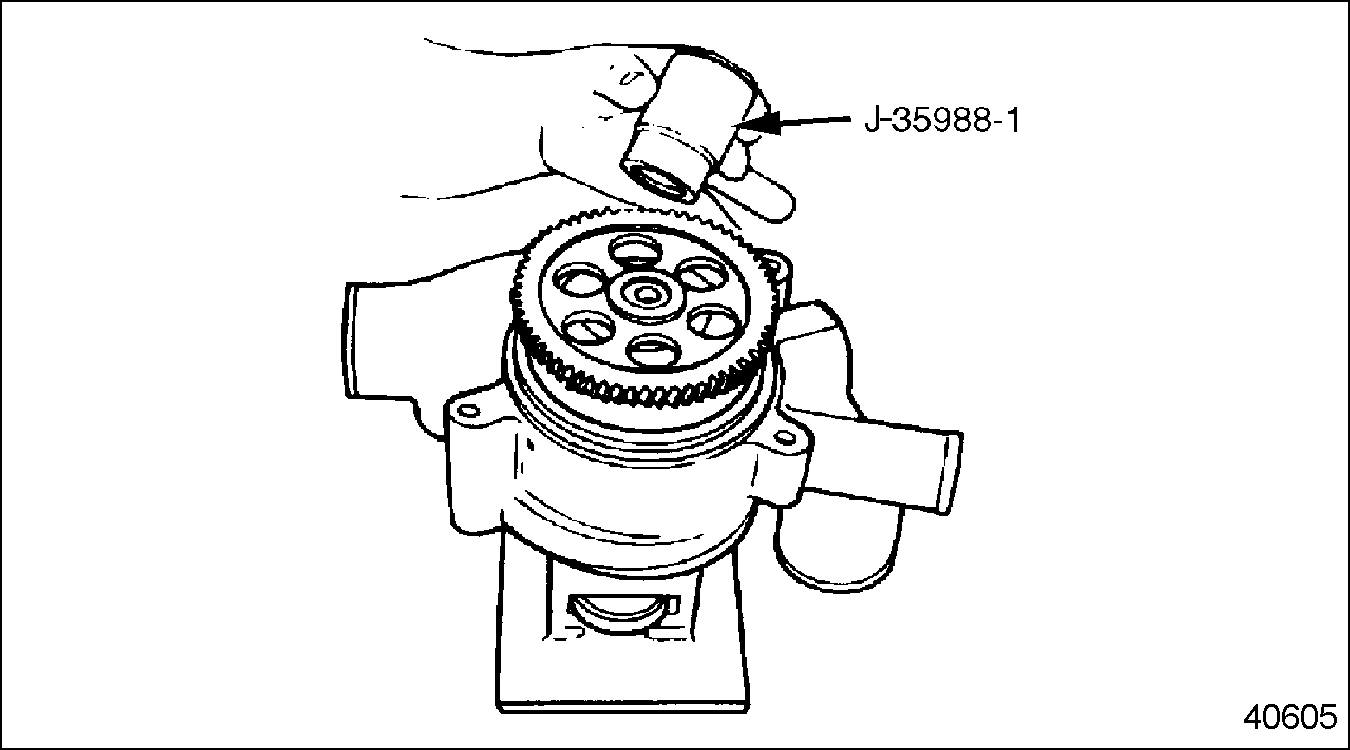
Figure 15. Drive Shaft Installation (GCM)
Press the drive shaft and bearing assembly into the water pump housing, using J–35988–1 (part of tool set J–35988–C)
until it is seated firmly against the shoulder in the housing.
Apply sealant sparingly. Use of excess sealant may result in seal failure due to contamination of the sealing faces, which may cause pump leakage.
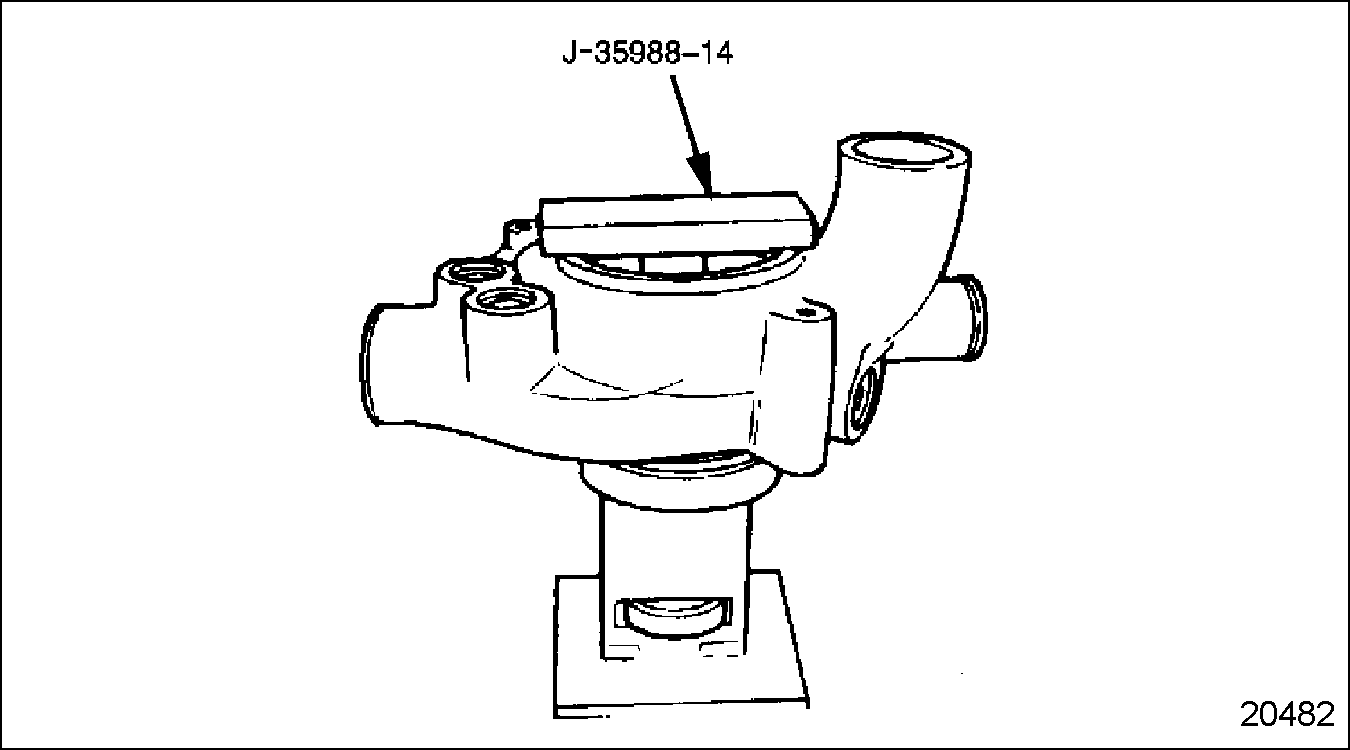
Turn the water pump housing over and check to make sure no residual sealant remains in the water seal bore or on the seal flange contact surface. Remove any residual sealant found in these areas. Working through the rear, apply a new coating of aviation Form-A-Gasket Number 3 or equivalent to the area where the water pump seal case contacts the pump body. See Figure
"Water Pump Housing Seal Bore (GCM)"
.
Detroit Diesel previously released a water pump coolant seal which required the use of seal installer (J–35517–1A, part of tool set J–35988–C)
. This seal went into effect with engine serial number 06R670637 thru 06R698567 for On-Highway applications, and can be used with both the former style (front mounted) water pump as well as the current style (gear case mounted) water pump. The former coolant seal is no longer serviced. The new coolant seal is used after engine serial number 06R698567 for On-Highway applications. The new coolant seal requires the use of seal installer (J–35988–19)
; do not use seal installer (J–35517–1A)
with the new coolant seal.
Press the water seal into the housing until the flange of the seal case contacts the water pump housing a full 360 degrees. Remove J–35988–19 (part of tool set J–35988–C)
.
During this procedure, the drive shaft must be supported by the extension tool (J–35988–3A, part of tool set J–35988–C)
. Failure to support the drive shaft while installing the impeller may result in bearing damage.
If the gear has a press fit, turn the adjustor wheel to raise the extension (J–35988–3A, part of tool set J–35988–C)
until it contacts and supports the shaft. This is necessary to prevent damage to the bearings when pressing the gear onto the shaft.
Figure 24. Water Pump Drive Gear Installation (GCM)
Install the water pump drive gear to the drive shaft.
Note: The water pump drive gear may have a slip fit. This is due to manufacturing tolerances and is acceptable.
Figure 25. Water Pump Drive Gear Installation (GCM)
Install the retaining bolt and washer. Hold the square end of the drive shaft and torque the retaining bolt to 101-126 N·m (75- 93 lb·ft).
Section 4.2.6.1 Assembly Integrity Test
Verify the assembly integrity as follows:
Turn the pump over and install the water pump impeller slip and lash tester (J–35687–1)
into the tapped holes provided in the impeller.
NOTICE:
When clamping gears, use soft jaws on vise to prevent damage to the gear teeth.
Clamp the water pump drive gear in a vise, with the impeller facing up.
Using a 1/2 in. drive torque wrench in the hole provided in the center of the slip and lash tester (J–35687–1)
, apply 68 N·m (50 lb·ft) torque in either direction. The impeller must withstand 68 N·m (50 lb·ft) torque without slipping.
If the torque specification is satisfied, reuse the part.
Using a dial indicator with magnetic base, measure the total run-out of the water pump drive gear at four places, at 90° intervals. Maximum allowable run-out is 0.0635 mm (0.0025 in.). See Figure
"Measuring Water Pump Drive Gear Runout (GCM)"
.
Figure 26. Measuring Water Pump Drive Gear Runout (GCM)
Remove dial indicator and magnetic base.
Section 4.2.7 Assembly of Water Pump (GCM)
Continue assembly of the water pump as follows:
EYE INJURY
To avoid injury from flying parts when working with components under spring tension, wear adequate eye protection (face shield or safety goggles).
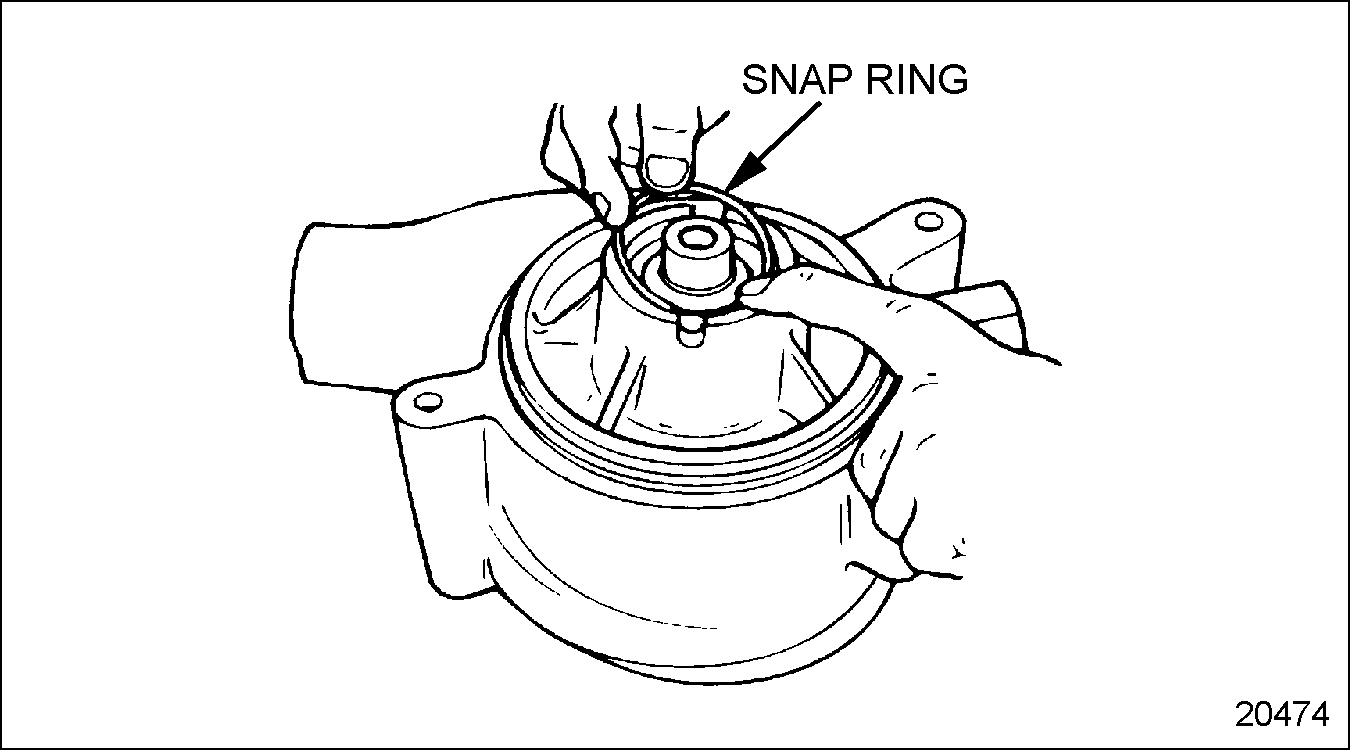
Install seal ring, water pump cover, and snap ring with the beveled side of snap ring facing out.
Tap around the inside rim of the snap ring with a brass drift and hammer to seat snap ring in groove fully.
Section 4.2.8 Installation of Water Pump (GCM)
Install the water pump as follows:
Coat the water pump seal ring with clean engine oil.
Install the seal ring to the groove in the water pump housing.
Coat the water pump drive gear with clean engine oil.
Install the water pump to the engine, meshing the water pump drive gear with the bull gear.
Install the three water pump housing-to-gear case bolts. Tighten the bolts alternately and evenly to draw the water pump straight into the engine. Torque the bolts to 58-73 N·m (43-54 lb·ft).
Install water bypass tube. If using a spring type hose clamps, refer to step 8
. If using worm screw drive, liner type hose clamps, refer to step 9
.
EYE INJURY
To avoid injury from flying parts when working with components under spring tension, wear adequate eye protection (face shield or safety goggles).
If spring type hose clamps are used, fasten the bypass tube to the water pump bypass outlet and thermostat housing water inlet as follows:
Using the hose clamp installer tool (J–41454)
, install two hose clamps onto the water bypass tube; then push a connecting hose onto each end of the bypass tube. See Figure
"Clamp Installer Tool"
. Using hose clamp installer tool (J–41454)
, open the clamps and slide them over the hoses to secure them in place on the tube.
Figure 27. Clamp Installer Tool
Note: Ensure the clamps are seated against the beads on the bypass tube neck and are at least one-half inch from the hose ends.
Using J–41454
(if required), install one clamp over the water bypass outlet on the water pump and one clamp over the thermostat housing water inlet.
Push one end of the bypass tube and hose assembly onto the water pump bypass outlet and the other end onto the thermostat housing water inlet, ensuring the tube is properly oriented to avoid interference.
Using the installer (J–41454)
, open the clamps and slide them over the hoses to secure them in place on the water pump bypass outlet and the thermostat housing inlet.
Note: Ensure the clamps are seated against the beads on the water pump bypass outlet and the thermostat housing water inlet and are at least one-half inch from the hose ends.
If worm screw drive, liner type clamps are used, fasten the bypass tube to the water pump bypass outlet and the thermostat housing water inlet as follows:
Install two hose clamps onto the water bypass tube and push connecting hoses onto the ends of the tube.
Push the hoses on the ends of the bypass tube onto the thermostat housing water inlet and the water pump bypass outlet, ensuring the tube is properly oriented to avoid interference.
Secure the clamps onto the hoses and secure the hoses to the bypass tube, thermostat housing water inlet, and water pump bypass outlet by tightening the clamp screws.
Note: Ensure the clamps are seated against the beads on the bypass tube neck; the thermostat housing water inlet, and the water pump bypass outlet, are at least one-half inch from the hose ends.
Fasten the water transfer tube to the water pump and oil cooler housing as follows:
Install four worm screw drive hose clamps onto the water transfer tube and push connecting hoses onto the ends of the tube.
Push the hoses on the ends of the transfer tube onto the oil cooler water inlet and the water pump outlet, ensuring the tube is properly oriented to avoid interference.
Secure the ends of the hoses to the transfer tube, oil cooler inlet, and water pump outlet by tightening the clamp screws.