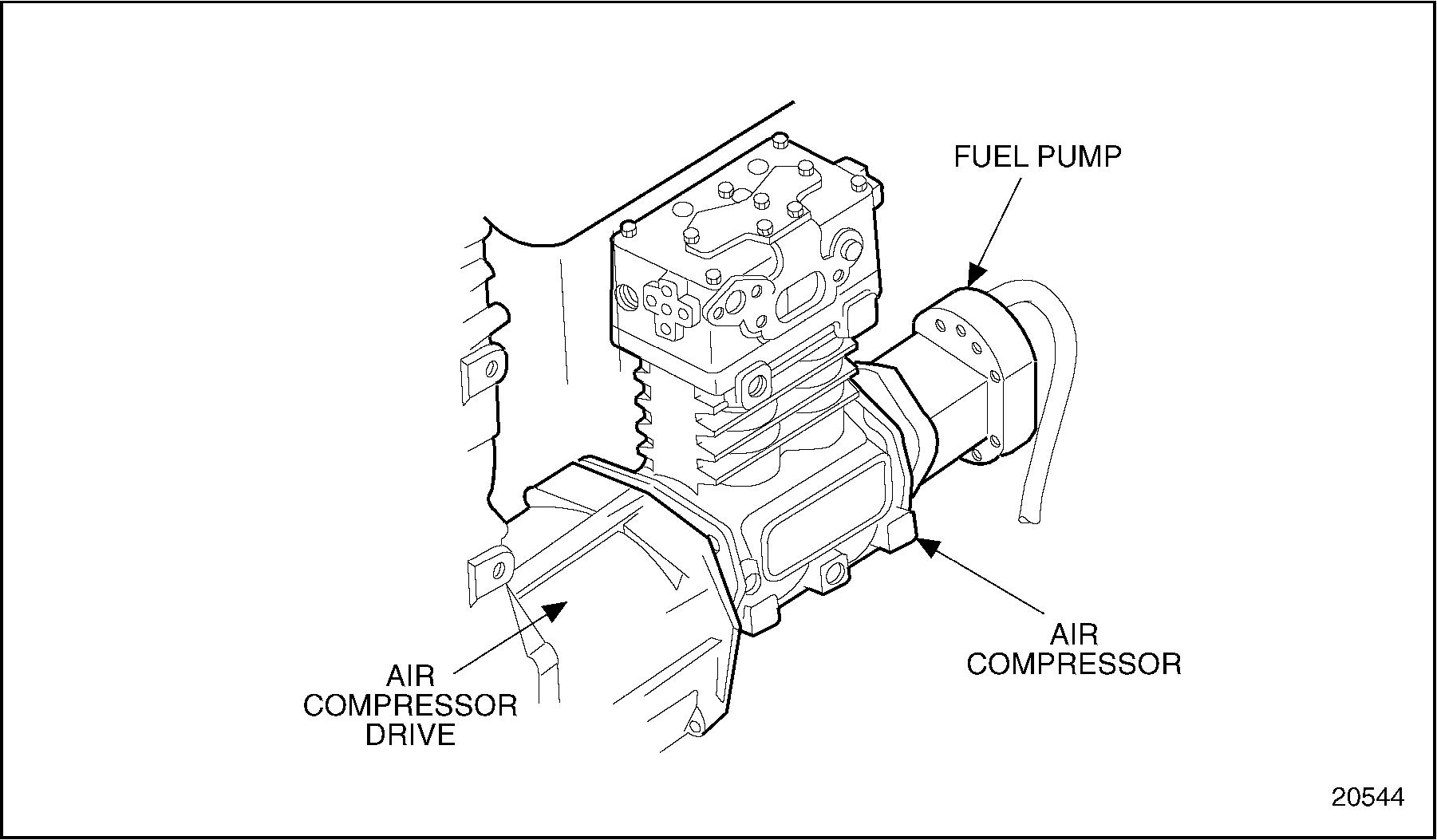
The original Series 60 air compressor is mounted to the rear of the gear case on the left side of the engine. See Figure "Original Air Compressor Mounting" .
Figure 1. Original Air Compressor Mounting
The original air compressor drives the engine fuel pump which is bolted to the rear end of the compressor. The air compressor is designed to accept a drive coupling placed between the air compressor and fuel pump.
Certain applications, and all Series 60 engines built before 1990, do not use the air compressor to drive the engine fuel pump. The air compressor is mounted in the same place on these units, but the engine fuel pump is mounted to the fuel pump drive assembly. The fuel pump drive assembly is bolted to the gear case above the air compressor and is driven by the bull gear. See Figure "Original Air Compressor with Flange Mounted Fuel Pump" .
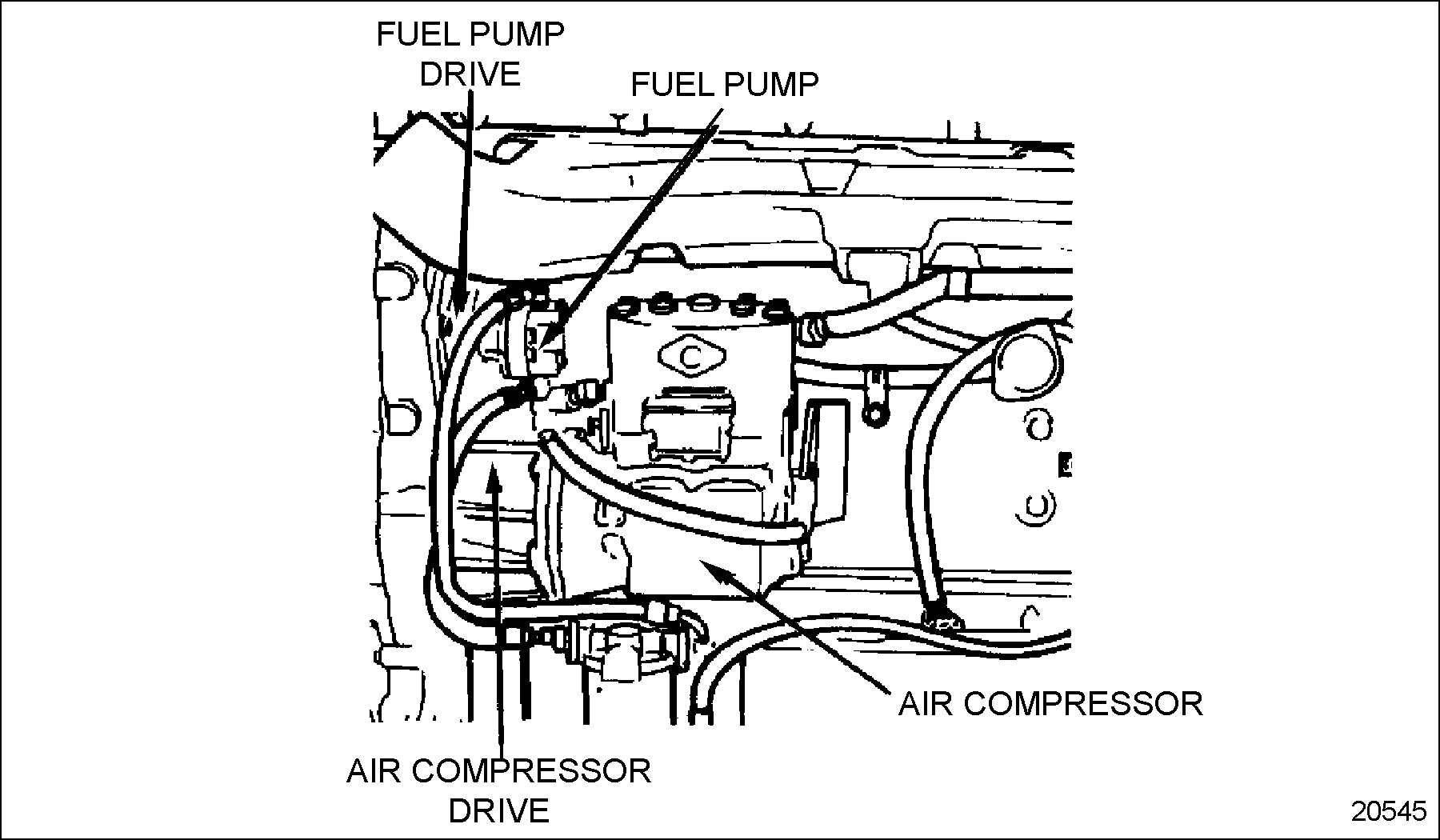
Figure 2. Original Air Compressor with Flange Mounted Fuel Pump
The original air compressor is driven by the bull gear and water cooled. Engine coolant is fed to the compressor through a flexible hose tapped into the engine block water jacket and connected to the front of the compressor. Coolant returns from the rear of the compressor through a flexible hose to the engine cylinder head. Lubricating oil is supplied to the compressor by a line from the cylinder block oil gallery that connects to the air compressor. Lubricating oil returns to the engine crankcase through the air compressor drive assembly.
Note: An air compressor oil test card (DD5524) is available to test engine-mounted air compressors for excessive oil leakage. Contact an authorized Detroit Diesel service outlet for details.
The current adaptorless air compressors have replaced the original air compressors and adaptors on the majority of Series 60 on-highway engines. This change took effect with unit serial number 6R210293, built November 30, 1994. The original compressor and adaptor are available on certain on-highway models due to customer preference.
An optional 28 cfm, twin-cylinder air compressor has replaced the former optional 31 cfm, four-cylinder air compressor, starting with model year 1999. The 28 cfm, high output air compressor is a naturally aspirated design that requires the intake air to be plumbed from the clean air side of the air filter.
Both high-output air compressors require the engine-driven fuel pump to be mounted to the gear case above the air compressor.
For Series 60 2002 Exhaust Gas Recirculation (EGR) engine a naturally aspirated single cylinder reciprocating compressor with a rated displacement of 13 cubic feet per minute at 1250 rpm is used. The engine provides a continuous supply of oil to the compressor. Oil is routed from the oil passage in the gear case to the compressor oil inlet.
Current adaptorless air compressors are similar to the original compressors, except that their mounting flanges have been redesigned to permit direct installation of the compressor onto the gear case. The drive gear stackup on this compressor has been modified to eliminate the need for a drive adaptor. See Figure "Original Adaptor, Current 28 CFM-mounted, and Current Adaptorless Air Compressor" .

Figure 3. Original Adaptor, Current 28 CFM-mounted, and Current Adaptorless Air Compressor
Note: If information is required to service an original air compressor, refer to "11.1.8 Installation of Former Air Compressor" .
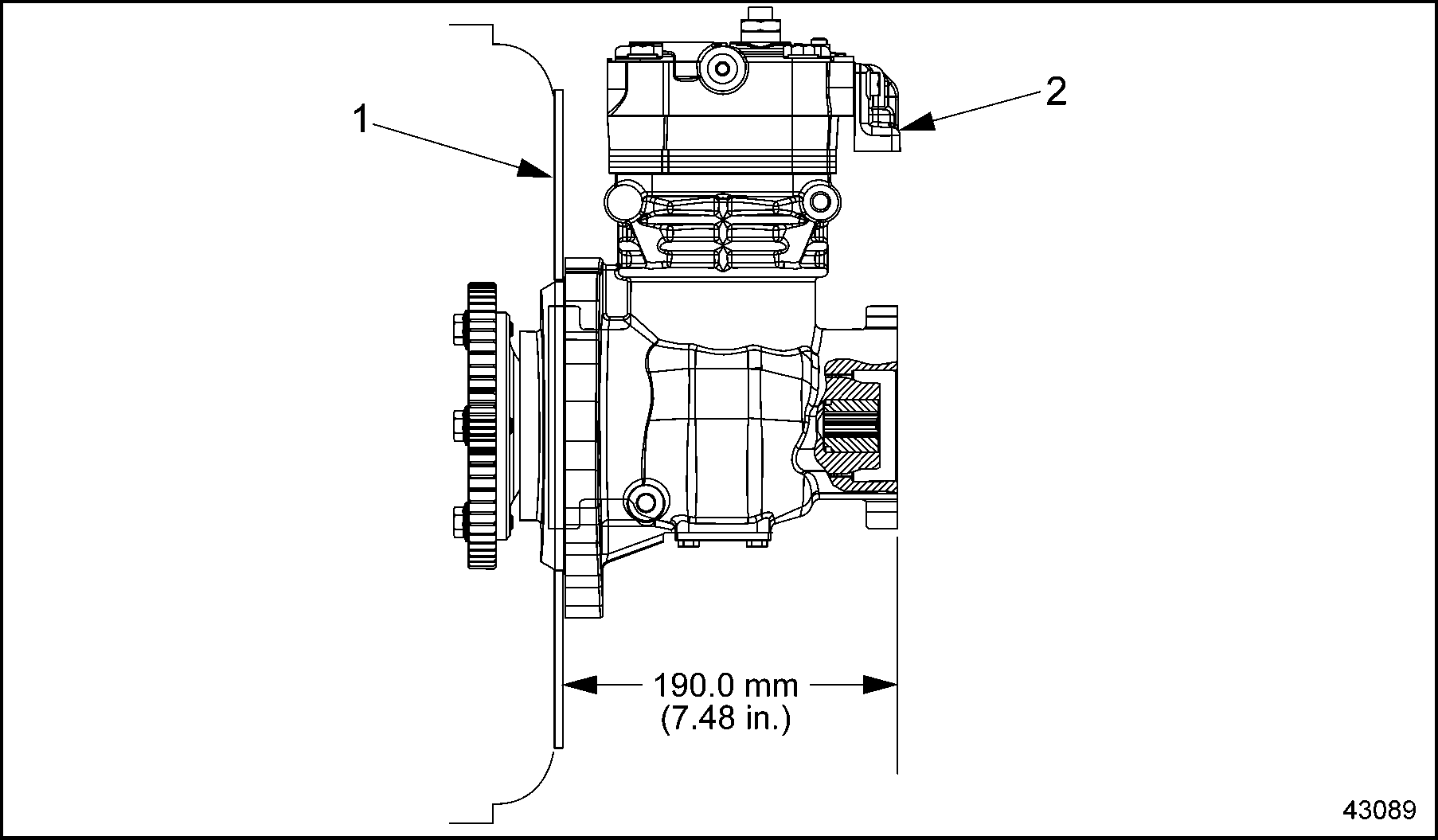
|
1. Gear Case |
2. Single Cylinder Air Compressor 13 CFM |
Figure 4. Series 60 2002 Single Cylinder Air Compressor 13 CFM
The current Series 60 adaptorless air compressor is flange-mounted to the rear of the gear case, located on the left side of the engine. See Figure "Adaptorless Air Compressor Mounting" .

Figure 5. Adaptorless Air Compressor Mounting
Current adaptorless air compressors also drive the engine fuel pump which is bolted to the rear end of the compressor. The compressor crankshaft is designed to accept a drive coupling placed between the compressor and fuel pump.
Detroit Diesel does not service the adaptorless air compressor. Service of an adaptorless air compressor should be referred to an authorized service center of the original equipment manufacturer.
To replace the adaptorless air compressor, perform the following procedure. See Figure "Flowchart for Replacement of Adaptorless Air Compressor" .

Figure 6. Flowchart for Replacement of Adaptorless Air Compressor
Precleaning is not necessary.
Remove the adaptorless air compressor as follows:
Note: Due to the cylinder block and compressor configuration, the upper inside air compressor-to-air compressor drive bolt is difficult to reach with standard tools. Compressor Wrench (J–35948) will facilitate removal and installation of this bolt.
Refer to OEM guidelines to determine if the air compressor needs to be repaired or replaced.
Install the adaptorless air compressor as follows:
Note: The shorter bolt is installed in the two o'clock position and the nut is installed in the twelve o'clock position.
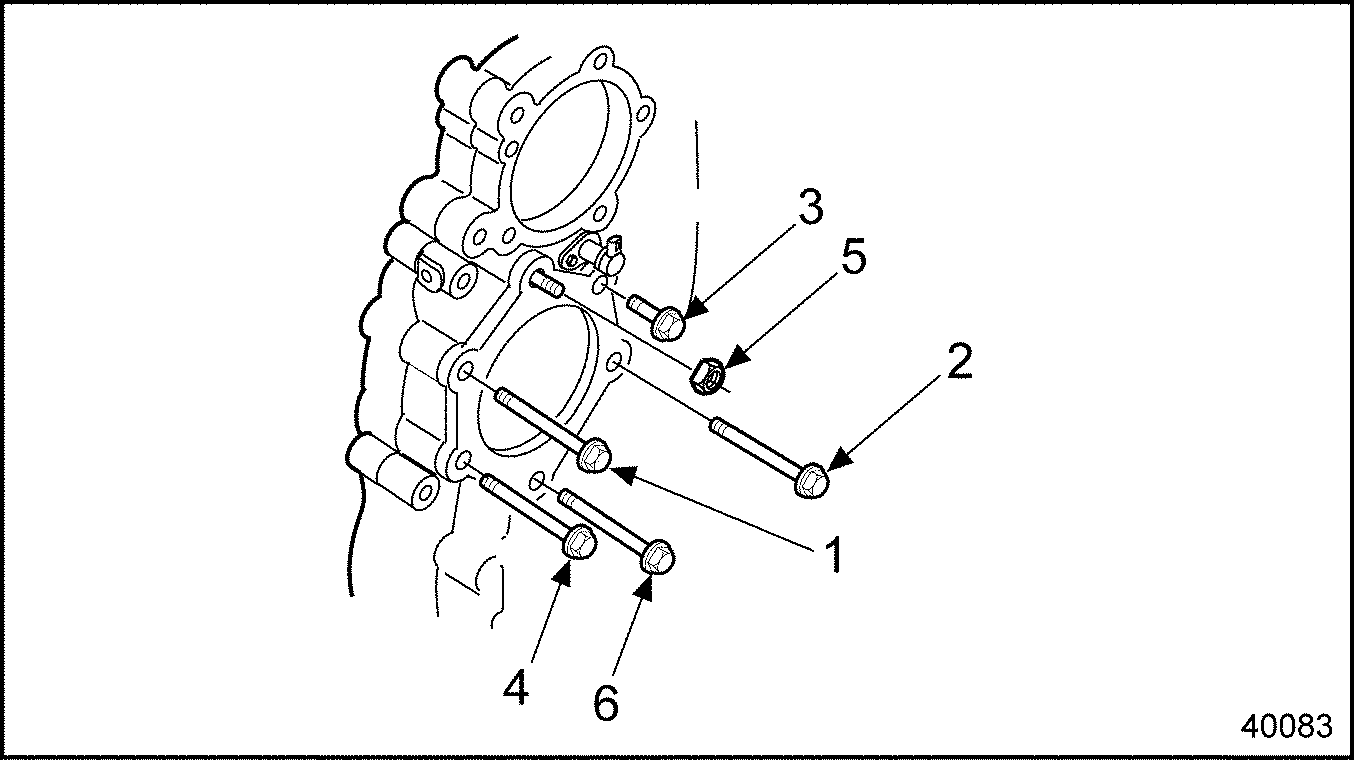
Figure 7. Bolt Torque Sequence

Figure 8. Bolt Torque Sequence Series 60 2002 Single Cylinder Air Compressor
 EYE INJURY |
|
To avoid injury from flying parts when working with components under spring tension, wear adequate eye protection (face shield or safety goggles). |
|
PERSONAL INJURY |
|
Diesel engine exhaust and some of its constituents are known to the State of California to cause cancer, birth defects, and other reproductive harm.
|
Detroit Diesel does not service the original-type air compressor. Service of the original-type air compressors should be referred to an authorized service center of the original equipment manufacturer.
To replace the original-type air compressor, perform the following procedure. See Figure "Flowchart for Replacement of the Original-type Air Compressor" .
Figure 9. Flowchart for Replacement of the Original-type Air Compressor
Precleaning is not necessary.
Remove the air compressor as follow:
Note: Due to the cylinder block and compressor configuration, the upper inside air compressor-to-air compressor drive bolt is difficult to reach with standard tools. Compressor Wrench (J–35948) will facilitate removal and installation of this bolt.
Refer to OEM guidelines to determine if the air compressor needs to be repaired or replaced.
Use the following procedure to install the air compressor pressure relief valve:
|
PERSONAL INJURY |
|
To avoid injury before starting and running the engine, ensure the vehicle is parked on a level surface, parking brake is set, and the wheels are blocked. |
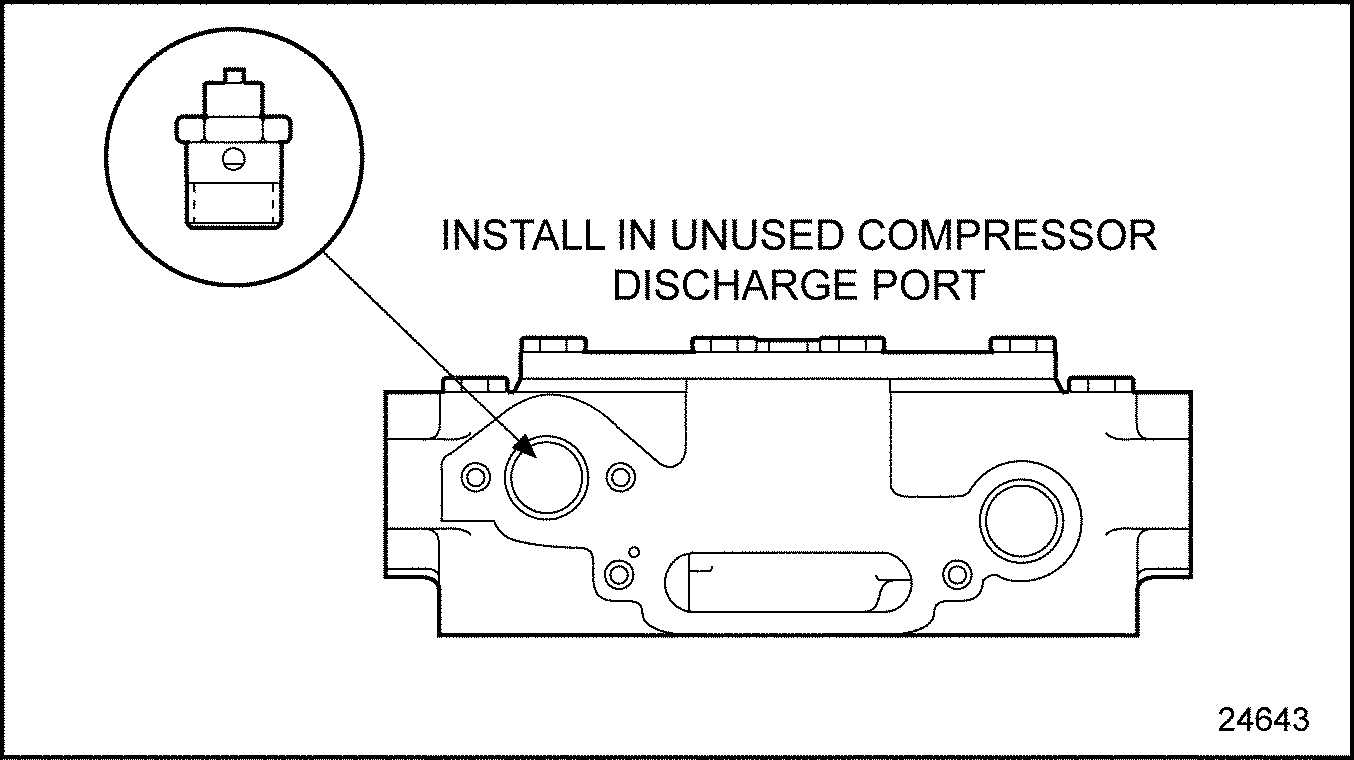
Figure 10. Location of Bendix Air Compressor Pressure Relief Valve
NOTICE: |
|
To prevent possible damage to the valve, do not install with a crescent wrench or locking pliers and do not exceed required torque. |
Install the air compressor as follows:
|
EYE INJURY |
|
To avoid injury from flying parts when working with components under spring tension, wear adequate eye protection (face shield or safety goggles). |
|
EXPLOSION |
|
The air intake manifold contains combustible gas. To avoid injury from explosion, do not connect the air inlet manifold to any devices or lines external to the manifold. |
| Series 60 Service Manual - 6SE483 |
| Generated on 10-13-2008 |