Two types of connecting rod are used in Series 60 engines. The open end or saddle type connecting rod is used with cast iron pistons which have bolt-on, style piston pins. The closed end or trunk type connecting rod is used with forged steel pistons which have floating, trunk style piston pins.
NOTICE: |
|
Do not mix forged steel pistons used with closed end connecting rods and cast iron pistons used with open-end connecting rods in the same engine. This will cause severe engine damage. |
OPEN-END CONNECTING ROD: The open-end connecting rod is forged to an "I" section with an open or saddle type contour at the upper end and a bearing cap at the lower end. The surface of the connecting rod is shot-peened for added strength. Therefore, no grinding is permitted since it will remove the benefits of shot-peening.
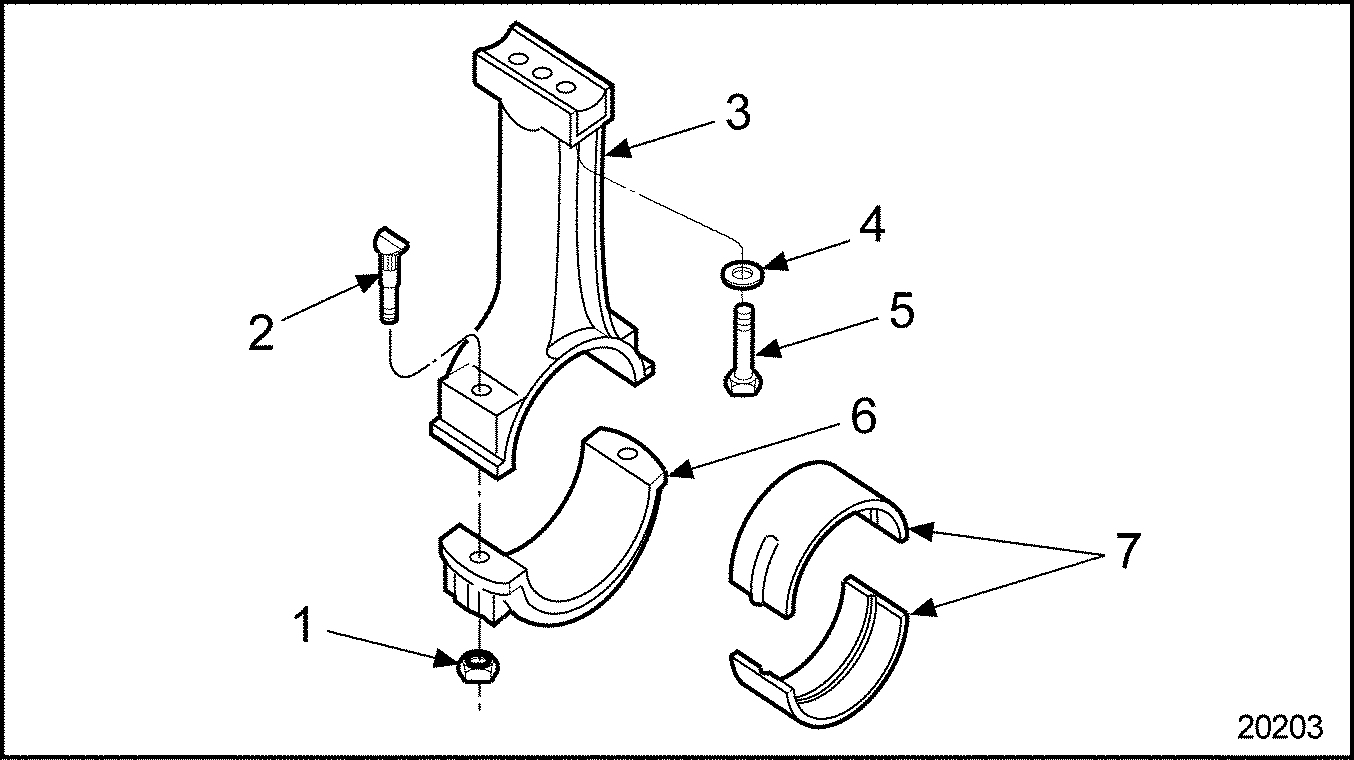
The upper end of the connecting rod is machined to match the contour of the piston pin. The piston pin is secured to the connecting rod with two special bolts and spacers. The lower bearing cap is secured to the connecting rod by two specially machined bolts and nuts. See Figure "Connecting Rod and Bearing Shells (Open-End Rod)" .
|
1. Connecting Rod Nut (2) |
5. Piston Pin Bolt (2) |
|
2. Notched Bolt (2) |
6. Connecting Rod Bearing Cap |
|
3. Connecting Rod |
7. Bearing Shells |
|
4. Spacer Washer (2) |
|
Figure 1. Connecting Rod and Bearing Shells (Open-End Rod)
The two special bolts locate the cap relative to the upper end. The assembly is machined as a unit and must not be used in the engine with any other cap or upper end. Orientation of the cap to the upper end is identified by stamped numbers.
Note: The Series 60G engine connecting rod is shorter in length and identified by "Natural Gas" on the side.
The current connecting rods with smaller rod chamfers replaced the former connecting rods, effective with the engine serial number listed in Table "New Connecting Rod Replacements" .
|
Engine Model |
Engine Serial Number |
|
6067WK60 (11.1L) |
6R184522 |
|
6067GK60 (12.7L) |
6R188251 |
This change was made to allow installation of new, wider connecting rod bearings that provide improved oil film thickness and reduced bearing pressures.
The rod chamfers on the current connecting rods are smaller than those on the former rods. This has been done to provide proper support for the wider bearings. To conform with this change, new crankshafts with smaller fillet radii have been released. Refer to "1.7 Crankshaft" for information on the new crankshafts.
Note: The current connecting rods, bearings, and crankshafts must be used together to ensure interchangeability. Former parts cannot be mixed with new parts in the same engine. The former connecting rods will continue to be available for engines built prior to the unit serial numbers as listed in Table "New Connecting Rod Replacements" .
The connecting rod bearing shells are precision made and are of the replaceable type. The upper bearing shell is seated in the connecting rod and a lower bearing shell is seated in the connecting rod cap. These bearings are not identical. The upper and lower bearing shells are located in the connecting rod by a tang at the parting line at one end of each bearing shell. See Figure "Connecting Rod and Bearing Shells (Open-End Rod)" .
The tri-metal bearing wear surfaces use a steel backing. First, an optimum composition (copper, tin and lead) lining is bonded to the steel back. A nickel barrier above the lining and the overlay serves to prevent tin migration. A soft lead overlay, 0.025 mm (0.001 in.) thick, provides run-in protection, and an initial wear surface. A flash tin plate, front and back, is for added corrosion protection and resistance during shipping and handling. These bearings are identified by the satin silver sheen of the tin when new, and a dull gray of the overlay after being in service.
The oil hole through the upper bearing shell supplies oil to the oil passage in the connecting rod, thereby providing a supply of lubricating oil from the crankshaft to the connecting rod bearings, piston-pin bushing, and underside of the piston dome. The upper shell is grooved from one edge to the oil hole. The lower shell has a full-length (180 degree) groove. See Figure "Connecting Rod Bearing Detail (Open-End Rod)" .
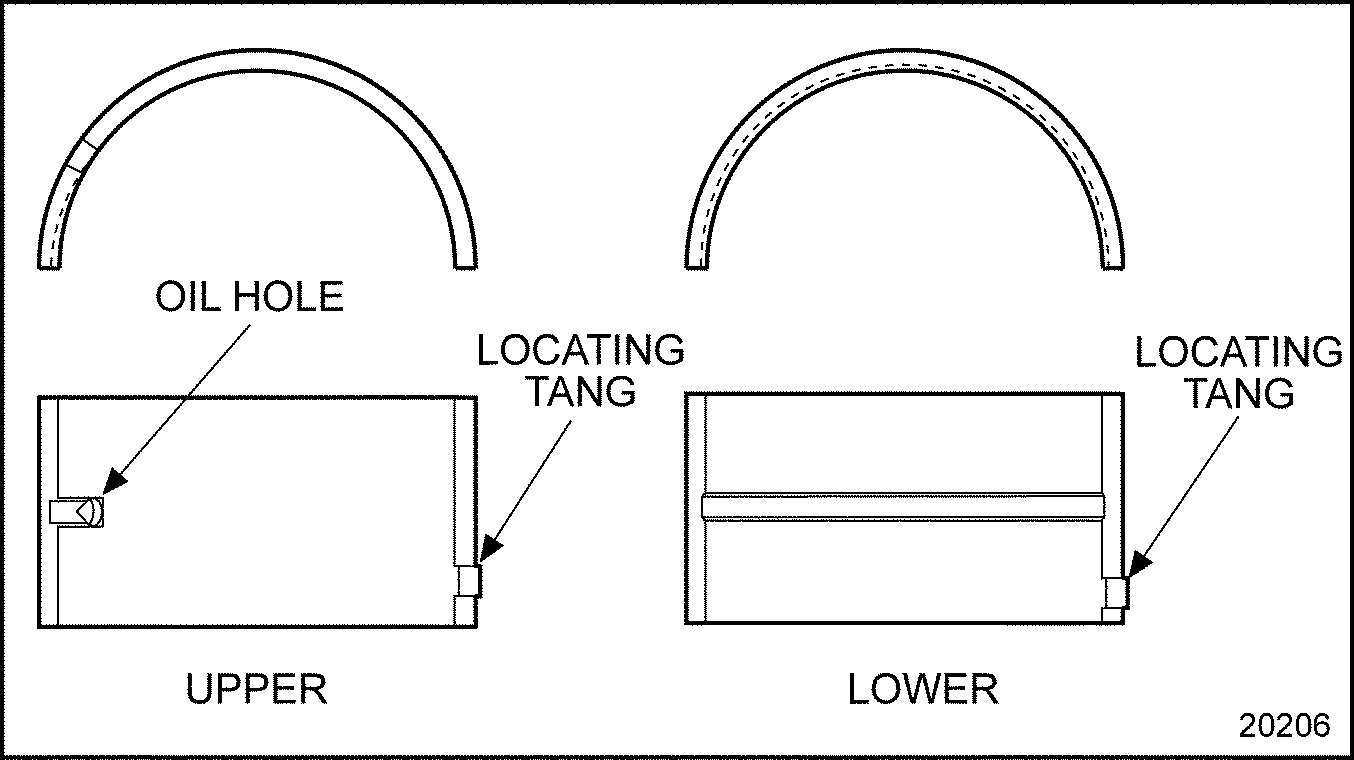
Figure 2. Connecting Rod Bearing Detail (Open-End Rod)
The connecting rods bearing caps are numbered according to the cylinder position with matching numbers stamped on the connecting rod tang side.
The current, wider connecting rod bearings replaced the former connecting rod bearings as listed in Table "Main Bearing" .
This change was made to improve oil film thickness and reduce bearing pressures. The current bearings are 47.44-47.14 mm (1.868-1.856 in.) wide. The former bearings were 43.44-43.13 mm (1.710-1.698 in.) wide. To provide full support for the wider bearings, new connecting rods with smaller rod chamfers and current crankshafts with smaller fillet radii were also released. Refer to "1.7 Crankshaft" for information on the current crankshafts.
Note: The current connecting rod bearings, connecting rods, and crankshafts must be used together to ensure interchangeability. Former parts cannot be mixed with new parts in the same engine. The former bearing shells will be available for engines built prior to the unit serial numbers as listed in Table "New Connecting Rod Replacements" .
CLOSED-END CONNECTING ROD: Each connecting rod is forged to an "I" section with a closed hub at the upper end and a bearing cap at the lower end. See Figure "Connecting Rod and Bearing Shells (Closed-end Rod)" . Unlike the open-end connecting rod, the closed end rod is not drilled prior to model year 2000. Lubrication for the piston and piston pin is supplied by a spray nozzle bolted to the block at the base of each cylinder bore. (Current blocks are drilled and tapped for installation of the cooling nozzles into the main oil gallery.) These nozzles spray crankcase oil upwards onto the piston and piston pin during engine operation, providing the required lubrication and cooling.
Note: The current connecting rod for 14 L engines and model year 2000 12.7 L engines use a drilled passage way through the rod to lubricate the piston pin bushing. These connecting rods can be mixed within an engine with the former non-drilled connecting rod. See Figure "Current and Former Closed-End Connecting Rods" .

Figure 3. Current and Former Closed-End Connecting Rods

|
1. Connecting Rod Nut (2) |
4. Connecting Rod Bearing Cap |
|
2. Notched Bolt (2) |
5. Bearing Shells |
|
3. Connecting Rod |
|
Figure 4. Connecting Rod and Bearing Shells (Closed-end Rod)
The upper end of the rod has a pressed-in, machined bushing with two scallops, 180 degrees apart. Spray oil entering these scallops lubricates the piston pin and bushing during engine operation. The piston pin floats in the bushings of both the piston and the connecting rod.
The lower bearing cap is secured to the connecting rod by two specially machined bolts and nuts. See Figure "Connecting Rod and Bearing Shells (Closed-end Rod)" .
The two special bolts locate the cap relative to the upper end. The assembly is machined as a unit and must not be used in the engine with any other cap or upper end. Orientation of the cap to the upper end is identified by stamped numbers.
Closed-end connecting rods prior to model year 2000 have no center-drilled lubricating oil passage. See Figure "Connecting Rod Bearing Detail (Closed End Rod Without a Drilled Passage)" , and see Figure "Connecting Rod Bearings for 14 L and 12.7 L Engines" .

Figure 5. Connecting Rod Bearing Detail (Closed End Rod Without a Drilled Passage)
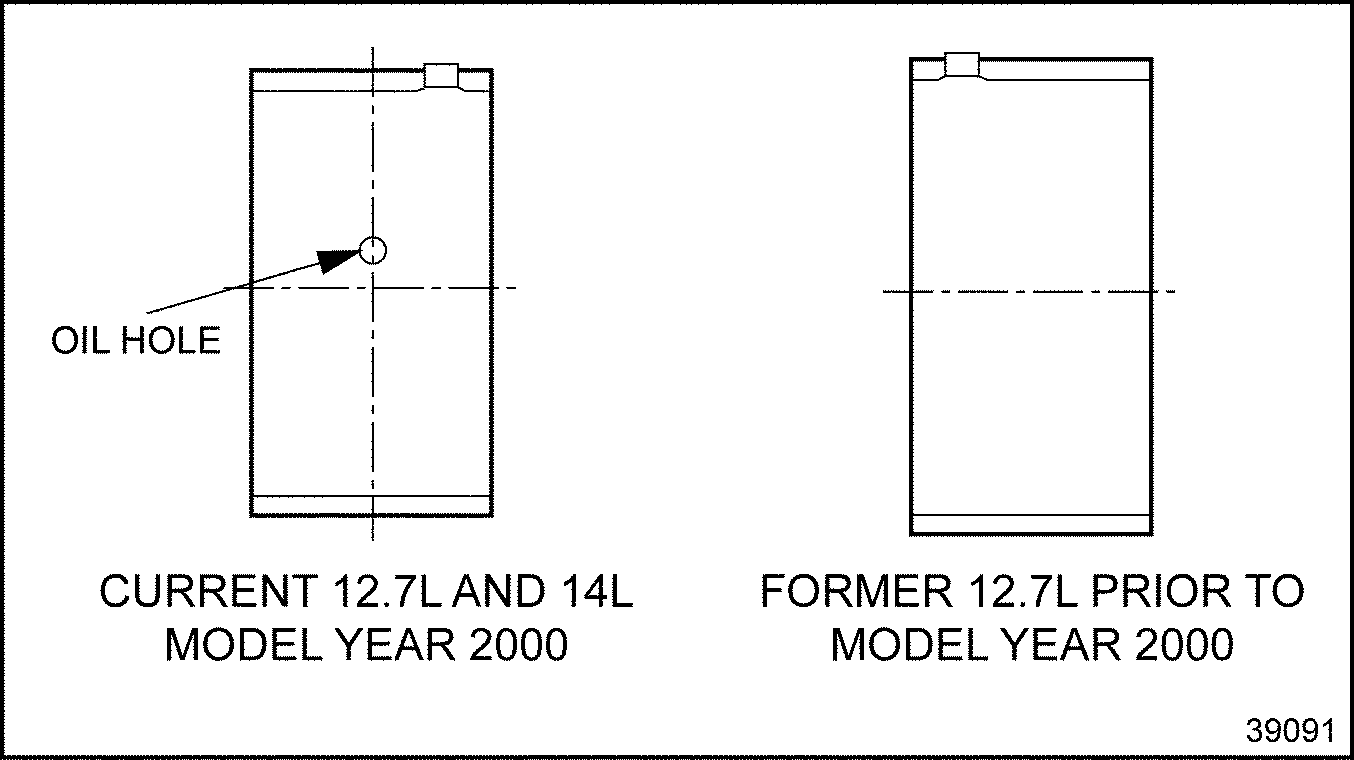
Figure 6. Connecting Rod Bearings for 14 L and 12.7 L Engines
The connecting rod bearing caps are numbered according to the cylinder position with matching numbers stamped on the connecting rod tang side.
The connecting rod bearing shells are precision made and are of the replaceable type. The upper bearing shell is seated in the connecting rod and a lower bearing shell is seated in the connecting rod cap. The upper and lower bearings are identical . The upper and lower bearing shells are located in the connecting rod by a tang at the parting line at one end of each bearing shell.
The tri-metal bearing wear surfaces use a steel backing. First, an optimum composition (copper, tin and lead) lining is bonded to the steel back. A nickel barrier above the lining and the overlay serves to prevent tin migration. A soft lead overlay, 0.025 mm (0.001 in) thick, provides run-in protection, and an initial wear surface. A flash tin plate, front and back, is for added corrosion protection and resistance during shipping and handling. These bearings are identified by the satin silver sheen of the tin when new and a dull gray of the overlay after being in service.
To determine if repair is possible or replacement is necessary, perform the following procedure. See Figure "Flowchart for Repair or Replacement of Connecting Rod" .
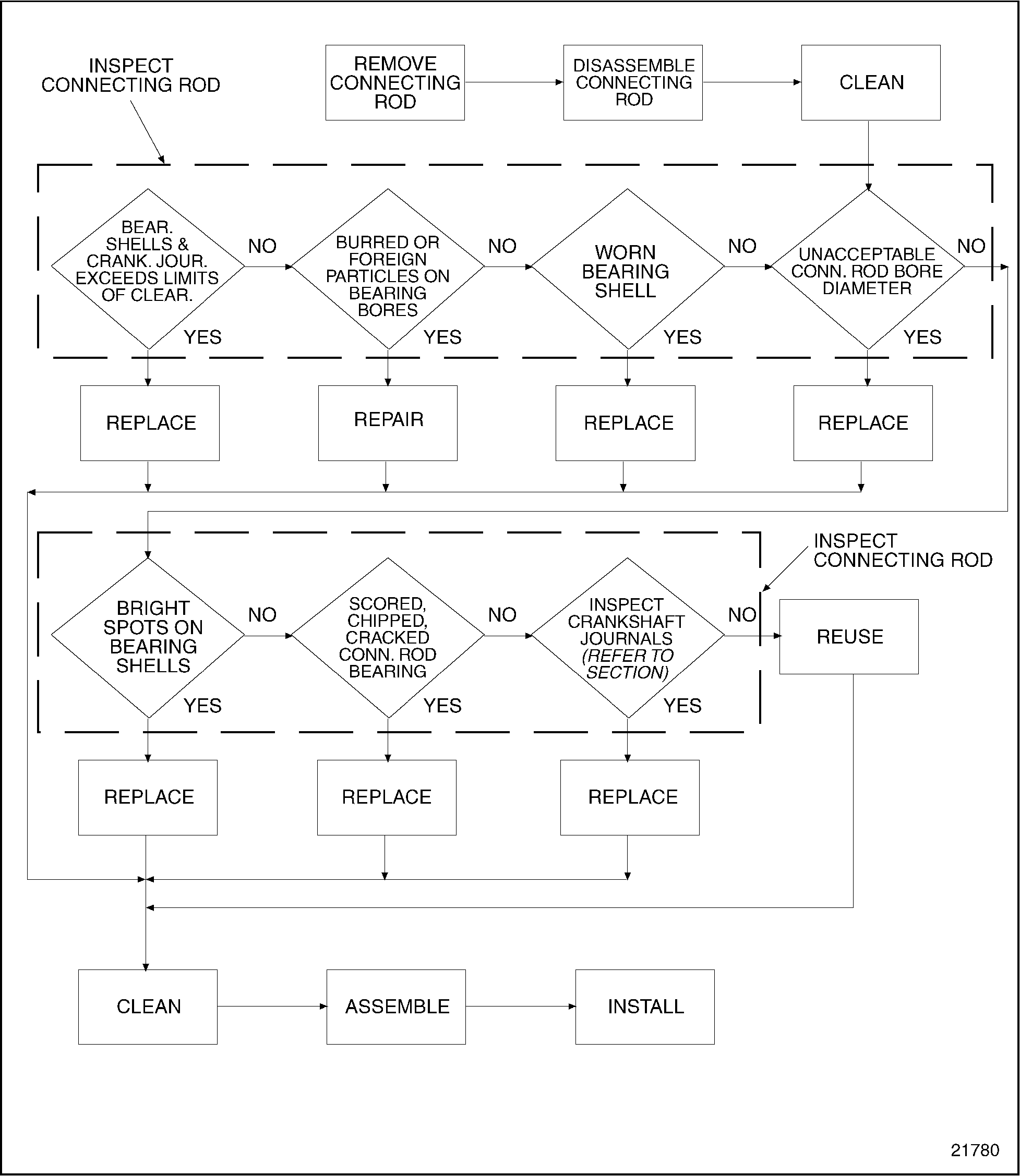
Figure 7. Flowchart for Repair or Replacement of Connecting Rod
Before removal, make sure the connecting rods and caps are stamped with their correct cylinder location. If not marked, stamp location (1-6) on the tang side (cooler side) of the rod and cap.
Refer to "1.21.2 Removal and Cleaning of Piston and Connecting Rod" for piston and connecting rod assembly removal procedure.
Disassemble the connecting rod as follows:
Note: It is best to disassemble, inspect and assemble each connecting rod separately. It is very important to keep the connecting rod cap, and the upper and lower bearing shells to the original connecting rod.
Clean the bearings prior to inspection as follows:
 EYE INJURY |
|
To avoid injury from flying debris when using compressed air, wear adequate eye protection (face shield or safety goggles) and do not exceed 276 kPa (40 psi) air pressure. |
Inspect the open-end connecting rod as follows:
Inspect the closed-end connecting rod as follows:
NOTICE: |
|
Reusing a connecting rod with a damaged or loose bushing may result in severe cylinder kit damage. |
Assemble connecting rod as follows:
NOTICE: |
|
Do not over torque the connecting rod bolt nuts. Over torque may permanently distort the connecting rod cap. |
NOTICE: |
|
Be sure the connecting rod bolt has not turned in the connecting rod before torque is applied to the nut. |
Measure the connecting rod bearing diameter at five locations. See Figure "Dimensional Inspection of Connecting Rods" .

Figure 8. Dimensional Inspection of Connecting Rods
Inspect the connecting rod bearing as follows:
|
EYE INJURY |
|
To avoid injury from flying debris when using compressed air, wear adequate eye protection (face shield or safety goggles) and do not exceed 276 kPa (40 psi) air pressure. |
|
EYE INJURY |
|
To avoid injury from flying debris when using compressed air, wear adequate eye protection (face shield or safety goggles) and do not exceed 276 kPa (40 psi) air pressure. |
Note: The current bearing shells for 14 L engines and 12.7 L engines for model year 2000 have an oil hole in them to allow oil to flow into the connecting rod.See Figure "Connecting Rod Bearings for 14 L and 12.7 L Engines"
Figure 9. Connecting Rod Bearings for 14 L and 12.7 L Engines
Note: Before installing the bearings, inspect the crankshaft journals. Refer to "1.7.2.4 Journal Diameter Measurements" . Do NOT replace one connecting rod bearing shell alone. If one bearing shell requires replacement, install both new upper and lower bearing shells. Also, if a new or reground crankshaft is to be used, install all new bearing shells.
Note: Bearing shells are NOT reworkable from one undersize to another under any circumstances.
Bearing shells are available in 0.254, 0.508 and 0.762 mm (approximately 0.010, 0.020, and 0.030 in.) undersize for service with reground crankshafts. The bearing size specifications are listed in Table "Main Bearing" .
Refer to "1.21.5 Installation of Piston and Connecting Rod Assembly" to install the piston and connecting rod assembly.
| Series 60 Service Manual - 6SE483 |
| Generated on 10-13-2008 |