
Series 60 EGR uses a camshaft gear assembly. Camshaft, camshaft drive gear and camshaft gear cover are the indivual parts part of this assembly. The camshaft gear assembly is located on top of the cylinder head and is removed and installed as an assembly. The camshaft actuates the intake and exhaust valves and injector operating mechanism. See Figure "Camshaft and Related Parts" .
Figure 1. Camshaft and Related Parts
The camshaft is supported by seven bearing assemblies, consisting of precision-type, replaceable bearing shell inserts that are split at their center lines. Current non-tin-plated production bearing shells are identified by their shiny aluminum color. Current tin-plated service bearing shells have a dull gray sheen. The lower bearing shell is positioned in a saddle that is integral with the cylinder head. The upper bearing shell is held in place by a machined camshaft cap. Upper and lower bearing shells are identical and have locating tangs and oil holes. Only the upper bearing shell oil holes index with oil supply holes in the camshaft caps. These camshaft caps are precision line-bored after assembly to the cylinder head.
Note: Caps are NOT interchangeable once the head is finished. Caps are numbered and must NOT be interchanged with other caps of the same part number from stock or from a different cylinder head. See Figure "Camshaft Assembly and Related Parts" .

|
1. Seal |
7. Camshaft Cap Bolt |
|
2. Camshaft Gear |
8. Stud |
|
3. Bolt |
9. Camshaft Bearing Caps |
|
4. Camshaft Gear Cover |
10. Camshaft |
|
5. Seal |
11. Cylinder Head |
|
6. Key |
Figure 2. Camshaft Assembly and Related Parts
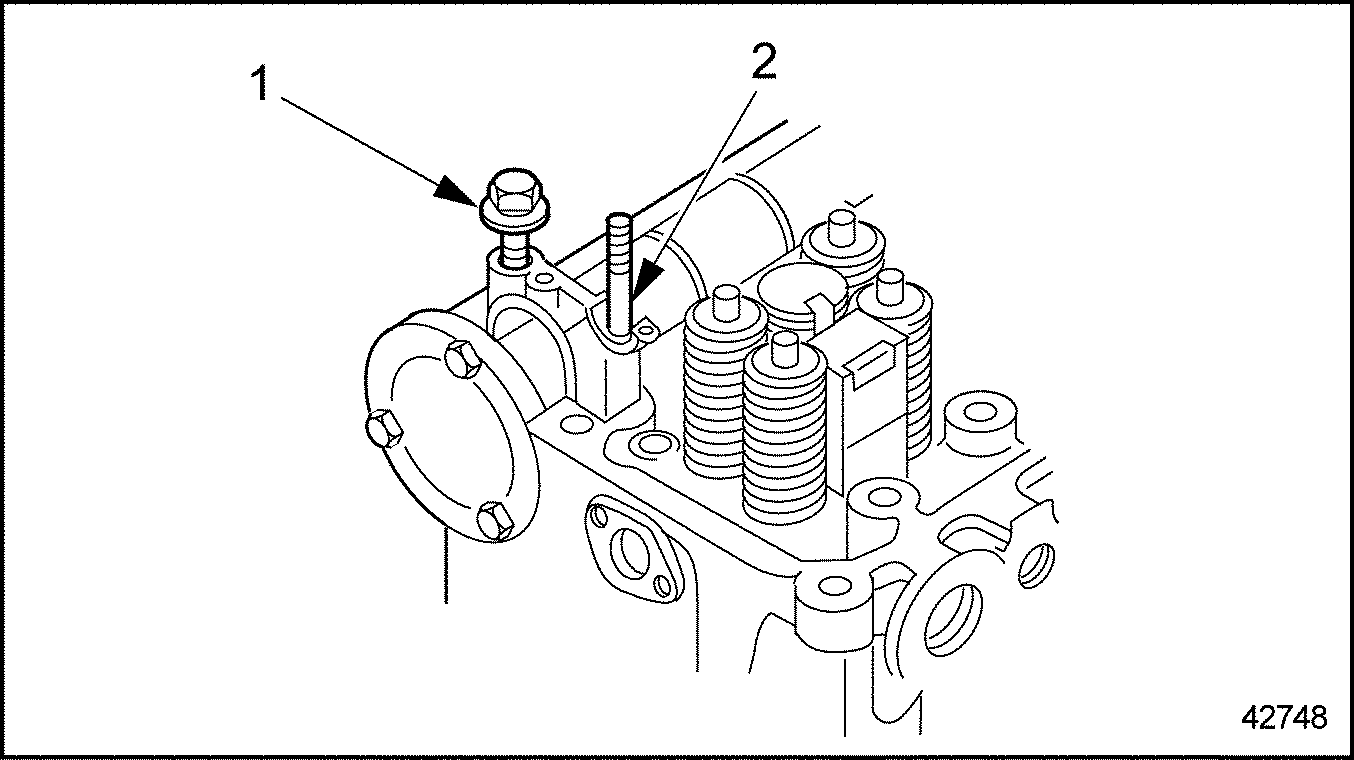
The No. 4 camshaft cap is secured to the cylinder head with three bolts; cap numbers 2, 3, 5, and 6 use two bolts each. Caps one and seven have a stud and one bolt each. The stud and nut arrangement on the end caps (1 and 7) allows rocker arm shaft removal without disturbing the gasket eliminator seal from the end camshaft caps to the cylinder head. There are four different camshaft cap configurations. Only the intermediate caps No. 2, 3, 5, and 6 are identical but must not be interchanged during re-assembly. See Figure "Camshaft Bolt and Cap Location" .

|
1. Camshaft Cap Bolt (13) |
2. Camshaft Cap Stud and Nut (2) |
Figure 3. Camshaft Bolt and Cap Location
Note: Caps are NOT interchangeable once the head is finished. Caps are numbered and must NOT be interchanged with other caps of the same part number from stock or from a different cylinder head. See Figure "Camshaft Assembly and Related Parts" .
The camshaft is driven by a camshaft drive gear, located in the camshaft gear cover assembly on top of the gear case, and is driven, through a series of intermediate gears, by the crankshaft timing gear. Refer to "1.24.2.1 Check Engine Timing" for gear train information and camshaft drive gear lash measurement and adjustment procedures. See Figure "Engine Gear Series 60 EGR" .

Figure 4. Engine Gear Series 60 EGR
A cover is provided at the rear end of the camshaft and is secured to the No. 7 camshaft bearing cap and the cylinder head by three bolts. See Figure "Rear Camshaft Access Cover" .

Figure 5. Rear Camshaft Access Cover
Vertical oil passages at the front and rear of the cylinder head deliver oil from the cylinder block front and rear oil galleries to the No. 1 and 7 lower camshaft bearing saddles. From there, the oil is directed upward ( through the enlarged stud hole) to the No. 1 and 7 upper bearing caps. A drilled passage in each of these caps exits at the rocker arm shaft seat area, where it indexes with a hole in each rocker arm shaft. The rocker arm shafts have internal oil passages that deliver oil to the rocker arm bushings and intermediate upper camshaft bearings. Some of the oil supplied to the rocker arm bushing passes through the oil hole in the bushing to the rocker arm. The rocker arm is drilled to supply oil to the camshaft follower, roller pin, and bushing. The rocker arm is also drilled to supply oil to the valve adjusting screw, valve button, retainer clip, intake, and exhaust valve stems and the fuel injector follower. The No. 4 camshaft cap is “Y” drilled, forming an oil path connection between the front and rear rocker arm shafts, to ensure complete lubrication. See Figure "Cylinder Head Lubrication Schematic" .

|
1. Rocker Arm, Exhaust Valve |
4. Rocker Arm Shaft |
|
2. Rocker Arm, Fuel Injector |
5. Cylinder Head |
|
3. Camshaft Cap |
6. Rocker Arm, Intake Valve |
Figure 6. Cylinder Head Lubrication Schematic
To determine if repair or replacement of the camshaft gear assembly is neccessary, perform the following procedure: see Figure "Flowchart for Repair or Replacement of Camshaft Gear Assembly" .

Figure 7. Flowchart for Repair or Replacement of Camshaft Gear Assembly
Remove camshaft gear assembly as follows:

|
1. Timing Pin |
Figure 8. Crankshaft Timing Pin

|
1. Bolt |
3. Gasket |
|
|
2. Cover |
Figure 9. Gear Case Assembly Cover

|
1. Camshaft Gear Cover |
2. Timing Hole |
Figure 10. Timing Verification

|
1. Bolt |
2. Camshaft Gear Cover |
Figure 11. Camshaft Gear Cover Bolt
Note: If timing is correct and the repair being made does not require that the engine is turned over, clean off an area where the camshaft gear and idler gear teeth mesh and mark the teeth with a suitable marker for a reference point when reassembling the camshaft. This procedure will make assembly easier.

|
1. Bolt |
Figure 12. Camshaft Gear Cover Bolts

Figure 13. Camshaft Gear Cover Bolts
|
1. Bolt |
|
1. Bolt |
2. Stud Bolt |
Figure 14. Camshaft Cap Bolt and Stud Bolt

Figure 15. Camshaft Cap Stud Removal
 PERSONAL INJURY |
|
To avoid injury when removing or installing a heavy engine component, ensure the component is properly supported and securely attached to an adequate lifting device to prevent the component from falling. |

|
1. Seal |
3. Lifting Tool |
|
2. Camshaft Gear Cover |
4. Camshaft |
Figure 16. Camshaft Gear Assembly and Lifting Tool
Disassemble the camshaft from the camshaft gear as follows.
|
NOTICE |
|
Extreme care must be taken not to support the camshaft gear cover at the outer edges. |
Inspect camshaft and camshaft bearings as follows:
|
EYE INJURY |
|
To avoid injury from flying debris when using compressed air, wear adequate eye protection (face shield or safety goggles) and do not exceed 276 kPa (40 psi) air pressure. |
Note: Camshafts may exhibit surface pits on the exhaust lobes. See Figure "Camshafts Acceptable for Reuse" . Extensive durability and field testing has shown that surface pits on the exhaust lobes can occur early in the operation of the engine. These blemishes do not adversely affect engine performance or the durability of the camshaft and followers. Camshafts with this condition may be reused.
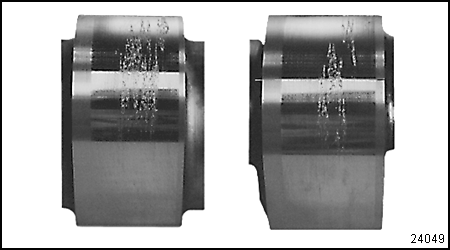
Figure 17. Camshafts Acceptable for Reuse
Note: Camshafts exhibiting extensive wear and pitting must be replaced. See Figure "Camshafts Not Acceptable for Reuse" .

Figure 18. Camshafts Not Acceptable for Reuse
Note: The camshaft can be in or out of the engine during this procedure.

Figure 19. Checking Camshaft Lobe Wear
Note: If one camshaft bearing needs to be replaced, replace both of the camshaft bearing shells.
Note: Check camshaft bearing clearance with bearing shells, camshaft, bearing caps and rocker arm shafts (without rocker assemblies in place) installed, and cap bolts, studs and nuts tightened to specification.

Figure 20. Camshaft Run-out Measurement
Install the camshaft gear to the camshaft as follows:
 |
|
To avoid injury from flying debris when using compressed air, wear adequate eye protection (face shield or safety goggles) and do not exceed 40 psi (276 kPa) air pressure. |
Note: If a new camshaft is being installed, steam clean it to remove the rust preventive and blow dry with compressed air.
Install the camshaft bearings and camshaft gear assembly as follows:
Note: If new bearings are to be installed, the upper and lower shells MUST be replaced as a set.

Figure 21. Camshaft Alignment Tool
|
NOTICE: |
|
Do not bar the engine over with the timing pin installed. The timing pin will break. |
|
1. Timing Pin |
Figure 22. Crankshaft Timing Pin

Figure 23. Idler Gear Centering Tool J–46306–A

Figure 24. Camshaft Cover Seals

|
1. RTV Sealant |
4. Lifting Tool J–46305 |
|
2. Seal |
5. Camshaft |
|
3. Camshaft Gear Cover |
Figure 25. Application of RTV Sealant along Split Line
Note: Camshaft gear cover assembly must be installed promptly to avoid the setting of the RTV sealant .
|
PERSONAL INJURY |
|
To avoid injury when removing or installing a heavy engine component, ensure the component is properly supported and securely attached to an adequate lifting device to prevent the component from falling. |
Note: Insure that the seal on the rear of the camshaft gear cover does not catch on the edge of the cylinder head.
Note: Verify alignment tool is installed correctly. Incorrect installation will result in gear not being in time and the procedure will need to be repeated.
|
1. Camshaft Gear Cover |
2. Timing Hole |
Figure 26. Timing Verification
|
NOTICE: |
|
Ensure RTV sealant is applied to camshaft cap No. 1 to prevent oil leaks and Gasket Eliminator® is applied to cap No. 7. |

Figure 27. Sealant Application
|
NOTICE: |
|
If the camshaft gear cover bolts and/or the camshaft cap bolts are tightened down with the camshaft gear out of time damage to the camshaft gear cover and the timing pin will result. |
|
1. Bolt |
2. Stud Bolt |
Figure 28. Camshaft Bearing Cap Bolt and Stud Bolt

Figure 29. Bolt Torque Sequence
|
1. Bolt |
Figure 30. Camshaft Gear Cover Bolts
|
1. Bolt |
2. Camshaft Gear Cover |
Figure 31. Camshaft Bolt
| Series 60 Service Manual - 6SE483 |
| Generated on 10-13-2008 |