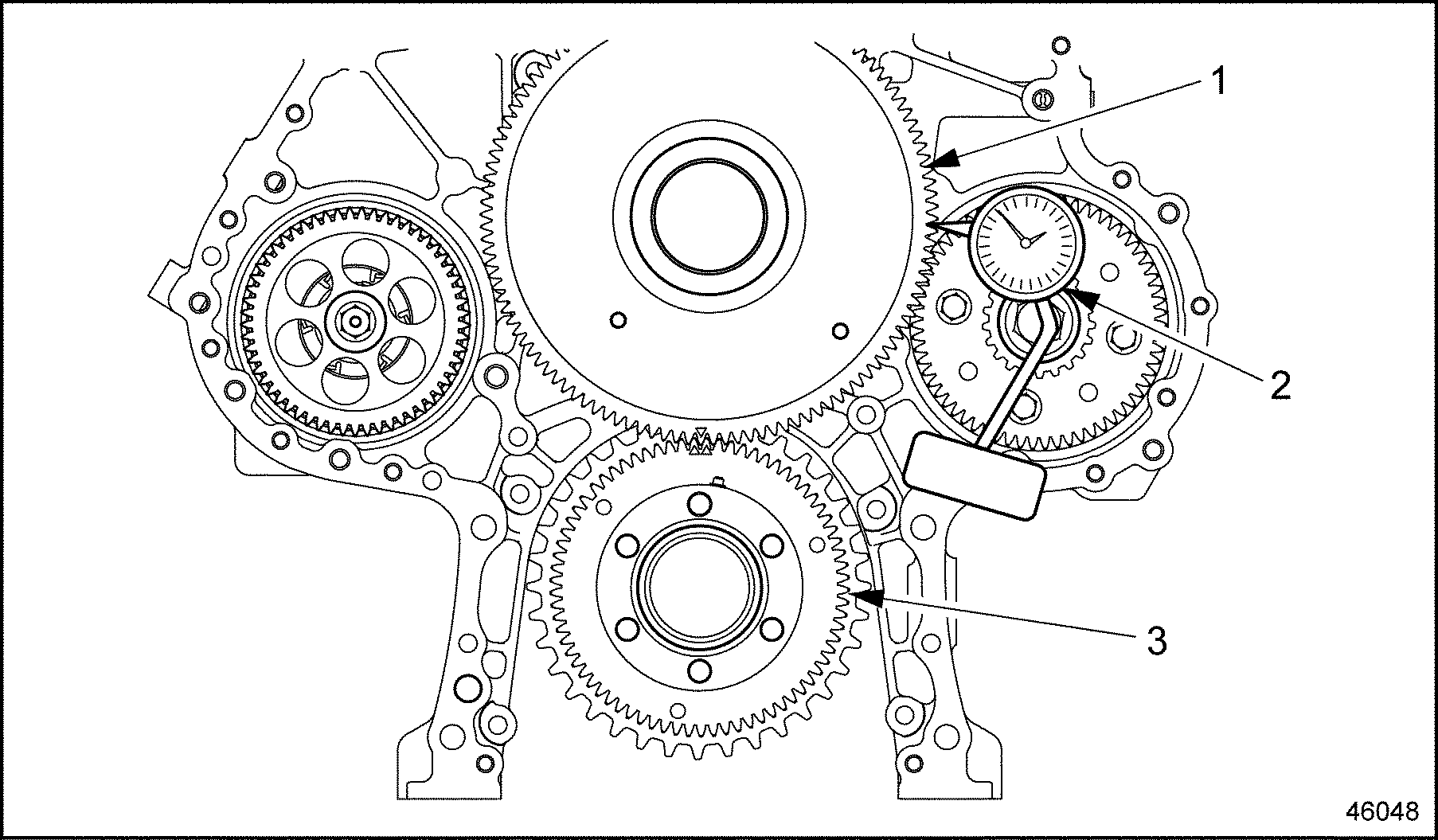
The compact gear train is completely enclosed between the gear case and gear case cover and is located at the front of the engine. The camshaft drive gear is part of the camshaft gear assembly and is located in the cover of the assembly. The gear train consists of a camshaft drive gear, camshaft idler gear, air compressor and power steering pump drive gear, bull gear, oil pump drive gear, crankshaft timing gear, water pump drive gear, accessory pulley drive gear, and adjustable idler gear. The gear train is lubricated by oil splash. The gear ratio of each gear in relationship to the crankshaft timing gear is shown directly below the gear title. See Figure
"Compact Gear Train"
.
Figure 1. Compact Gear Train
The crankshaft timing gear, pressed onto the front end of the crankshaft, directly drives the bull gear and oil pump drive gear, and indirectly (through the bull gear), drives the air compressor and power steering pump drive gear, accessory pulley drive gear and water pump drive gear.
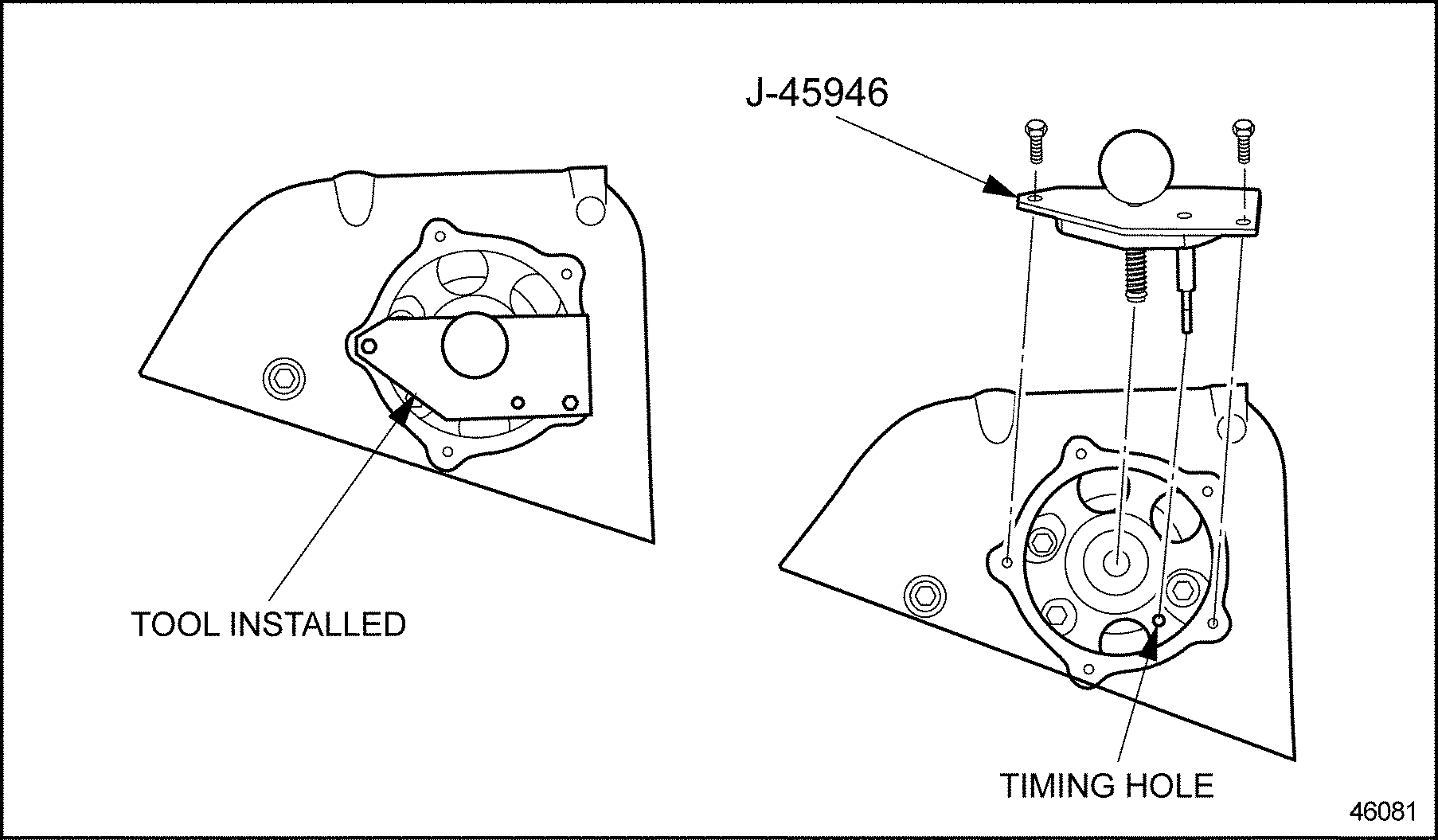
The camshaft gear assembly must be in time with the crankshaft timing gear. Since there are three gears between them, timing marks have been stamped or etched on the face of the crankshaft timing gear and bull gear to facilitate correct gear train timing.
There are no timing marks on the drive gears for the air compressor and power steering pump, water pump, accessory drive pulley, adjustable idler gear or camshaft drive gear. Therefore it is not necessary to align these gears in any particular position during installation..
The lash between the various mating gears in the gear train should be 0.051 - 0.229 mm (0.002 - 0.009 in.) and should not exceed 0.305 mm (0.012 in.) backlash between worn gears.
Gear train noise is usually an indication of excessive gear lash, chipped, pitted or burred gear teeth or excessive bearing wear. Therefore, when noise develops in a gear train, the gear case cover should be removed and the gear train and its bearings inspected. A rattling noise usually indicates excessive gear lash whereas a whining noise indicates too little gear lash.
The correct relationship between the crankshaft and the camshaft must be maintained to properly control the opening and closing of the intake and exhaust valves, the operation of the fuel injectors and to help maintain engine balance.
An “out of time” engine may result in valve-to-piston dome contact, a no-start condition or loss of power.
Section 1.25.1 Repair or Replacement of Gear Train and Engine Timing
Gear train noise is usually an indication of excessive gear lash, chipped, pitted or burred gear teeth, or excessive bearing wear. Therefore, when noise develops in a gear train, the gear case cover should be removed and the gear train and its bearings inspected. A rattling noise usually indicates excessive gear lash. A whining noise indicates too little gear lash.
Hold the crankshaft timing gear stationary, and rotate the oil pump drive gear in one direction, as far as it will go, without moving the crankshaft timing gear.
Zero the dial indicator.
Move the oil pump drive gear in the opposite direction, as far as it will go, without moving the crankshaft timing gear.
Read and record the total gear lash.
Note: The gear lash must be checked in four positions 90 degrees apart.
Proper lash between the crankshaft timing gear and oil pump drive gear is 0.051-0.229 mm (0.002 -0.009 in.).
The gear lash between the crankshaft timing gear and the oil pump drive gear can be adjusted utilizing shims inserted between the oil pump body and the cylinder block. See Figure
"Lubricating Oil Pump Shim Installation"
.
Figure 7. Lubricating Oil Pump Shim Installation
Remove or install shims as necessary to obtain the proper gear lash clearance.
Note: When adjusting for gear tooth lash by installing or removing shims, the same number of shims must be changed under each foot so that the pump will always be level on the engine block. The insertion or removal of one 0.127 mm (0.005 in.) shim will change the gear tooth lash by approximately 0.102 mm (0.004 in.).
Adjust the stem of the dial indicator to rest on the center of a tooth on the bull gear.
Preload the bull gear.
Zero the dial indicator pointer.
Hold the crankshaft timing gear stationary with one hand. Rotate the bull gear and check the total gear lash in four positions of crank gear, approximately 90 degrees apart.
Although gear lash for the remaining gear sets is not adjustable, the lash must still be measured. Lash specifications is 0.051-0.229 mm (0.002-0.009 in.) for new parts and a maximum of 0.305 mm (0.012 in.) for used parts.
If lash measurement is exceeded, replace gear with a new part.
The procedure for measuring the lash between the bull gear, air compressor and power steering pump drive gear is similar to the steps just mentioned. Refer to step 3
and perform step 3a
, as the first step and refer to step 3g
, as the final step.
The procedure for measuring the lash between the accessory drive gear and air compressor pump drive gear (on vehicle without power steering) is similar to the steps just mentioned. Refer to step 3
and perform step 3a
, as the first step and refer to step 3g
, as the final step.
Note: Lash can be measured with the gear case cover installed. Access covers are provided for checking the lash between these gears and the bull gear.
The procedure for measuring the lash for the adjustable idler gear is similar to the steps just mentioned. Refer to step 3
and perform step 3a
, as the first step and refer to step 3g
, as the final step.
Note: These gears are measured with the gear case cover installed.
The procedure for measuring the lash between the bull gear and the water pump drive gear is similar to the steps just mentioned. Refer to step 3
and perform step 3a
, as the first step and refer to step 3g
, as the final step.
Note: These gears can be measured with the pump installed.
Check the bull gear-to-accessory drive gear lash measurement as follows:
The arm of this tool has an inscribed line. Measuring with a dial indicator at this line of the tool, the gear lash measurement will be an exact 1:1 reading. Gear lash specifications are 0.051-0.229 mm (0.002 -0.009 in.).
If proper lash cannot be obtained, replace the gear with a new part.
Remove the dial indicator and the gear lash tool.
Install the pipe plug in the gear case cover. Torque to 24-31 N·m (18-23 lb·ft).
Check the bull gear-to-air compressor drive gear lash measurement as follows:
Mount a magnetic dial indicator base and dial indicator to the gear case cover so that the stem of the dial indicator may be positioned on a tooth of the air compressor drive gear.
Preload the drive gear in one direction.
Zero the dial indicator.
Rotate the air compressor drive gear, read and record the total gear lash. Gear lash measurements are 0.051-0.229 mm (0.002 -0.009 in.) for new parts, with a maximum of 0.305 mm (0.012 in.) for used gears.
If proper lash cannot be obtained, replace the gear with a new part.
Remove the dial indicator and magnetic base.
Install the power steering drive coupling to the air compressor drive gear (if equipped with power steering) and insert a new O-ring on the power steering pump (if so equipped).
Install the power steering pump to the gear case cover, meshing the drive coupling properly.
Install and torque the power steering pump mounting bolts to 30-38 N·m (22-28 lb·ft). Tighten the five bolts alternately and evenly, in a star-shaped pattern, to progressively draw the power steering pump into the gear case cover.
Note: Do not force the bolts. If resistance is encountered, remove the power steering pump and re-engage the drive hub with the coupling.
If the engine is not equipped with power steering, install the air compressor drive gear access cover using a new gasket.
Install and torque the retaining bolts to 30-38 N·m (22-28 lb·ft), using a star-shaped pattern.
Section 1.25.2.2 Engine Timing for the Compact Gear Train Assembly
The procedures for measuring and adjusting the gear lash for the compact gear train are as follows:
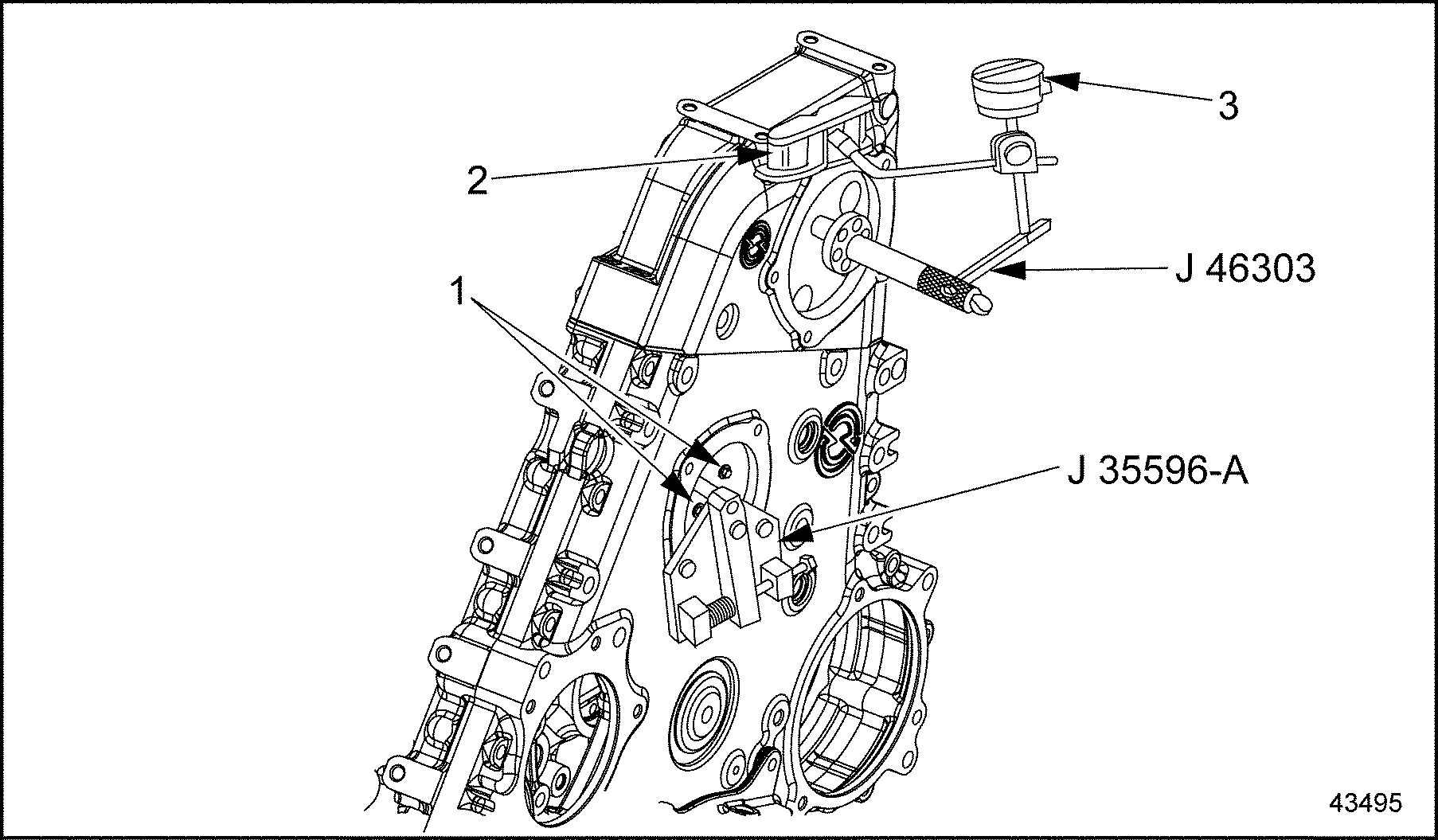
Attach the magnetic base on dial indicator to the camshaft gear cover. Adjust the stem of the dial indicator to rest on the flat of measuring tool ( J–46303)
at the scribe line on the bar at a 90° angle. Zero the dial indicator. See Figure
"Compact Gear Train Gear Lash Measurement"
.
If the adjustable idler gear has been removed, torque the three nuts that retain the adjustable idler gear hub to the gear case to 57-67 N·m (42-49 lb·ft) to seat the assembly before proceeding.
Loosen the three nuts that retain the adjustable idler gear hub to the gear case until they are hand tight.
Insert the dowel portion of the gear lash adjusting tool (J–35596–A)
through the hole in the adjustable idler gear retaining plate and into the adjustable idler gear hub, using the bottom two adjustable idler gear cover bolt holes. See Figure
"Compact Gear Train Gear Lash Measurement"
.
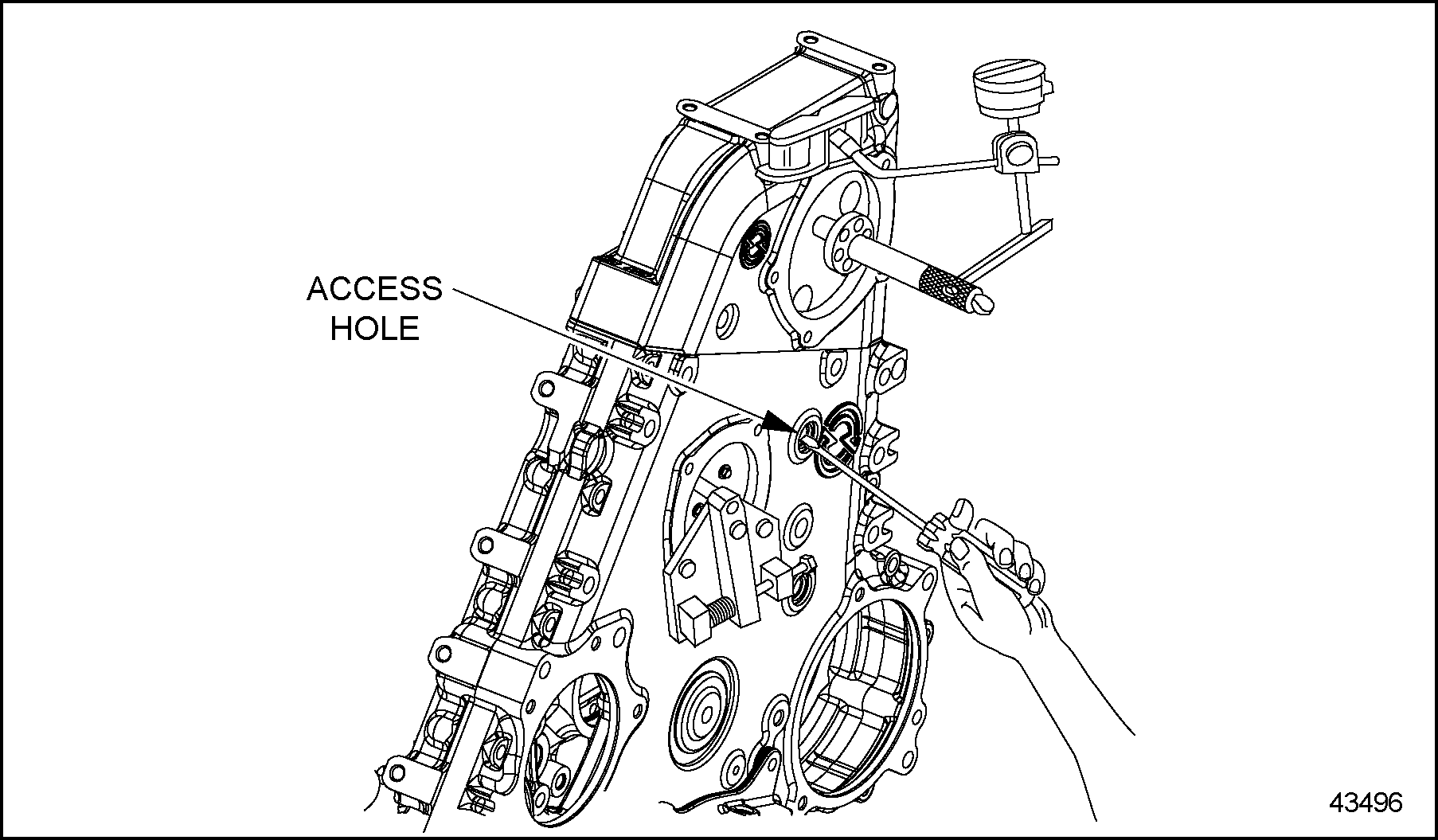
Note: Ensure screwdriver is inserted between camshaft and idler gear teeth and not on the perimeter of the gear, incorrect insertion of the screwdriver will result in incorrect lash measurement readings.
Note: Do not apply side load with the screwdriver; prying the gears will result in incorrect lash measurement readings.
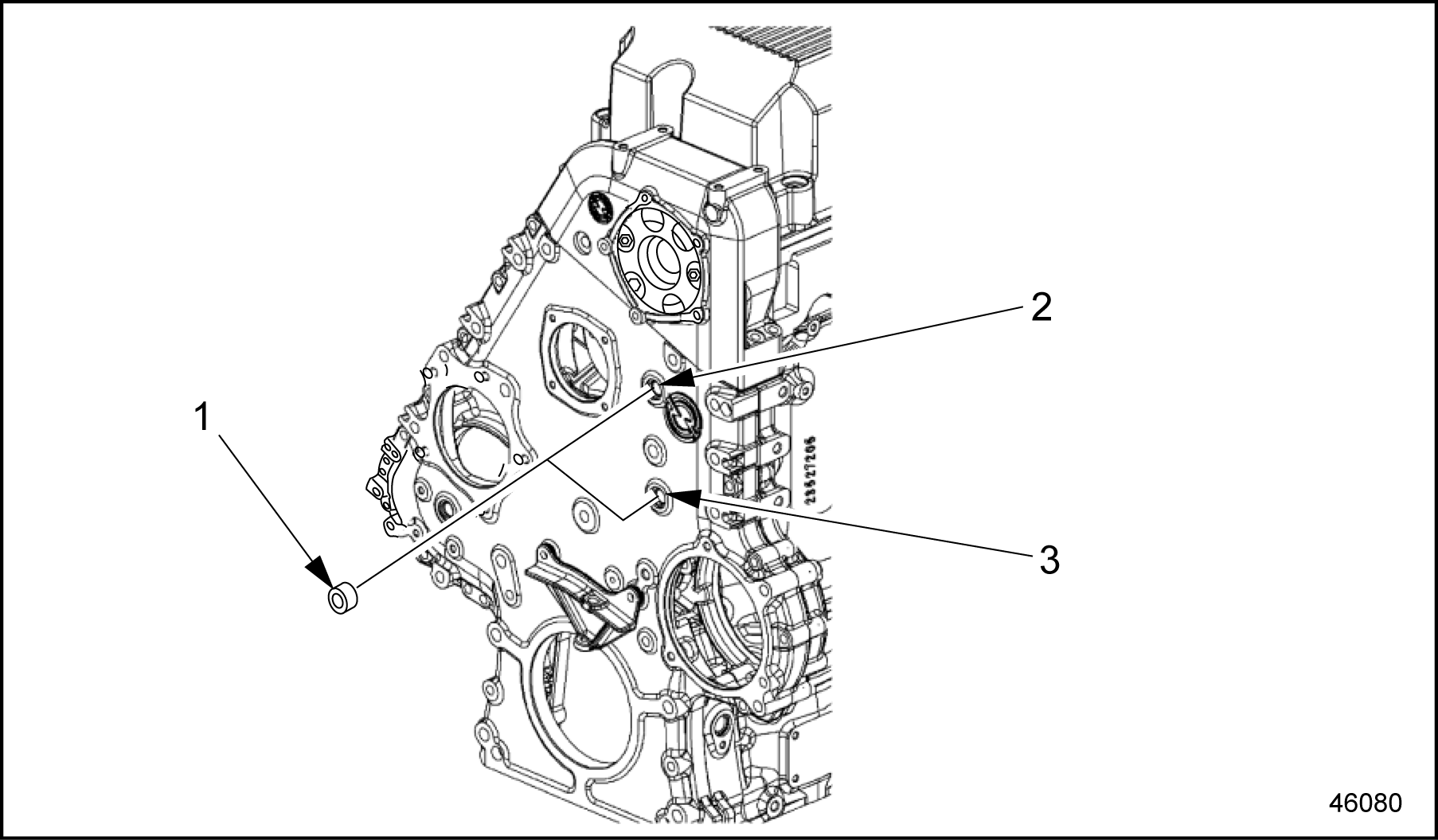
Insert a screwdriver through the idler gear access hole provided in the gear case cover. Engage the screwdriver between two of the idler gear teeth and apply pressure on the screwdriver to secure the gear. This will prevent the gear from moving. See Figure
"Compact Gear Train Lash Adjustment"
.
Figure 15. Compact Gear Train Lash Adjustment
Zero the dial indicator.
Using a rag to protect against the sharp edges of the camshaft, rotate the camshaft by hand and observe the dial indicator pointer.
Note: Turn the adjuster on tool J–35596–A
clockwise to decrease gear lash and counterclockwise to increase gear lash.
Secure the adjustable idler gear with a screwdriver; refer to step 9
.
Turn the adjusting screw of the gear lash adjusting tool (J–35596–A),
approximately 1-1/2 turns. Gear lash should be 0.051-0.229 mm (0.002-0.009 in.). Repeat steps 11 and
until proper lash is obtained.
Note: If there is zero lash between the two gears, the dial indicator pointer will not move from zero.
Note: Torque idler gear nuts first to prevent any gear movement which would change gear lash settings.
When the proper readings of 0.051-0.229 mm (0.002-0.009 in.) are obtained at all four positions, secure the idler gear and torque the three adjustable idler gear nuts to 103-113 N·m (76-83 lb·ft.).
Check the gear lash with the measuring tool (J–46303)
at 3, 6, 9, and 12 o'clock positions.
If proper lash measurement cannot be obtained, replace gear(s) with new part(s).
Before installing the rocker arm shaft assemblies, check the torque on the end studs to ensure they were not loosened at the time of removal. The torque specification is 101-116 N·m (75 -86 lb·ft).
Install the camshaft drive gear access cover. Torque the five bolts to 30-38 N·m (22-28 lb·ft) and install the two plugs into the gear case cover and torque the plugs to 38-42 N·m (28-31 lb·ft).
Section 1.25.3 Installation of Removed Compact Gear Train Components
After all of the gear lash measurements have been taken, assemble the engine components as follows:
Install the air conditioner compressor and brackets (if so equipped). Install the air conditioner drive belt.
Adjust the alternator, fan and air conditioner compressor drive belts to specifications. Refer to "14.6.9 Drive Belts"
. Torque the accessory mounting bolts to specifications.
Install any other equipment such as hoses, brackets, lines or electrical looms that were removed to gain access to the engine gear case cover.